Dr Medha Singh, Dr Sudhir Singh, Rahul Kapse
KEMIN INDUSTRIES SOUTH ASIA PVT. LTD.
Subacute ruminal acidosis, or SARA, is one of those conditions that often develop quietly but leaves a big impact on animal health and performance. It occurs when the rumen stays below its ideal pH range for several hours a day, most commonly after animals consume diets rich in rapidly fermentable carbohydrates such as grains. The problem is called “subacute” because it is not as dramatic as acute acidosis, yet it is still serious enough to disturb rumen fermentation, upset microbial balance, and reduce digestive efficiency. An important point to remember is that SARA is primarily driven by an accumulation of short-chain fatty acids (SCFA), also referred to as volatile fatty acids, rather than by a major build-up of lactic acid as seen in acute ruminal acidosis. In simple terms, acid production in the rumen rises faster than the animal can buffer or absorb it, and over time that imbalance begins to affect the whole animal, not just the rumen. (8, 9)
Subacute ruminal acidosis, or SARA, is one of those conditions that often develop quietly but leaves a big impact on animal health and performance. It occurs when the rumen stays below its ideal pH range for several hours a day, most commonly after animals consume diets rich in rapidly fermentable carbohydrates such as grains. The problem is called “subacute” because it is not as dramatic as acute acidosis, yet it is still serious enough to disturb rumen fermentation, upset microbial balance, and reduce digestive efficiency. An important point to remember is that SARA is primarily driven by an accumulation of short-chain fatty acids (SCFA), also referred to as volatile fatty acids, rather than by a major build-up of lactic acid as seen in acute ruminal acidosis. In simple terms, acid production in the rumen rises faster than the animal can buffer or absorb it, and over time that imbalance begins to affect the whole animal, not just the rumen. (8, 9)

SARA usually appears when feeding management pushes the rumen faster than it can safely adapt. This often happens when animals are moved too quickly from forage-based diets to grain-rich diets, when physically effective fiber is too low, or when feed sorting allows them to consume more concentrate than intended. It is especially common during the transition period and early lactation in highyielding dairy cows, when the pressure to meet energy demand is high and rations become more concentrated. Among all ruminants, high-producing dairy cows are often the most vulnerable because they eat large amounts of feed and are routinely exposed to dense, fermentable diets in support of milk production.
The consequences of SARA can be both immediate and long-lasting. Inside the rumen, low pH reduces fiber digestion and changes the normal fermentation pattern, which means the animal gets less value from the ration. Outside the rumen, the effects start to show up in everyday performance: inconsistent feed intake, less cud chewing, loose manure, milk fat depression, poor body condition, and lower production efficiency. In more persistent cases, the rumen lining becomes irritated and inflamed, leading to rumenitis. Once that protective lining is compromised, harmful compounds and bacteria can move beyond the rumen and contribute to liver abscesses, laminitis, and broader inflammatory stress. That is why SARA is often described as a hidden disorder; the signs may look mild at first, but the biological and economic losses can be substantial.
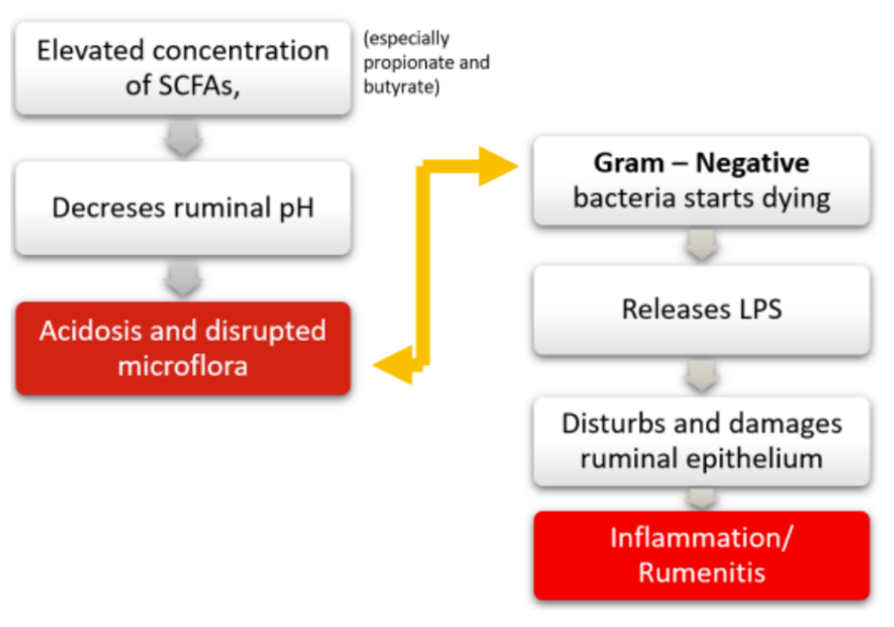
One of the most important things to understand after SARA is the role of lipopolysaccharide, or LPS. LPS is an endotoxin that comes mainly from the cell walls of Gram-negative bacteria. When rumen pH drops and the environment becomes too acidic, many of these bacteria are damaged or die, and that leads to the release of LPS into the rumen fluid. At the same time, the rumen wall itself may become irritated and more permeable. This creates a risky situation: more endotoxin is present in the rumen, and the barrier that normally helps contain it is weaker. As a result, LPS and other harmful compounds may move into circulation and trigger inflammationin different parts of the body. So, after a SARA event, managing LPS is not just about calming the rumen; it is about helping the animal recover from a broader inflammatory challenge. (3, 6)
Microflora management is just as important because the rumen works like a living fermentation system built on microbial teamwork.
What Are Lipopolysaccharides (LPS)?
Lipopolysaccharides are structural components of the outer membrane of Gram negative bacteria. In the rumen, LPS are continuously present at low levels under normal conditions. However, when rumen pH drops—as seen during SARA— large scale lysis of Gram negative bacteria occurs, releasing excessive amounts of free LPS into the ruminal fluid. LPS are biologically active endotoxins that strongly stimulate the innate immune system through Toll like receptor 4 (TLR4), initiating inflammatory cascades.
Fiber-digesting microbes, starch fermenters, lactate producers, and lactate utilizers all need to stay in balance for the rumen to function smoothly. During SARA, that balance is disturbed. Beneficial fiber-digesting populations may decline, microbial diversity may drop, and the rumen becomes less stable and less efficient. Even if rumen pH improves later, the animal may continue to struggle if this microbial ecosystem is not restored. That is why recovery after SARA should focus not only on correcting acidity, but also on supporting a healthier rumen environment through proper fiber, gradual diet adaptation, consistent feeding practices, and nutritional strategies that help the microbiota return to a more stable state.
| Aspect | Summary |
| What is SARA? | Subacute ruminal acidosis is a prolonged depression of rumen pH caused mainly by the accumulation of short-chain fatty acids from rapid fermentation of highly fermentable carbohydrates, rather than by marked lactic acid accumulation as seen in acute acidosis. |
| When does it happen? | It commonly occurs during high-grain feeding, sudden diet shifts, poor adaptation to concentrates, low effective fiber intake, and transition or early lactation periods. |
| Which animals are prone? | High-producing dairy cows are most prone, followed by feedlot beef cattle and other intensively managed ruminants fed energy-dense diets. |
| Major consequences | Reduced fiber digestion, lower feed efficiency, milk fat depression, variable feed intake, loose manure, laminitis, rumenitis, liver abscesses, inflammation, and production losses. |
| Why is LPS important? | Low rumen pH damages Gram-negative bacteria, releasing LPS. Once the rumen barrier is compromised, LPS may enter circulation and stimulate systemic inflammatory responses. |
| Why is microflora management important? | SARA disrupts the microbial ecosystem, reducing beneficial populations and fermentation stability. Restoring microbial balance is essential for rumen recovery and prevention of repeated SARA episodes. |
- SARA is often a hidden disorder with major impacts on health and performance.
- It is strongly linked to high-concentrate feeding and inadequate fiber management.
- High-producing dairy cows and feedlot cattle are the most vulnerable groups.
- The condition affects not only rumen fermentation but also hoof health, liver health, immunity, and productivity.
- LPS control and microflora restoration are central to successful post-SARA recovery.
In conclusion, SARA is much more than a temporary dip in rumen pH. It is a whole-rumen health challenge that affects fermentation, microbial balance, barrier function, inflammation, and ultimately animal performance. The real concern is that it often develops silently, while productivity and health gradually suffer in the background. That is why effective management should go beyond acid control alone. A successful approach should help stabilize fermentation, protect the rumen lining, reduce the impact of endotoxins like LPS, and encourage recovery of a healthy microbial population so the animal can return to consistent performance and better long-term health. (9)
SARA usually appears when feeding management pushes the rumen faster than it can safely adapt. This often happens when animals are moved too quickly from forage-based diets to grain-rich diets, when physically effective fiber is too low, or when feed sorting allows them to consume more concentrate than intended. It is especially common during the transition period and early lactation in highyielding dairy cows, when the pressure to meet energy demand is high and rations become more concentrated. Among all ruminants, high-producing dairy cows are often the most vulnerable because they eat large amounts of feed and are routinely exposed to dense, fermentable diets in support of milk production.
The consequences of SARA can be both immediate and long-lasting. Inside the rumen, low pH reduces fiber digestion and changes the normal fermentation pattern, which means the animal gets less value from the ration. Outside the rumen, the effects start to show up in everyday performance: inconsistent feed intake, less cud chewing, loose manure, milk fat depression, poor body condition, and lower production efficiency. In more persistent cases, the rumen lining becomes irritated and inflamed, leading to rumenitis. Once that protective lining is compromised, harmful compounds and bacteria can move beyond the rumen and contribute to liver abscesses, laminitis, and broader inflammatory stress. That is why SARA is often described as a hidden disorder; the signs may look mild at first, but the biological and economic losses can be substantial.
One of the most important things to understand after SARA is the role of lipopolysaccharide, or LPS. LPS is an endotoxin that comes mainly from the cell walls of Gram-negative bacteria. When rumen pH drops and the environment becomes too acidic, many of these bacteria are damaged or die, and that leads to the release of LPS into the rumen fluid. At the same time, the rumen wall itself may become irritated and more permeable. This creates a risky situation: more endotoxin is present in the rumen, and the barrier that normally helps contain it is weaker. As a result, LPS and other harmful compounds may move into circulation and trigger inflammationin different parts of the body. So, after a SARA event, managing LPS is not just about calming the rumen; it is about helping the animal recover from a broader inflammatory challenge. (3, 6)
Microflora management is just as important because the rumen works like a living fermentation system built on microbial teamwork.
What Are Lipopolysaccharides (LPS)?
Lipopolysaccharides are structural components of the outer membrane of Gram negative bacteria. In the rumen, LPS are continuously present at low levels under normal conditions. However, when rumen pH drops—as seen during SARA— large scale lysis of Gram negative bacteria occurs, releasing excessive amounts of free LPS into the ruminal fluid. LPS are biologically active endotoxins that strongly stimulate the innate immune system through Toll like receptor 4 (TLR4), initiating inflammatory cascades.
Fiber-digesting microbes, starch fermenters, lactate producers, and lactate utilizers all need to stay in balance for the rumen to function smoothly. During SARA, that balance is disturbed. Beneficial fiber-digesting populations may decline, microbial diversity may drop, and the rumen becomes less stable and less efficient. Even if rumen pH improves later, the animal may continue to struggle if this microbial ecosystem is not restored. That is why recovery after SARA should focus not only on correcting acidity, but also on supporting a healthier rumen environment through proper fiber, gradual diet adaptation, consistent feeding practices, and nutritional strategies that help the microbiota return to a more stable state.
| Aspect | Summary |
| What is SARA? | Subacute ruminal acidosis is a prolonged depression of rumen pH caused mainly by the accumulation of short-chain fatty acids from rapid fermentation of highly fermentable carbohydrates, rather than by marked lactic acid accumulation as seen in acute acidosis. |
| When does it happen? | It commonly occurs during high-grain feeding, sudden diet shifts, poor adaptation to concentrates, low effective fiber intake, and transition or early lactation periods. |
| Which animals are prone? | High-producing dairy cows are most prone, followed by feedlot beef cattle and other intensively managed ruminants fed energy-dense diets. |
| Major consequences | Reduced fiber digestion, lower feed efficiency, milk fat depression, variable feed intake, loose manure, laminitis, rumenitis, liver abscesses, inflammation, and production losses. |
| Why is LPS important? | Low rumen pH damages Gram-negative bacteria, releasing LPS. Once the rumen barrier is compromised, LPS may enter circulation and stimulate systemic inflammatory responses. |
| Why is microflora management important? | SARA disrupts the microbial ecosystem, reducing beneficial populations and fermentation stability. Restoring microbial balance is essential for rumen recovery and prevention of repeated SARA episodes. |
- SARA is often a hidden disorder with major impacts on health and performance.
- It is strongly linked to high-concentrate feeding and inadequate fiber management.
- High-producing dairy cows and feedlot cattle are the most vulnerable groups.
- The condition affects not only rumen fermentation but also hoof health, liver health, immunity, and productivity.
- LPS control and microflora restoration are central to successful post-SARA recovery.
In conclusion, SARA is much more than a temporary dip in rumen pH. It is a whole-rumen health challenge that affects fermentation, microbial balance, barrier function, inflammation, and ultimately animal performance. The real concern is that it often develops silently, while productivity and health gradually suffer in the background. That is why effective management should go beyond acid control alone. A successful approach should help stabilize fermentation, protect the rumen lining, reduce the impact of endotoxins like LPS, and encourage recovery of a healthy microbial population so the animal can return to consistent performance and better long-term health. (9)