A. Tharun Goud, Maneesh Jatav, Yamini Verma,Amita Dubey,Madhu Swamy
Department of Veterinary Pathology, College of Veterinary Science and A.H., NDVSU, Jabalpur (M.P)
Introduction
The success of poultry production largely depends on the type of food that is offered to birds. The food may be nutritionally balanced but can pose serious harm to the birds due to the presence of fungi and their associated toxins. All the mycotoxins are toxic substances produced by certain fungi during their growth on feed ingredients, but the most lethal ones are aflatoxins since they have great impact on the health of the birds, leading to low productivity and economic loss worldwide. These toxins are mostly produced by the fungi, Aspergillus flavus and Aspergillus parasiticus.
What is Aflatoxicosis?
Aflatoxicosis is a type of disease that arises when feed with aflatoxins is ingested. The aflatoxin enters the alimentary canal and is transported through blood stream until it reaches the liver, where it primarily damages it. There are different types of aflatoxins like B1,B2,G1,G2 in that B1 is most toxic.The liver is the main target organ due to its ability to change aflatoxin B₁ into a very toxic compound(aflatoxin B1-8,9-epoxide).
Common Sources of Aflatoxin:
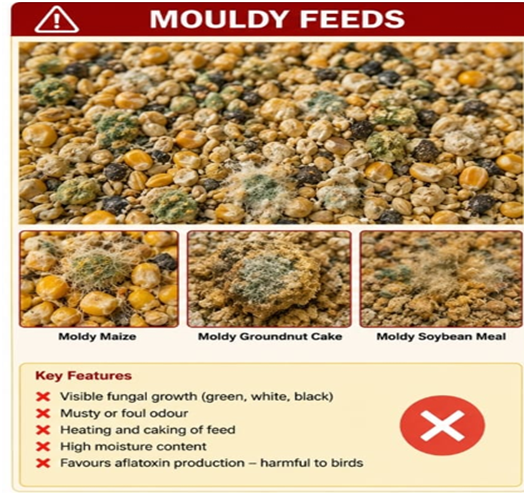
The following listed feed materials are very prone to fungal infection:
- Maize
- Groundnut cake
- Cottonseed meal
- Soybean meal
- Sorghum
- Rice bran
- Peanut meal
- Sunflower cake
- Stored cereals
- Improperly dried, damaged cereals, infestation of insects, and poor warehouse conditions encourage fungal infections.
Clinical Signs:
Clinical symptoms differ depending on the amount of toxin intake and the time period for which the animal has been exposed to the toxin.
Acute Cases:
- Decreased feed intake
- Depression and lethargy
- Ruffled feathers
- Diarrhoea
- Anaemia
- Yellow discoloration of the comb and wattles
- Sudden increase in mortality
Chronic Cases
- Reduced weight gain
- Low feedconversion efficiency
- Uneven flock development
- Decreased egg production
- Disease outbreak
- Reduced fertility and hatchability
- Immunosuppression which leads to vaccine failure and increases in secondary bacterial and viral infections
Effects on Internal Organs
- The liver is the most severely affected organ.
Gross lesions include:
- Enlarged, pale-yellow liver
- Fatty liver
- Petechial haemorrhages on liver
- Enlarged gall bladder
- Enlarged kidneys
- Atrophy of the bursa of Fabricius and thymus
- In lungs multiple nodules are noticed or pneumonia
Under microscopic examination, liver cells exhibit fatty changes,hepatocyte vacuolation necrosis, and fibrosis (chronic cases) and bile duct proliferation, whereas lymphoid organs become depleted, leading to immunosuppression.
Economic Impact
Aflatoxicosis causes heavy financial losses through:
- Slow growth
- Poor feed conversion efficiency
- Increased mortality
- High medication costs
- Reduced broiler performance
- Decreased egg production
- Poor hatchability
- Increased culling
- Increased carcass condemnation
- Even low levels of aflatoxin can reduce profitability if exposure continues for a prolonged period.
Diagnosis:
- History
- Clinical signs
- Post-mortem lesions
- Feed analysis for aflatoxins
- Histopathology
Treatment: There is no antidote only supportive therapyby:
- Remove contaminated feed immediately
- Provide fresh balanced feed
- Vitamin E supplementation
- Selenium supplementation
- Liver tonics
- Mycotoxin binders
- Adequate hydration
Prevention is Better than Cure
Treatment of aflatoxicosis is often unsatisfactory. Therefore, prevention remains the best strategy.
1 Purchase Quality Feed:Buy feed and raw materials only from reliable suppliers.
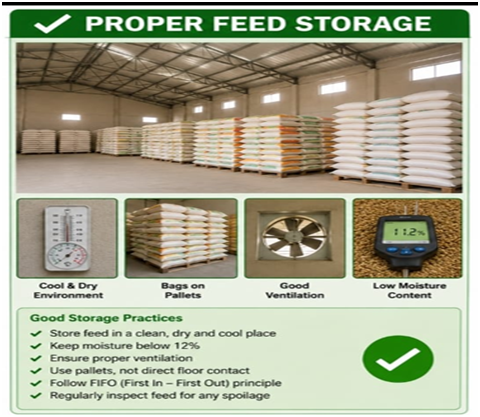
2.Proper Storage :Store feed in clean, dry and well-ventilated rooms.
- Prevent water leakage.
- Keep moisture levels below 12–13%.
- Relative humidity below 70%
- Good ventilation
- Use pallets
- Avoid direct floor storage
- Follow the “first in, first out” principle.
3.Control Fungal Growth: Dry grains thoroughly before storage and avoid insect damage.
- Use Mycotoxin Binders:Incorporate approved toxin binders such as hydrated sodium calcium aluminosilicate (HSCAS), bentonite or yeast-based binders as recommended.
- Antioxidant Supplementation:Supplement antioxidants such as vitamin E and selenium when there is a risk of aflatoxin exposure to reduce oxidative damage.
- Biological and Natural Control:It has become a potentially effective and ecofriendly means for reducing aflatoxins. Useful microbes like Lactobacillus, Bacillus, and Saccharomyces cerevisiae bind or break down aflatoxins; thus, preventing their absorption. Apart from that, some plants particularly turmeric naturally have antifungal and antioxidative qualities which prevent the growth of Aspergillus flavus, aflatoxin production, and also protect the liver. Some other phytogenic additives like garlic, oregano, and neem have also proven to be effective in this regard. Regular Feed Testing: Periodic laboratory testing of feed helps detect contamination before serious losses occur.
- Regular Feed Testing: Periodic laboratory testing of feed helps detect contamination before serious losses occur.
Take-Home Message
Aflatoxicosis is a preventable disease that continues to threaten poultry production worldwide. Good feed management, proper storage, routine monitoring and the use of appropriate mycotoxin control measures can effectively reduce the risk of aflatoxin contamination. Early prevention not only protects bird health but also improves productivity, profitability and the overall sustainability of poultry farming.
Did You Know?
- Even invisible fungal contamination may contain dangerous aflatoxin levels.
- Aflatoxin B₁ is the most toxic naturally occurring aflatoxin.
- The liver is the primary organ damaged by aflatoxins.
- Proper feed storage is the first line of defence against aflatoxicosis.
- Prevention is far more economical than treating affected flocks.