Abstract
Modern broiler breeder hens are the female parents of fast-growing, feed-efficient broiler chickens and carry many of the same genetic traits selected for in their meat-type offspring. Field reports from commercial breeder operations describe a recurring cluster of production and health problems, including suboptimal peak production, hepatic lipidosis, mid- and late-cycle reproductive decline, excess body weight despite feed restriction, abdominal fat deposition, disorganised follicular development and egg-yolk peritonitis, delayed recovery from disease challenge, reduced hatchability with early embryo mortality, late-cycle fertility decline, deteriorating eggshell quality, and transient non-laying episodes. These conditions are conventionally managed as largely independent problems through feed restriction, lighting programmes, and targeted nutrient supplementation. This narrative review surveys the published literature relevant to each condition and considers a proposed, but not yet directly confirmed in broiler breeders, unifying physiological contributor: an inherited tendency toward altered insulin signalling in broiler-derived genetic lines, which has been hypothesised to influence AMP-activated protein kinase (AMPK) activity in metabolically active tissues. Evidence for individual components of this pathway is drawn primarily from studies in broiler chicks, laying hens, and other intensively selected livestock species that exhibit comparable trade-offs between production traits and reproductive fitness, including dairy cattle, double-muscled beef breeds, broad-breasted turkeys, and brachycephalic dog breeds. Direct experimental evidence linking AMPK activity to each of the eleven conditions in broiler breeder hens specifically remains limited. This review is intended to synthesise existing knowledge and identify priorities for targeted research rather than to establish causation.
Keywords: broiler breeder hen; AMP-activated protein kinase; insulin signalling; reproductive performance; genetic selection; hepatic lipidosis; hatchability
1. Introduction
The broiler breeder hen occupies an unusual physiological position. She carries the genome of a bird selected almost exclusively for rapid, efficient growth of her offspring, yet her own productive role requires the opposite: a controlled body weight and a steady, sustained rate of egg production over more than a year of lay. This tension between the traits favoured by broiler selection programmes and the physiological requirements of a long-lived breeding female has been described in the poultry science literature as the “broiler breeder paradox” (Decuypere et al., 2006; Decuypere et al., 2010). Feed restriction during rearing and lay is the primary management tool used to reconcile this conflict, and it is generally effective at controlling body weight and supporting acceptable reproductive output. However, a cluster of production and health problems continues to be reported in well-managed commercial flocks even where feed restriction, lighting, and nutrition programmes are followed closely.
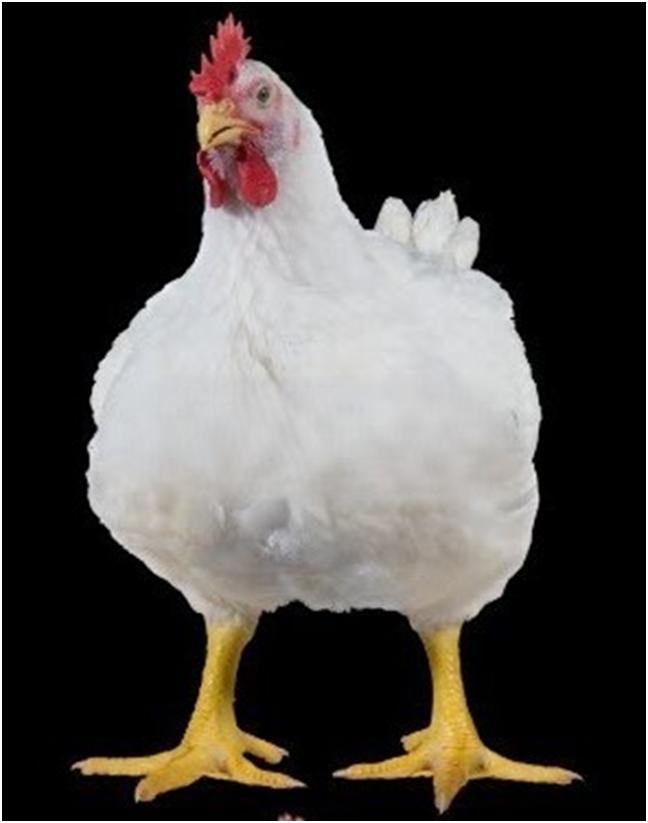
Figure 1. Representative modern broiler-type bird, illustrating the fast-growth, heavy-bodied conformation selected for in broiler genetic lines and inherited by their breeder parents.
This review considers eleven such conditions as they are commonly described in the field: peak production below breed-standard targets, low egg output associated with pale or enlarged livers, a gradual decline in reproductive performance after week 40, excess body weight despite restricted feeding, abdominal fat accumulation with hepatic lipidosis, disorganised follicular growth associated with egg-yolk peritonitis, slow recovery following disease challenge, reduced hatchability with early embryo mortality, declining fertility beyond week 55, deteriorating eggshell quality after peak, and transient non-laying episodes affecting a subset of hens at defined ages. These are typically managed as separate problems, each with its own established set of interventions. The purpose of this review is twofold: first, to summarise the genetic and physiological background relevant to each condition as it is currently understood; and second, to examine a hypothesis, developed by analogy with better-characterised species, that a shared metabolic pathway involving insulin signalling and AMPK may contribute to several of these conditions simultaneously. This hypothesis is presented as a direction for further research rather than as an established explanation, and each section notes where supporting evidence is indirect or drawn from species other than the broiler breeder hen.
2. Genetic Selection and Reproductive Trade-offs: A Pattern Across Species
Selection for rapid growth and high feed efficiency in broiler chickens has been one of the notable achievements of applied animal genetics, substantially reducing the time and feed required to reach market weight over the past several decades (Decuypere et al., 2010). The broiler breeder hen inherits many of the same genes that underlie this efficiency, including a strong appetite and a tendency to deposit tissue quickly, even though her own reproductive role calls for a different metabolic priority: sustained follicular development and ovulation rather than fast somatic growth. Feed restriction is used specifically to manage this conflict, and its reproductive benefits in broiler breeders are well documented (Bruggeman et al., 1999).
This trade-off between a selected production trait and reproductive fitness is not unique to broiler breeders. In dairy cattle, decades of selection for milk yield have produced animals that frequently cannot consume enough feed to match early-lactation milk output, a mismatch associated with elevated rates of ketosis, hepatic lipidosis, and reduced fertility (Roche et al., 2009; Overton & Waldron, 2004; Figure 2).
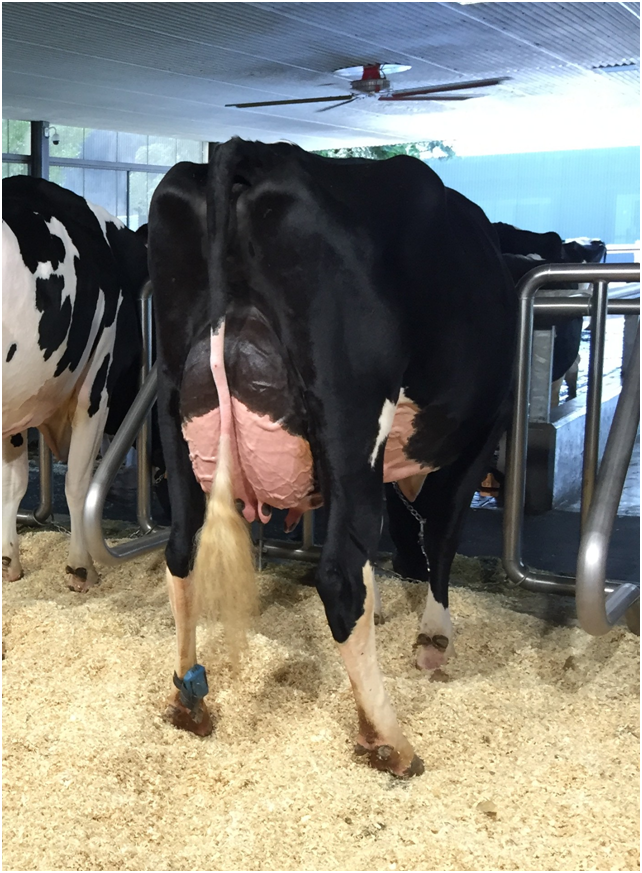
Figure 2. High-yield dairy cow, illustrating a comparable production-reproduction trade-off in another intensively selected livestock species.]] In double-muscled beef breeds such as the Belgian Blue, a mutation in the myostatin gene that produces markedly increased muscle mass is also associated with delayed puberty, reduced fertility, and a narrowed birth canal that necessitates caesarean delivery in most calvings (Bellinge et al., 2005). In turkeys, sustained selection for increased body weight has been shown experimentally to reduce egg production and reproductive performance in selected lines relative to unselected control populations, to the point that natural mating in heavy commercial strains is now largely replaced by artificial insemination (Nestor, 1977). In dogs, breeds selected intensively for a brachycephalic head conformation, including the English Bulldog, show a high prevalence of dystocia related to fetopelvic disproportion, with the great majority of litters delivered by caesarean section rather than natural birth (Wydooghe et al., 2013; Evans & Adams, 2010). Similar production-reproduction trade-offs have been described in pigs selected for lean growth and in farmed salmon selected for rapid growth. Taken together, these examples illustrate a general pattern in which intensive selection for a single valuable trait is frequently accompanied by a cost elsewhere in the animal’s physiology, and reproduction is commonly among the traits affected. This comparative context motivates, but does not by itself demonstrate, the hypothesis that a shared metabolic mechanism could similarly link several distinct field conditions in the broiler breeder he
3. A Proposed Metabolic Contributor: Insulin Signalling and AMPK
AMP-activated protein kinase (AMPK) is a cellular energy sensor conserved across vertebrate tissues that is activated when cellular energy status declines, and that broadly promotes energy-conserving processes while restraining energy-consuming ones, including lipid synthesis (Hawley et al., 2003; Shackelford & Shaw, 2009; Ferrer et al., 2017). In mammalian liver, AMPK activation has been shown to inhibit lipogenic enzyme activity via phosphorylation of sterol regulatory element-binding protein (SREBP) pathway components, reducing hepatic fat accumulation (Li et al., 2011; Zhao et al., 2019). In hen granulosa cells, AMPK activation has been shown to modulate the response of ovarian follicles to insulin-like growth factor 1 (IGF-1) and to influence progesterone secretion, indicating a role in follicular signalling in poultry specifically (Tosca et al., 2007; Cai et al., 2017).
Separately, studies in broiler-type chicks have reported evidence of altered insulin sensitivity relative to layer-type strains from an early age, a finding that has been interpreted as consistent with the selection pressure for rapid early growth (Shiraishi et al., 2011; Saneyasu et al., 2020). Because insulin signalling and AMPK activity interact within shared intracellular pathways in other species, it has been proposed that the altered insulin sensitivity documented in broiler-type chickens could, by extension, be associated with reduced AMPK activity in breeder hens carrying the same genetic background. This extension has intuitive appeal given the tissue-level roles AMPK plays in lipid metabolism and follicular signalling described above, both of which are relevant to the conditions considered in this review. However, it should be noted clearly that direct measurement of AMPK activity across the reproductive, hepatic, and ovarian tissues of broiler breeder hens under field conditions has not, to the authors’ knowledge, been comprehensively reported, and the pathway described here should be regarded as a working hypothesis that draws on findings from related tissues, related species, and early-life broiler physiology rather than as an established mechanism in adult breeder hens.
4. Field-Observed Conditions in Broiler Breeder Flocks
4.1 Suboptimal Peak Production
Many commercial flocks fail to reach the 85-87% hen-day production typically expected at peak, or reach it later than the breed-standard timeline, with the shortfall usually emerging between weeks 27 and 32 and persisting through the remainder of the peak-lay period. Feed restriction, precise light stimulation timed to target body weight, and close monitoring of flock uniformity are the primary tools used to manage this window, and they are generally effective. Where a shortfall persists despite well-executed feed and light management, the biological literature summarised in Section 3 suggests that reduced cellular energy signalling in developing follicles is a plausible, though unconfirmed, contributor, since AMPK-dependent signalling has been shown to influence the follicular response to reproductive hormones in hens (Tosca et al., 2007).
4.2 Low Egg Output with Hepatic Lipidosis
Hens with reduced egg output not infrequently show, at post-mortem, enlarged, pale, and friable livers consistent with fatty liver syndrome. Laying hens naturally transport substantial quantities of lipid through the liver to support yolk formation, and dietary energy control together with choline and methionine supplementation, which support hepatic lipid export, are the standard management responses (Zhao et al., 2019). These measures act primarily on lipid clearance rather than on the rate of hepatic lipid synthesis. Given the demonstrated role of AMPK as a restraint on lipogenic enzyme activity in mammalian liver (Li et al., 2011), reduced AMPK activity has been proposed as a contributor to cases where lipid accumulation continues despite adequate choline and methionine provision, although this mechanism has not been directly confirmed in the breeder hen liver (Figure 3).
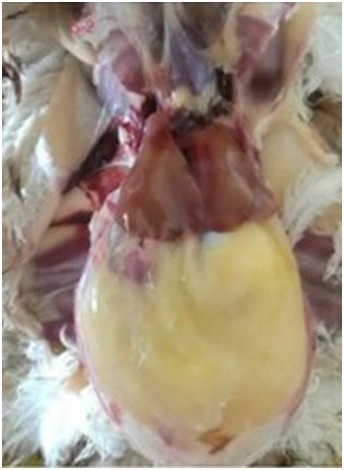
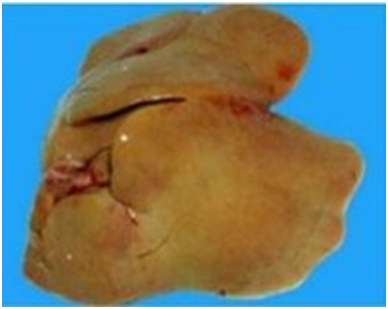
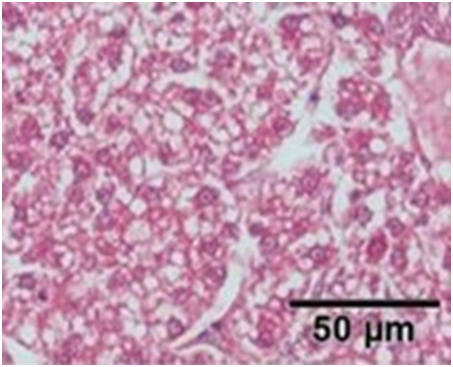
Figure 3. Hepatic lipidosis in a broiler breeder hen.1) gross abdominal appearance at necropsy.2) enlarged, pale, friable liver at post-mortem. 3) histological section showing diffuse hepatocellular vacuolation (scale bar 50 µm).
4.3 Reproductive Decline After Week 40
Past week 40 of lay, some flocks show a gradual decline steeper than the standard production curve, with less consistent egg timing and a higher incidence of double-yolked or soft-shelled eggs, despite feed intake and body weight remaining on target. Late-lay feed reduction, consistent lighting, and calcium-to-phosphorus adjustment are the established management responses. This pattern of gradual decline over many months of sustained lay is consistent with a cumulative process rather than an acute nutrient shortage, and a mild but persistent reduction in cellular energy signalling, building incrementally across the laying cycle, has been proposed as one possible contributor to this cumulative wear, though this remains a hypothesis rather than a demonstrated mechanism specific to this condition.
4.4 Excess Body Weight Despite Restricted Feeding
Individual birds or whole flocks can exceed the standard weight curve even while on a correctly executed restricted feeding programme, often accompanied by greater abdominal fat deposition and reduced flock uniformity. Feed grading, skip-a-day or 5:2 feeding schedules, and fibre dilution are used to manage this once restriction is already at practical welfare limits. Because two hens on an identical ration can reach different body weights, differences in how efficiently individual birds convert and store feed energy, rather than differences in intake, are likely to explain much of this residual variation. Reduced AMPK activity relative to insulin signalling has been proposed as one contributor to this efficient-storage phenotype, by analogy with its role in mammalian energy partitioning, but this has not been directly tested in breeder hens.
4.5 Abdominal Fat Accumulation and Hepatic Lipidosis
At post-mortem, some birds show marked abdominal fat together with hepatic lipid accumulation even when their outward body condition scores appear normal, indicating that external scoring can underestimate internal fat deposition. Dietary energy control, choline and methionine supplementation, and periodic post-mortem sampling are the standard approaches used to monitor and manage this risk. Because this condition shares its proposed hepatic mechanism with the fatty liver picture described in Section 4.2, and because breeding for lean muscle in the broiler offspring appears to have shifted fat deposition toward abdominal and hepatic depots in the parent hen, these two conditions may share a common underlying contributor, consistent with the proposed role of AMPK in restraining lipogenesis in both tissues (Li et al., 2011; Zhao et al., 2019).
4.6 Disorganised Follicular Growth and Egg-Yolk Peritonitis
Some hens show a disorganised hierarchy of ovarian follicles rather than the normal smooth size sequence, a pattern associated with egg-yolk peritonitis, in which a released yolk enters the body cavity instead of the oviduct. Biosecurity, vaccination, and consistent lighting and feeding schedules are used to reduce known triggers, but these measures act on external risk factors rather than on the internal hormonal fine-tuning that governs orderly follicular recruitment. AMPK-dependent signalling has been shown to modulate the granulosa cell response to reproductive hormones in a manner that varies appropriately by follicle size in hens (Tosca et al., 2007; Cai et al., 2017), and a weakening of this graded response has been proposed as a plausible internal contributor to follicular disorganisation, alongside the established infectious and management risk factors (Figure 4).
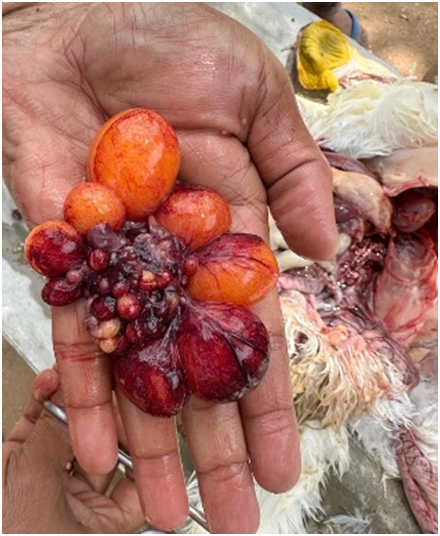
Figure 4. Disorganised ovarian follicular hierarchy recovered at post-mortem from a broiler breeder hen, showing follicles of irregular size and maturity rather than the normal smooth size sequence.
4.7 Delayed Recovery Following Disease Challenge
Following a disease challenge, some flocks recover production and shell quality more slowly than others despite receiving comparable supportive care once the acute illness has resolved. Increased dietary protein and micronutrients, electrolyte support, and enhanced biosecurity during the recovery window are the standard responses, and they act principally by supplying additional raw material for repair. Tissue repair and immune response draw on the same cellular energy systems implicated elsewhere in this review, and AMPK is known to play a role in cellular stress response and in clearance of damaged cellular components in other species (Shackelford & Shaw, 2009). Birds with a genetically reduced capacity for AMPK activation may therefore have less metabolic reserve available during recovery, though this has not been directly measured in broiler breeders recovering from field disease challenge.
4.8 Reduced Hatchability and Early Embryo Mortality
Some flocks show lower-than-expected hatchability with a disproportionate share of embryo mortality occurring in the first week of incubation, despite eggs appearing normal externally. Breeder nutrition through pre-lay and peak, careful egg handling and storage, correct mating ratios, and tightly controlled incubation parameters are the established management levers, and they act on factors external to the yolk itself or on the incubation environment. Because the first week of embryonic development relies heavily on the nutrient and cellular quality the hen has deposited in the yolk, maternal metabolic status during yolk formation is a plausible contributor to variation in early embryo survival that incubation management cannot address, consistent with the proposed role of AMPK-related pathways in hepatic lipid handling described above, although this connection to yolk composition and early embryo viability specifically requires direct confirmation (Figure 5).

Figure 5. Early embryo mortality in a broiler breeder hatching egg, showing an underdeveloped embryo at candling/break-out examination.
4.9 Declining Fertility Beyond Week 55
Past week 55 of lay, fertile egg percentage can decline faster than expected even where male fertility parameters and mating behaviour appear normal, which typically directs management attention toward the male. Female-side contributors, specifically the hen’s sperm-storage tubule function and the precision of her ovulation timing, are less commonly investigated but are also known to decline with age and cumulative reproductive demand. Where the cumulative metabolic strain proposed in Section 4.3 continues to build through late lay, a corresponding decline in the cellular systems supporting sperm storage and ovulation timing has been proposed as a female-side contributor to late-cycle fertility loss that complements, rather than replaces, standard male-focused evaluation.
4.10 Deteriorating Eggshell Quality After Peak
Eggshell quality commonly declines faster than expected after peak lay, with thinner, weaker, or irregularly shaped shells and increased breakage, typically monitored through shell strength and thickness measurement. Calcium and phosphorus adjustment, calcium particle size management, and vitamin D3 supplementation address calcium supply and availability, which is necessary but may not be sufficient if the enzymatic machinery of the shell gland responsible for building the shell’s carbonate structure is itself functioning suboptimally. Because this enzymatic activity depends on cellular energy status, reduced AMPK signalling in shell gland tissue as hens age past peak has been proposed as a contributor to shell quality decline that operates independently of calcium supply, though this has not been directly measured in the shell gland of ageing broiler breeder hens.
4.11 Transient Non-Laying Episodes
Within a typical flock, a subset of hens, commonly estimated at 8-10%, temporarily cease laying for approximately four to five weeks, most often around weeks 31-33 and again around weeks 40-45, with the majority subsequently returning to production. These pause points coincide with the periods of highest metabolic demand described elsewhere in this review, namely the transition into peak and a second point in mid-lay. Because most affected hens recover without intervention, this pattern is often treated by farms as an unavoidable background loss rather than as a condition to actively manage. It has been proposed that these pauses represent a temporary, protective suspension of follicular development occurring when cumulative metabolic strain crosses a threshold, rather than a permanent reproductive failure, which would be consistent with the observed pattern of recovery, though the underlying trigger and its relationship to insulin signalling and AMPK activity specifically remain to be tested directly.
5. Discussion: A Common Thread Among Diverse Conditions?
Considered individually, the eleven conditions summarised above affect distinct organ systems and are conventionally treated as unrelated problems, each with its own diagnostic approach and management response. The comparative and mechanistic literature reviewed in Sections 2 and 3 raises the possibility that several of these conditions could share a common contributing pathway, specifically an inherited tendency toward altered insulin signalling in broiler-derived genetic lines that may be associated with reduced AMPK activity across multiple tissues, including the liver, ovarian follicles, shell gland, and reproductive tract. Because AMPK influences lipid metabolism, hormone-responsive follicular signalling, cellular stress response, and enzymatic activity in several of these tissues, a single weakened signalling pathway could plausibly manifest as different problems in different organ systems, which would be consistent with the tendency for these conditions to co-occur within affected flocks.
This synthesis should be treated as a hypothesis rather than a demonstrated causal chain. The individual pieces of supporting evidence are drawn from a mixture of sources: some directly involve hen granulosa cells or broiler chicks (Tosca et al., 2007; Cai et al., 2017; Shiraishi et al., 2011; Saneyasu et al., 2020), while others are drawn from mammalian liver physiology (Li et al., 2011; Zhao et al., 2019) or from comparative examples in other intensively selected livestock species (Roche et al., 2009; Bellinge et al., 2005; Nestor, 1977; Wydooghe et al., 2013). No single study to date has traced this pathway through from insulin signalling to AMPK activity to each of the eleven field conditions within the same population of broiler breeder hens. Established causes of each condition, including infectious disease, nutritional deficiency, and management error, should continue to be investigated and ruled out as a matter of routine diagnostic practice; the pathway proposed here is intended to be considered as an additional line of investigation once these established causes have been addressed, particularly in flocks that display more than one of these conditions concurrently.
6. Limitations of the Current Evidence Base
This review has several limitations that should inform how its synthesis is used. First, it is a narrative rather than a systematic review, and the literature search underlying it was not exhaustive; a systematic review with defined inclusion criteria would be a useful next step. Second, the central hypothesis linking insulin signalling to AMPK activity across multiple tissues in the adult broiler breeder hen is extrapolated substantially from early-life broiler chick physiology, from other cell types and species, and from comparative examples in other livestock, rather than from direct measurement in laying breeder hens under field conditions. Third, several of the field conditions described here, particularly the transient non-laying episodes described in Section 4.11, are supported mainly by field observation and industry experience rather than by published, peer-reviewed production data, and would benefit from formal epidemiological characterisation. Direct studies measuring AMPK activity and its regulators across the relevant tissues in broiler breeder hens at defined stages of the laying cycle, and correlating this activity with the incidence and severity of the conditions described here, are needed before the proposed pathway can be considered established rather than hypothesised.
7. Conclusion
Broiler breeder hens carry genetic traits selected for rapid, efficient growth in their meat-type offspring, and a growing body of comparative evidence across livestock species suggests that this kind of selection commonly carries a reproductive cost. A recurring cluster of field conditions in broiler breeders, spanning production, hepatic health, body condition, follicular development, disease recovery, hatchability, fertility, and shell quality, is currently managed largely as eleven separate problems. This review has summarised the biological literature relevant to each condition and outlined a hypothesis, drawn substantially from comparative and early-life physiology rather than from direct measurement in adult breeder hens, that altered insulin signalling and its downstream effects on AMPK activity may contribute to several of these conditions through shared cellular mechanisms. Testing this hypothesis directly in broiler breeder hens, across the relevant tissues and at defined stages of the laying cycle, represents a clear priority for future applied poultry research, alongside continued attention to the established nutritional, management, and infectious contributors to each condition.
Conflict of Interest
The author declares a professional interest in the poultry animal health sector. No specific products or commercial interventions are described or promoted in this review.
References
1. Decuypere E, Hocking PM, Tona K, Onagbesan O, Bruggeman V, Jones EKM, Cassy S, Rideau N, Metayer S, Jego Y, Putterflam J, Tesseraud S, Collin A, Duclos M, Trevidy JJ, Williams J. Broiler breeder paradox: a project report. World’s Poultry Science Journal. 2006;62(3):443-453.
2. Decuypere E, Bruggeman V, Everaert N, Li Y, Boonen R, De Tavernier J, Janssens S, Buyse J. The broiler breeder paradox: ethical, genetic and physiological perspectives, and suggestions for solutions. British Poultry Science. 2010;51(5):569-579.
3. Bruggeman V, Onagbesan O, D’Hondt E, Buys N, Safi M, Vanmontfort D, Berghman L, Vandesande F, Decuypere E. Effects of timing and duration of feed restriction during rearing on reproductive characteristics in broiler breeder females. Poultry Science. 1999;78(10):1424-1434.
4. Hawley SA, Boudeau J, Reid JL, Mustard KJ, Udd L, Makela TP, Alessi DR, Hardie DG. Complexes between the LKB1 tumor suppressor, STRAD alpha/beta and MO25 alpha/beta are upstream kinases in the AMP-activated protein kinase cascade. Journal of Biology. 2003;2(4):28.
5. Shackelford DB, Shaw RJ. The LKB1-AMPK pathway: metabolism and growth control in tumour suppression. Nature Reviews Cancer. 2009;9(8):563-575.
6. Ferrer J, et al. Phosphorylation of AMPK by upstream kinases is required for activity in mammalian cells. Biochemical Journal. 2017;474(17):3059-3073.
7. Li Y, Xu S, Mihaylova MM, Zheng B, Hou X, Jiang B, Park O, Luo Z, Lefai E, Shyy JY, Gao B, Wierzbicki M, Verbeuren TJ, Shaw RJ, Cohen RA, Zang M. AMPK phosphorylates and inhibits SREBP activity to attenuate hepatic steatosis and atherosclerosis in diet-induced insulin resistant mice. Cell Metabolism. 2011;13(4):376-388.
8. Zhao P, Wong KI, Sun X, et al. Post-translational regulation of lipogenesis via AMPK-dependent phosphorylation of insulin-induced gene. Nature Communications. 2019;10:679.
9. Tosca L, Chabrolle C, Crochet S, Tesseraud S, Dupont J. IGF-1 receptor signaling pathways and effects of AMPK activation on IGF-1-induced progesterone secretion in hen granulosa cells. Domestic Animal Endocrinology. 2007;34(3):204-216.
10. Cai L, et al. Regulatory mechanisms underlying the expression of prolactin receptor in chicken granulosa cells. PLOS ONE. 2017;12(1):e0170409.
11. Shiraishi J, Yanagita K, Fukumori R, Sugino T, Fujita M, Kawakami S, McMurtry JP, Bungo T. Comparisons of insulin related parameters in commercial-type chicks: evidence for insulin resistance in broiler chicks. Physiology & Behavior. 2011;103(2):233-239.
12. Saneyasu T, Honda K, Kamisoyama H. Role of insulin-like growth factor-1 in the central regulation of feeding behavior in chicks. Frontiers in Physiology. 2020;11:1078.
13. Roche JR, Friggens NC, Kay JK, Fisher MW, Stafford KJ, Berry DP. Invited review: Body condition score and its association with dairy cow productivity, health, and welfare. Journal of Dairy Science. 2009;92(12):5769-5801.
14. Overton TR, Waldron MR. Nutritional management of transition dairy cows: strategies to optimize metabolic health. Journal of Dairy Science. 2004;87(E Suppl):E105-E119.
15. Bellinge RHS, Liberles DA, Iaschi SPA, O’Brien PA, Tay GK. Myostatin and its implications on animal breeding: a review. Animal Genetics. 2005;36(1):1-6.
16. Nestor KE. Genetics of growth and reproduction in the turkey. 5. Selection for increased body weight alone and in combination with increased egg production. Poultry Science. 1977;56(2):337-347.
17. Wydooghe E, Berghmans E, Rijsselaere T, Van Soom A. International breeder inquiry into the reproduction of the English Bulldog. VlaamsDiergeneeskundigTijdschrift. 2013;82(4):181-186.
18. Evans KM, Adams VJ. Proportion of litters of purebred dogs born by caesarean section. Journal of Small Animal Practice. 2010;51(2):113-118.