
Poultry Technical Manager South Asia
dsm-firmenich

OU Marketing Manager, West GAPAC
dsm-firmenich
Water is often called the most important nutrient in poultry nutrition. A laying hen consumes approximately 1.8-2.5 times water than feed on a weight basis. During the rainy season, water sources such as bore wells, open reservoirs, ponds, and storage tanks become vulnerable to contamination from surface runoff, sewage infiltration, organic matter, and microbial pathogens.Increased rainfall, high humidity, elevated temperatures, flooding, deterioration of water quality, feed spoilage, mycotoxin contamination, and increased pest pressure collectively reduce bird performance and increase production costs.Heavy rainfall can increase the microbial load of drinking water, introducing pathogens such as Escherichia coli, Salmonella spp., Campylobacter spp., and various protozoa. Increased turbidity and organic matter reduce the effectiveness of disinfectants and promote bacterial growth in pipelines and drinker systems. Contaminated water can result in enteritis, reduced nutrient absorption, poor feed conversion ratio (FCR), lower egg production, poor shell quality, and increased mortality.Field observations across South Asia indicate that farms experiencing water contamination during monsoon periods commonly report declines in egg production ranging from 3-10%, increased medication costs, and higher culling rates. Water contamination also facilitates the spread of diseases such as colibacillosis and salmonellosis, which further compromise flock performance.Poor drinking water quality and mycotoxin contamination are two of the most economically significant factors influencing egg production, feed efficiency, bird health, and mortality.
Water quality parameters of concern in poultry farms
Several water quality parameters become critical during the rainy season. Water with high microbial contamination can damage intestinal integrity and reduce nutrient utilization.
Particular attention should be paid to:
- Total bacterial count
- Coliform count
- pH (optimal 5.5-6.7)
- Total dissolved solids
- Nitrate and nitrite levels
- Iron and manganese concentration
- Water hardness
- Presence of biofilms in pipelines
Failure to monitor these parameters can result in chronic performance losses that are often difficult to diagnose.
Increased mycotoxin risk in feed
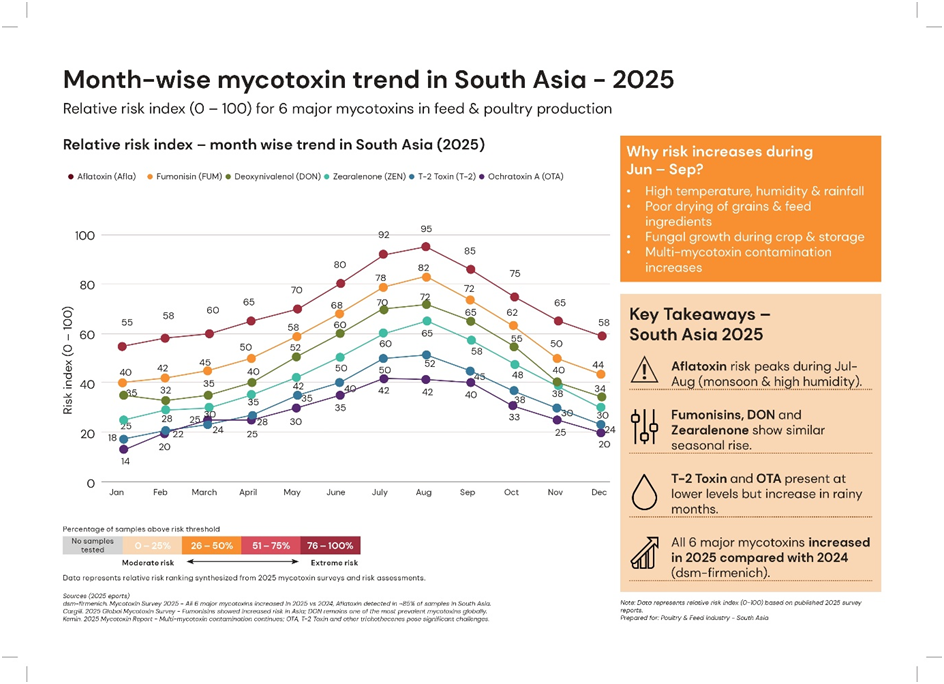
The rainy season creates ideal environmental conditions for fungal growth in crops and feed ingredients. High humidity, elevated temperature, delayed harvesting, poor drying practices, and moisture accumulation during storage contribute to increased mycotoxin contamination.Mycotoxins are toxic secondary metabolites produced by fungi such as Aspergillus, Fusarium, and Penicillium species. Poultry are highly sensitive to mycotoxins because of their rapid metabolism and high nutrient demands.Studies conducted in India, Bangladesh, and Sri Lanka have consistently demonstrated higher mycotoxin contamination during wet and humid months. A study from Bangladesh reported that aflatoxin contamination in poultry feeds was highest during June, July, and August, corresponding to the peak rainy season. Moisture content showed a strong positive relationship with aflatoxin levels.Similarly, surveys of Indian poultry feeds have reported frequent contamination with aflatoxins, Fumonicines and ochratoxin A, particularly in maize, groundnut cake, mixed feeds, and other commonly used ingredients. Published reports from industry also shows the similar trend of mycotoxins in year 2025.
Fig. 1. Mycotoxin trend in South Asia 2025
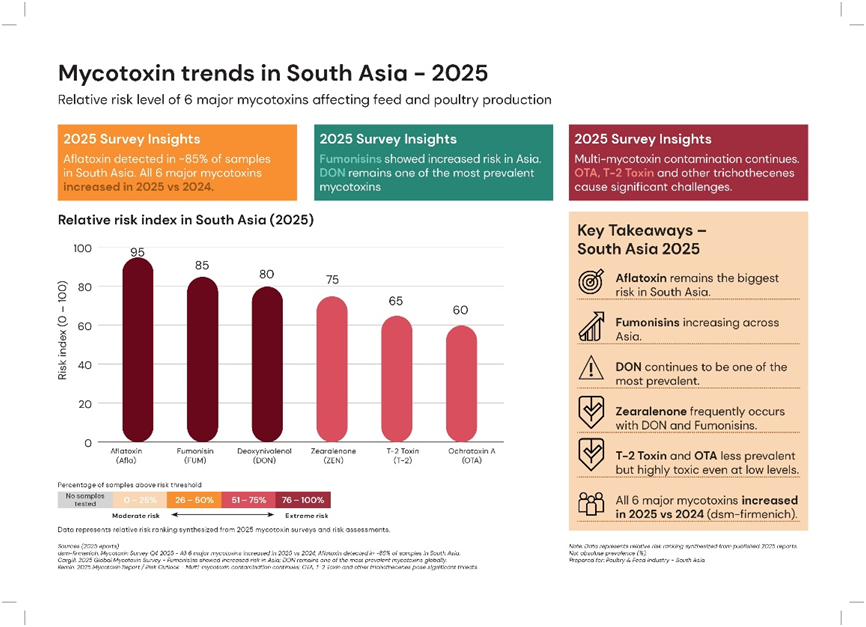
Fig. 2. Moth wise trend and relative risk of mycotoxin in South Asia
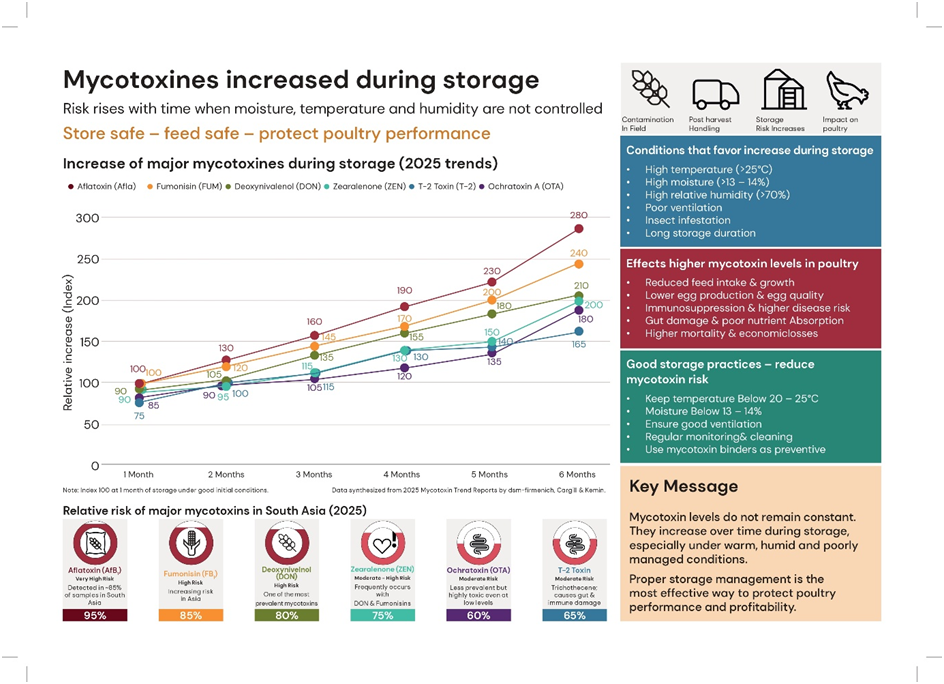
Mycotoxins That Develop During Storage Under High Humidity and High Temperature
Even when crops enter storage with relatively low contamination, improper storage conditions can lead to rapid fungal proliferation and toxin production. Storage moisture above 13-14%, relative humidity above 70%, and temperatures between 25-35°C are highly favourable for fungal growth.Poor storage practices such as leaking roofs, inadequate ventilation, condensation, wet feed bags, and prolonged storage periods significantly increase the risk of toxin development.
Fig. 3. Growth of mycotoxins related to storage conditions and period of storage
Gut Health
- Effects of poor water quality on gut health
The gastrointestinal tract is the primary interface between the bird and its environment. Poor-quality water introduces pathogens and excessive microbial loads that disrupt the normal gut microbiota.
Consequences include:
- Damage to intestinal villi
- Increased intestinal inflammation
- Reduced nutrient absorption
- Increased intestinal permeability (“leaky gut”)
- Wet litter
- Increased incidence of enteric diseases
Gut inflammation diverts nutrients away from egg production toward immune responses. This results in lower egg output, poorer feed efficiency, and increased susceptibility to secondary infections.
Table 1. Water quality, major effect, clinical signs and postmortem findings in layer
| Water Quality Issue | Major Effects | Clinical Signs in Layers | Characteristic Gross & Histopathological Lesions |
| High Bacterial Contamination (E. coli, Salmonella, Coliforms) | Enteritis, reduced nutrient absorption, immunosuppression, poor performance | Reduced feed intake, diarrhoea, wet litter, decreased egg production, increased mortality, poor FCR | Catarrhal enteritis, intestinal congestion, enlarged liver, airsacculitis, pericarditis, perihepatitis, villus damage |
| High Total Dissolved Solids (TDS) / Salinity | Water refusal, dehydration, electrolyte imbalance, wet litter | Excessive water consumption, watery droppings, poor shell quality, reduced egg production | Enlarged kidneys, urate deposition, dehydration lesions, renal tubular degeneration |
| Excess Iron and Manganese | Biofilm formation, bacterial proliferation, reduced disinfectant efficacy | Reduced water intake, poor flock performance, recurrent bacterial infections | Thick biofilms in pipelines, chronic enteritis, secondary bacterial lesions |
| High Nitrate/Nitrite Levels | Reduced oxygen transport, metabolic stress, decreased productivity | Weakness, poor growth, reduced egg production, respiratory distress in severe cases | Cyanosis, tissue hypoxia, liver and kidney degeneration |
| Improper pH (<6 or >8) | Reduced water palatability, altered gut microbiota, poor medication efficacy | Reduced water intake, poor feed conversion, inconsistent flock performance | Mild enteritis, intestinal irritation, altered gut morphology |
| Fungal and Organic Contamination | Increased pathogen load, mold growth, gut dysbiosis, toxin exposure | Wet droppings, reduced egg production, poor immunity, increased disease outbreaks | Intestinal inflammation, liver enlargement, fungal colonization, lymphoid tissue depletion |
- Effects of mycotoxins on gut health
The intestinal tract is one of the first organs exposed to dietary mycotoxins. Even subclinical contamination can cause significant gut damage before visible clinical signs appear.
Mycotoxins can:
- Destroy intestinal epithelial cells
- Reduce villus height
- Increase crypt depth
- Impair digestive enzyme production
- Reduce nutrient absorption
- Alter gut microbiota balance
- Increase susceptibility to bacterial infections
During the rainy season in South Asia, gut health damage caused by poor water quality, coccidiosis, bacterial enteritis, and mycotoxin contamination can result in substantial economic losses in commercial layer farms. Intestinal damage reduces nutrient absorption, worsens feed conversion, lowers egg production by 5-15%, increases cracked eggs, weakens vaccine response, and raises medication costs. Mycotoxins such as aflatoxin, fumonisin, ochratoxin, and T-2 toxin further impair gut integrity and immunity, leading to chronic performance losses. Studies indicate that decreased egg production is the most common consequence of mycotoxin-associated disease in layers.
Table 2. Mycotoxins, major effect, clinical signs and postmortem findings in layer
| Mycotoxin | Major Effects | Clinical Signs in Layers | Characteristic Gross & Histopathological Lesions |
| Aflatoxin (AFB₁) (Aspergillus flavus, A. parasiticus) | Hepatotoxic, immunosuppressive, reduced nutrient utilization, decreased egg production | Reduced feed intake, poor growth, pale comb, reduced egg production, poor shell quality, increased disease incidence, poor vaccine response | Enlarged pale-yellow fatty liver, liver haemorrhages, kidney swelling, bursal and thymic atrophy, hepatocellular degeneration, fatty infiltration and necrosis |
| Fumonisin (FB₁) (Fusarium verticillioides, F. proliferatum) | Disrupts sphingolipid metabolism, gut barrier damage, immunosuppression | Reduced feed intake, poor FCR, reduced egg production, poor flock uniformity, increased enteric disease susceptibility | Enlarged pale liver, kidney degeneration, intestinal villus shortening, enteritis, bursal atrophy, lymphoid depletion, hepatocyte vacuolation |
| Deoxynivalenol (DON / Vomitoxin) (Fusarium graminearum, F. culmorum) | Feed refusal, intestinal inflammation, reduced protein synthesis, impaired immunity | Reduced feed consumption, poor growth, lower egg production, wet droppings, poor nutrient absorption | Catarrhal enteritis, intestinal irritation, villus damage, mild liver degeneration, lymphoid tissue depletion and intestinal inflammation |
| Zearalenone (ZEN) (Fusarium graminearum, F. culmorum) | Estrogenic effects, reproductive disturbances, immunomodulation | Reduced egg production, lower hatchability, poor fertility, reduced performance during chronic exposure | Ovarian dysfunction, follicular regression, mild liver degeneration, intestinal damage, lymphoid tissue depletion and reduced reproductive efficiency |
| T-2 Toxin & HT-2 Toxin (Fusarium sporotrichioides, F. poae) | Severe cytotoxicity, inhibition of protein synthesis, immunosuppression | Feed refusal, oral lesions, reduced egg production, depression, poor growth, increased mortality | Oral ulcers, necrosis of tongue and palate, proventricular erosion, intestinal ulceration, liver necrosis, bursal and thymic atrophy, severe lymphoid depletion |
| Ochratoxin A (OTA) (Aspergillus ochraceus, Penicillium verrucosum) | Nephrotoxic, immunosuppressive, reduced protein synthesis | Reduced feed intake, poor growth, decreased egg production, poor shell quality, increased disease susceptibility | Enlarged pale kidneys, nephrosis, tubular degeneration, liver degeneration, intestinal damage, bursal atrophy, lymphoid depletion and reduced vaccine response |
Impact on layer performance and economic losses
The economic consequences of water contamination and mycotoxin exposure are often substantial. Direct losses include reduced egg production, poor egg quality, increased mortality, and lower body weight. Indirect losses arise from increased veterinary costs, medication expenses, labor requirements, and premature culling.
Typical effects include:
- Reduced egg production
- Reduced egg mass
- Poor shell thickness
- Increased cracked eggs
- Reduced feed intake
- Poor feed conversion
- Increased mortality
- Increased disease incidence
- Reduced vaccine response
Field reports have identified decreased egg production as one of the most common manifestations of mycotoxin exposure in layer farms.Severe aflatoxicosis outbreaks have caused mortality rates exceeding 30-60% in affected poultry flocks under extreme conditions.
Fig. 4. Estimated monitory losses due to bad water quality and mycotoxins in a 100,000 lakh capacity layer farm
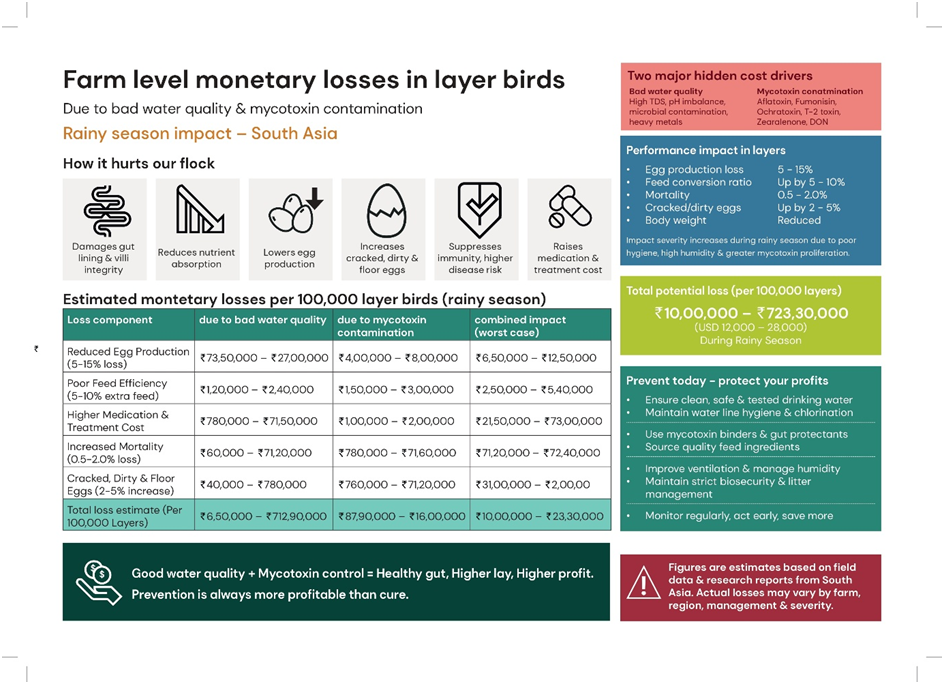
For a 100,000 capacity layer farm, rainy-season gut health problems can easily cause losses of ₹10-30 lakh (USD 12,000-36,000) over a few months through reduced egg output, increased mortality, and higher treatment costs. Across South Asia, these losses amount to hundreds of millions of dollars annually.
To do tasks to maintain water and feed quality
Table 3. Water and feed quality monitoring and corrective action to ensure feed safety
| Area | Parameter to Check | Recommended Frequency | Acceptable Range/Condition | Corrective Action |
| Water Quality | pH | Weekly | 5.5-6.7 | Acidify or adjust pH using approved water conditioners |
| Water Quality | Total Dissolved Solids (TDS) | Weekly | <500 ppm (ideal <200 ppm) | Use filtration, RO treatment if excessive |
| Water Quality | Total Bacterial Count | Monthly | As low as possible | Clean tanks, flush lines, sanitization, chlorinate, oxidation of water |
| Water Quality | Coliform Count | Monthly | Nil or minimal | Shock chlorination, sanitize pipelines |
| Water Quality | Iron (Fe) | Quarterly | <0.3 ppm | Use iron-removal systems, aeration |
| Water Quality | Manganese (Mn) | Quarterly | <0.05 ppm | Oxidation and filtration treatment |
| Water Quality | Nitrate | Quarterly | <25 ppm | Change water source or treat water |
| Water Quality | Chlorine Residual | Weekly | 2-5 ppm at drinker end | Adjust chlorinator dosage |
| Water Quality | Biofilm in Pipelines | Monthly | No visible slime | Use pipeline cleaners and sanitizers |
| Water Quality | Water Tank Cleanliness | Monthly | Clean, covered tanks | Wash and disinfect tanks regularly |
| Feed Quality | Feed Moisture | Every Feed Batch | <13% | Improve drying and storage conditions |
| Feed Quality | Mold Growth | Weekly | No visible mold | Discard affected feed immediately |
| Feed Quality | Feed Temperature | Weekly | Ambient temperature | Improve ventilation in feed storage |
| Feed Quality | Feed Odor | Weekly | Fresh odor | Remove musty or rancid feed |
| Feed Quality | Feed Storage Humidity | Daily | <70% RH | Improve warehouse ventilation |
| Feed Quality | Bag Condition | Weekly | Dry and intact | Replace damaged bags |
| Feed Quality | Mycotoxin Testing | Every batch/High-Risk Season | Below recommended limits | Use toxin binders and replace contaminated ingredients |
| Feed Quality | Stock Age | Weekly | FIFO principle* | Avoid prolonged storage |
| Feed Quality | Warehouse Leaks | Daily During Monsoon | No leakage | Repair roof and wall leak immediately |
| Feed Quality | Pest Infestation | Weekly | No rodents/insects | Implement rodent and pest control program |
*FIFO principle– meaning First In, First Out is an inventory management principle in which the oldest feed ingredients or finished feed are used first, and the newest stock is used last.
Biosecurity alterations required during the rainy season
The rainy season necessitates significant modifications to standard biosecurity programs. Water accumulation, mud, flooding, and increased movement of pathogens increase disease transmission risks.
Recommended biosecurity measures include:
- Increasing the frequency of disinfection
- Maintaining effective footbaths
- Restricting visitor access
- Preventing standing water accumulation
- Improving drainage around poultry houses
- Enhancing litter management
- Monitoring drinking water quality weekly
- Increasing sanitation of feed storage areas
- Implementing strict vehicle disinfection
Special attention should be given to farm entrances because contaminated mud can transport pathogens into poultry houses.
Importance of feed storage management during monsoon
Feed storage is one of the most critical control points for mycotoxin prevention. Feed ingredients should be dried to safe moisture levels before storage. Warehouses must remain clean, well ventilated, and protected from leaks.
Key recommendations include:
- Use pallets to elevate feed bags
- Maintain adequate airflow
- Inspect feed regularly for mold growth
- Apply approved mold inhibitors
- Follow first-in-first-out inventory management
- Avoid long-term storage during humid periods
Regular mycotoxin monitoring should be incorporated into quality assurance programs, especially for maize-based diets.
Importance of rodent control during the rainy season
Rodent populations often increase or migrate into poultry facilities during rainy periods as outdoor habitats become flooded. Rodents are important reservoirs and mechanical vectors of numerous poultry pathogens, including Salmonella and E. coli.
Rodents can:
- Contaminate feed and water
- Damage feed bags
- Spread pathogens
- Increase feed wastage
- Carry ectoparasites
A single rat can contaminate substantial quantities of feed through urine and feces. Therefore, integrated rodent management involving bait stations, environmental sanitation, structural maintenance, and regular monitoring is essential.
Importance of pest control during the rainy season
Flies, beetles, mosquitoes, and other insects thrive under humid conditions. These pests contribute to disease transmission and flock stress.Darkling beetles can harbor pathogens such as Salmonella and E. coli. Flies act as mechanical vectors of enteric diseases, while mosquitoes may contribute to the spread of various viral infections.
Effective pest management should include:
- Litter management
- Insecticide rotation programs
- Removal of spilled feed
- Proper manure handling
- Elimination of standing water
- Structural repairs to prevent pest entry
An integrated pest management program significantly reduces disease pressure and improves flock performance.
The rainy season presents a complex set of challenges for layer farms throughout South Asia. Poor drinking water quality and increased mycotoxin contamination are among the most significant factors reducing productivity and profitability. Aflatoxins, fumonisins,DON, zearalenone,ochratoxins and trichothecenes become more prevalent during wet periods, while poor storage conditions further exacerbate toxin production. Both contaminated water and mycotoxins damage gut health, impair immunity, reduce nutrient utilization, and ultimately decrease egg production and flock performance. Effective management requires rigorous water quality monitoring, feed quality assurance, mycotoxin control programs, enhanced biosecurity, and robust rodent and pest management strategies. Farms that proactively address these seasonal risks are better positioned to maintain production efficiency, bird welfare, and profitability during the monsoon period.
References
Khan MMH et al. (2005). Variation of Aflatoxin Level in Different Poultry Feeds Used in Different Poultry Farms of Bangladesh Round the Year. International Journal of Poultry Science.
Thirumala-Devi K et al. (2002). Occurrence of aflatoxins and ochratoxin A in Indian poultry feeds. Journal of Food Protection.
Parvathi D et al. (2017). Incidence of mycotoxins in poultry feeds and feed ingredients used in Warangal, India.
Jand SK et al. Observations on occurrence of poultry diseases associated with mycotoxins in feed. Indian Journal of Animal Sciences.
Kalita JJ et al. (2024). Pathology of co-contamination of mycotoxins in poultry farms of Aizawl district of Mizoram. Indian Journal of Animal Sciences.
Chahota R et al. Investigation of a severe aflatoxicosis outbreak among chicken in Himachal Pradesh. Indian Journal of Animal Sciences.
dsm-firmenich World Mycotoxin Survey 2025; Cargill Global Mycotoxin Report 2025; Kemin Feed Safety & Mycotoxin Management Resources (2025-2026).