By Sopaphan Pruekvimolphan, Technical Manager, Orffa
(Thailand) Ltd. Jolien van Soest, Global Solution Manager – Mineral Nutrition, Orffa Additives B.V., The Netherlands.
Shifting from mineral quantity to mineral quality
Although required in small amounts, trace minerals support enzyme activity, immunity, antioxidant defense, reproduction, skeletal strength, oxygen transport, hoof integrity, meat quality, and rumen metabolism. Modern poultry and ruminant nutrition is therefore shifting from mineral quantity to source quality: selecting forms that deliver minerals efficiently, with low reactivity and at the right site of action. This matters because soluble sulphates and oxides can release reactive metal ions that bind nutrients such as phytate, vitamins, enzymes, fats, amino acids, or other minerals, causing instability, oxidation, reduced enzyme efficacy, poorer palatability, and higher excretion. Superior mineral sources should combine adequate concentration with stability, controlled solubility, bioavailability, low antagonism, predictable response, and lower environmental impact. These qualities are best evaluated through four practical areas: nutrient antagonism, premix and feed stability, site of action, and economic justification.
Trace Mineral Antagonisms
Trace mineral antagonism is often overlooked but can reduce nutrient availability. Highly soluble sulphates rapidly release free copper, zinc, or iron, which may bind with phytate, calcium, fiber, sulfur, molybdenum, or other minerals. In poultry, this can reduce nutrient stability, enzyme efficacy, lipid quality, gut health, and mineral absorption. In ruminants, early copper and zinc release may disrupt microbial fermentation. Orffa in vitro data showed that sulphate and several organic sources reduced total VFA production, while hydroxy trace minerals did not, supporting their use where rumen activity is critical.
Premix and Feed Stability
Trace mineral source affects feed stability. Reactive minerals can degrade vitamins, enzymes, fats, and amino acids, reducing nutrient value. In poultry diets, free copper and iron can accelerate lipid oxidation and lower fat quality. Hydroxy Cu, Zn, and Mn reduce reactive metal release, while Orffa data showed 10% higher vitamin A and E retention after three months when Excential Smart minerals replaced sulphates. In ruminants, minerals that dissolve too early may suppress fermentation; hydroxy trace minerals maintained total VFA production better than sulphate and several organic sources.
Site of Action
The best trace mineral source depends on where the mineral needs to act. In poultry and swine, the priority is controlled release and absorption in the small intestine. HydroxyCu, Zn, and Mn help reduce early antagonism, while ferrous glycinate supports more efficient iron utilization. In ruminants, the strategy varies by mineral: hydroxy forms help protect rumen fermentation for Cu, Zn, and Mn; L-selenomethionine builds selenium reserves; and cobalt sulphate remains practical because cobalt must be available to rumen microbes for vitamin B12 synthesis.
Economic Justification
Economics should be judged by total value, not price per kilogram. More bioavailable, less reactive sources can support lower inclusion, reduced excretion, and stronger return on investment.
Why Hydroxy Cu, Zn, and Mn Are Strong Choices: Why Smart bonding matters
Hydroxy Cu, Zn, and Mn are superior sources because their crystalline structure and strong covalent bonds control solubility and reduce reactivity. This targeted release limits early interactions with phytate, vitamins, enzymes, fats, and other minerals, improving both feed stability and biological efficiency.
Orffa data show that Excential Smart C remains stable at neutral pH but progressively releases Cu at lower stomach pH, while copper sulphate stays soluble across pH conditions. By reducing Cu-phytate complex formation, it helps protect phytase activity and improve phosphorus release. Pang and Applegate (2006) also reported consistently higher phytate P hydrolysis with hydroxy copper across Cu levels, whereas hydrolysis declined significantly as Cu increased from 0 to 500 ppm in the copper chloride and copper sulphate groups.
Stability data further supports the practical value of hydroxy trace minerals. Compared with sulphate sources, Excential Smart Hydroxy Cu, Zn, and Mn improved retention of fat-soluble vitamins A by 10% after 3 months storage in premix (Figures 1). For lipid stability, reduced release of reactive metal ions helps slow oxidation. Anisidine value (AV) was measured in Orffa internal study. AV indicates secondary oxidation products such as aldehydes and ketones, which are linked to rancidity, off-flavors, reduced palatability, and lower nutrient quality. After 3-month storage, feed containing hydroxy minerals had lower AV than feed containing sulphate minerals.
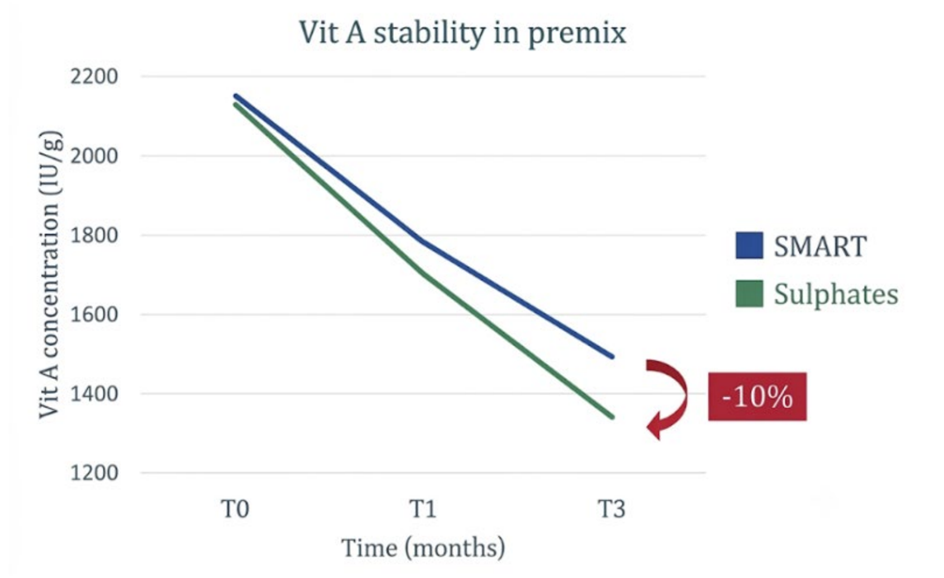
Figure 1. Vitamin A content in 2 premixes with identical composition of trace minerals from SMART hydroxy source and Inorganic source of Zn, Cu, and Mn, at 14000, 18000, and 10000 ppm, respectively, in 3 months storage duration.
For ruminants, the same low-reactivity profile supports rumen compatibility. In simulated rumen fermentation by in vitro gas production technique, hydroxy trace minerals were the only tested source that did not reduce total volatile fatty acid (VFA) production, whereas sulphate and several organic sources reduced fermentation indicators (Figure 2). This makes hydroxy trace minerals especially valuable when the goal is to meet mineral requirements while protecting microbial fermentation.
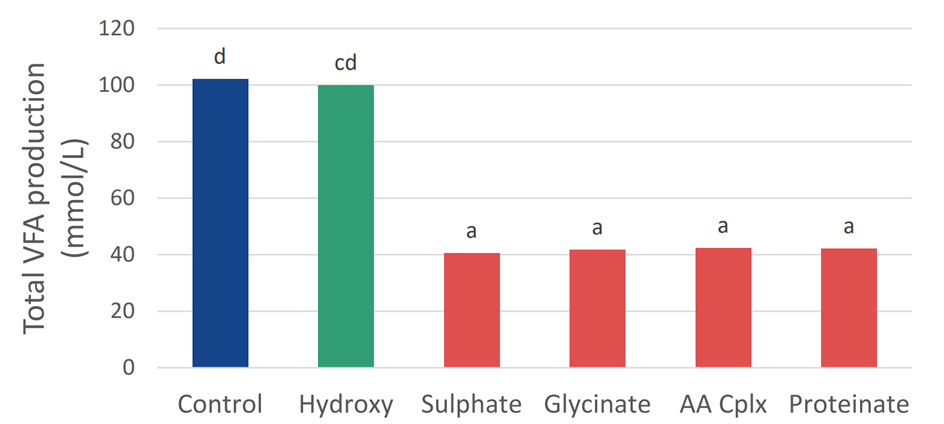
Figure 2. Total VFA production in the rumen with different trace mineral sources (Orffa internal study). Means with different superscripts differ significantly (P < 0.05). Source: The XIIIth International Symposium on Ruminant Physiology (ISRP 2019).
Overall, hydroxy Cu, Zn, and Mn are precision mineral sources that combine stable bonding, low neutral-pH reactivity, and controlled digestive release to protect sensitive nutrients, reduce antagonism, preserve feed and premix quality, and improve targeted mineral delivery.
Selenium: Why L-Selenomethionine Is the Preferred Source
Selenium should be viewed differently from Cu, Zn, and Mn because its value depends on metabolic form, not only solubility. L-selenomethionine (L-SeMet) is the preferred source because it follows the methionine pathway and can be incorporated directly into body proteins, eggs, milk, and meat. This creates a functional selenium reserve that animals can use during stress, reproduction, immune challenge, or reduced feed intake.
Not all organic selenium is the same. Selenium yeast varies considerably in L-SeMet content even between products and production batches. Under EU specification, selenium yeast should contain at least 63% of total Se as SeMet, yet in practice many selenium yeast products fall below this benchmark. Hydroxy-selenomethionine (OH-SeMet) must first be converted into L-SeMet before it can be incorporated into animal proteins. Scientific studies report conversion of around 80% or lower if liver health has been compromised.
A study by Federal University of Lavras in Brazil with Cobb 500 broiler breeders, Excential Selenium 4000 was compared with sodium selenite, selenium yeast, and OH-SeMet after 84 days of feeding, with eggs collected at week 39. Excential Selenium 4000 improved breeder performance (Figure 3), including egg production, fertility, hatchability, sperm motility, and sperm viability, and increased selenium deposition in eggs and day-old chicks in a dosedependent manner. Importantly, Excential Selenium 4000 at 0.175 ppm Se, or half the selenium yeast dose (0.350 ppm Se), achieved a comparable deposition response, demonstrating the efficiency of direct 100% L-SeMet delivery. Offsprings of Excential Selenium 4000 group showed stronger antioxidant status, antioxidant enzyme activity, and better early weight gain during the first three weeks.
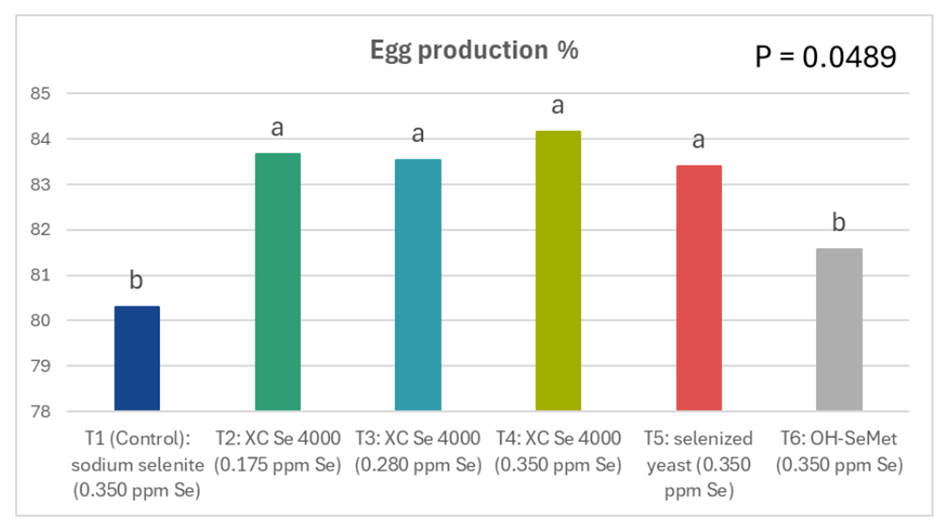
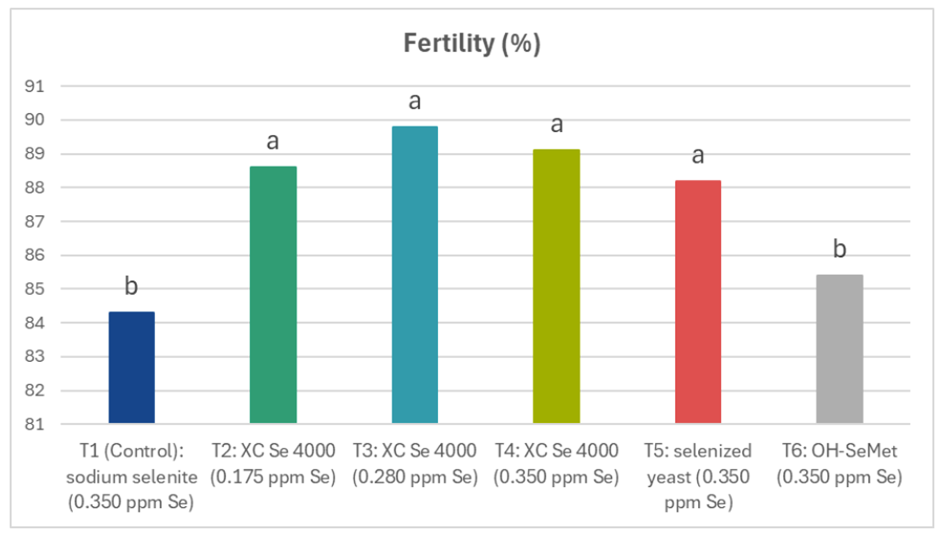
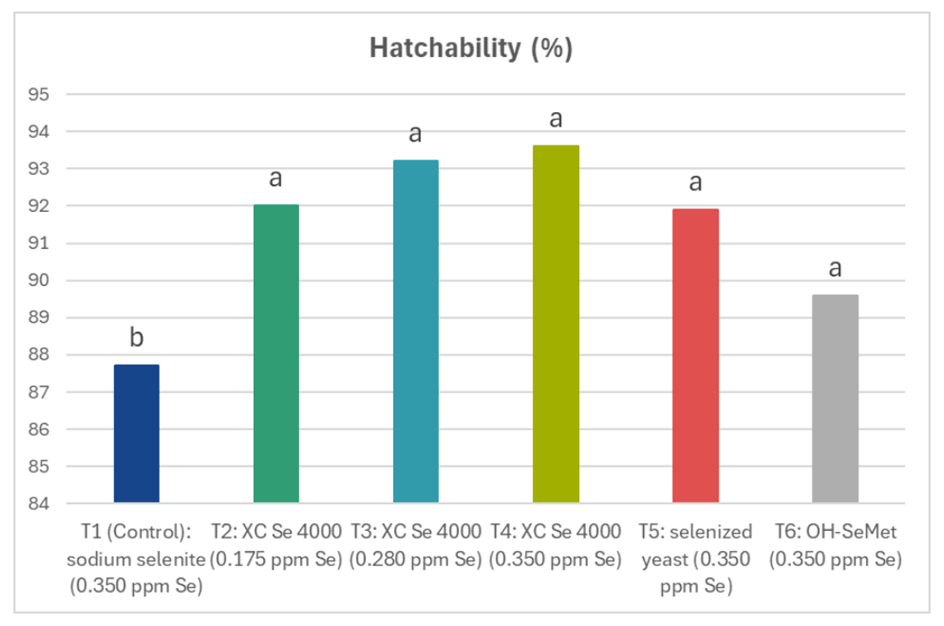
Figure 3. Effect of selenium source and concentration on female broiler breeder performance.
In ruminants, L-SeMet also improved meat tenderness in bull calves and showed positive trends for growth, feed efficiency, and carcass weight in sheep, supporting its role in selenium reserves, antioxidant protection, reproductive transfer, meat quality, and performance.
In short, L-SeMet is the most precise and bioavailable selenium source when the goal is to build reliable selenium reserves and improve selenium transfer into animal tissues and products. This supports more predictable deposition, stronger antioxidant capacity, improved reproductive transfer, and consistent biological responses across species.
Ferrous Glycinate: Efficient Iron Delivery
Iron is essential for hemoglobin and myoglobin formation, oxygen transport, energy metabolism, immunity, enzyme activity, growth, and skeletal development, making source efficiency especially important in fast-growing broilers, young calves, and diets with high antagonistic pressure.
Ferrous glycinate (Fe-Gly) is a precision iron source in which glycine binding helps keep iron stable before absorption while allowing efficient release and uptake at the target site. By improving iron delivery and limiting reactive free iron in the intestinal lumen, it supports gut compatibility, feed stability, and reduced mineral waste.
Broiler study (Kwiatkowska et al., 2018) tested whether Fe-Gly could maintain broiler tibia quality at lower iron levels than the Ross 308 recommendation. In a 42-day trial, 200 male broilers received 40 mg Fe/kg as ferrous sulphate or Fe-Gly, or reduced Fe-Gly at 20 or 10 mg Fe/kg. Tibia traits, strength, geometry, cortical properties, and mineral composition in both reduced Fe-Gly groups were maintained or improved versus ferrous sulphate, suggesting that lower Fe-Gly inclusion may be sufficient because of higher bioavailability.
Overall, ferrous glycinate is one of the best iron-source options when efficient iron utilization, lower gut reactivity, and reduced mineral excretion are priorities.
Potassium Iodate: A Reliable and Stable Source of Iodine
Iodine is essential for thyroid hormone synthesis, supporting metabolism, thermoregulation, growth, reproduction, and productivity. In poultry, it supports thyroid activity, feed efficiency, hatchability, and iodine deposition; in ruminants, it supports fertility, milk production, fetal development, and calf vitality. Because requirements are low, but deficiency risks are serious, iodine must be supplied in a stable form.
Potassium iodate (KIO₃) is preferred because its oxidized form is more stable than iodide sources under air, humidity, heat, trace minerals, and reactive premix conditions. This helps preserve iodine during storage, pelleting, transport, and feeding. After ingestion, iodate is converted to iodide for thyroid hormone synthesis, so its main advantage is protecting iodine before it reaches the animal. Compared with potassium iodide, it offers stronger storage stability; compared with calcium iodate, it provides the same iodate concept with a different carrier and good premix compatibility.
Overall, potassium iodate is a reliable iodine source for precise poultry and ruminant supplementation, especially where premix complexity, goitrogenic pressure, or storage conditions require consistent iodine delivery.
Cobalt Sulphate: A Practical Cobalt Source for Rumen Vitamin B12Synthesis
Cobalt requires a different nutritional logic from most trace minerals. In poultry, cobalt itself is less central when vitamin B12 is supplied directly. In ruminants, however, cobalt is essential because rumen microbes use it to synthesize vitamin B12, which supports propionate metabolism, glucose formation, protein metabolism, appetite, growth, reproduction, immunity, and milk production. Inadequate cobalt may lead to poor intake, weak growth, anemia, fertility problems, and lower productivity.
Specifically for rumen conditions, Cobalt sulphate is a practical ruminant source because it is soluble, rumen-available, and cost-effective. Compared with cobalt carbonate, it is more readily available in rumen fluid; compared with organic cobalt, it often delivers similar practical outcomes at lower cost when cobalt supply is adequate.
In ruminants, Raths et al. (2023) found similar growth and carcass responses among inorganic and organic cobalt sources when cobalt was sufficiently supplied, suggesting source differences may be small under adequate nutrition.
Overall, cobalt sulphate is preferred in ruminants for rumen microbial vitamin B12 synthesis. Its value lies in rumen availability and cost efficiency.