In most animal species, the purpose of bone is primarily for structural support, as well as forming a complex reservoir for minerals, such as calcium and phosphorous However, in the case of avian species, the additional requirement for eggshell formation necessitates greater mobilization of calcium reserves beyond levels provided by the diet. In fact, early studies showed that while approximately 60 to 75% of the calcium destined for the shell comes directly from intestinal absorption.up to 36% could be traced to bones.
This bone source is critical since shell calcification occurs during the scotophase, also known as the dark period, when the hen is not feeding. Since the calcium storage capacity will influence the reproductive efficiency of the adult, proper skeletal development is integral during pullet growth. This should be achieved prior to sexual maturation, with long bones reaching their maximum length and cortical bone reaching optimal thickness This should be achieved prior to sexual maturation, with long bones reaching their maximum length and cortical bone reaching optimal thickness. Upon activation of the reproductive axis and in preparation for the laying cycle, increasing estradiol 17-beta (E2) concentrations shift the activity of osteoblasts toward the formation of medullary bone, with cortical bone accumulation terminated.
Skeletal Health
Skeletal health and egg production in laying hens are biologically linked, as a hen’s skeleton acts as the primary metabolic reservoir for the calcium required to build eggshells. A modern high-performing layer uses about 10% of her total body calcium to produce a single eggshell. When dietary calcium is insufficient during the overnight shelling process, the hen must dissolve her own bones to maintain production, directly creating a balancing act between skeletal integrity and egg output.
The Three Bone Types in Laying Hens
To balance structure and production, a hen’s skeleton consists of three distinct bone types, as detailed in research:
- Cortical Bone: The hard, dense outer layer of long bones (like the femur) providing structural strength.
- Trabecular Bone: The internal, honeycombed structural network that reinforces cortical bone from the inside.
- Medullary Bone: A unique, highly vascularised spongy bone that forms inside marrow cavities about 10–14 days before the first egg is laid. It functions strictly as a fast-mobilising calcium reserve for eggshell creation.
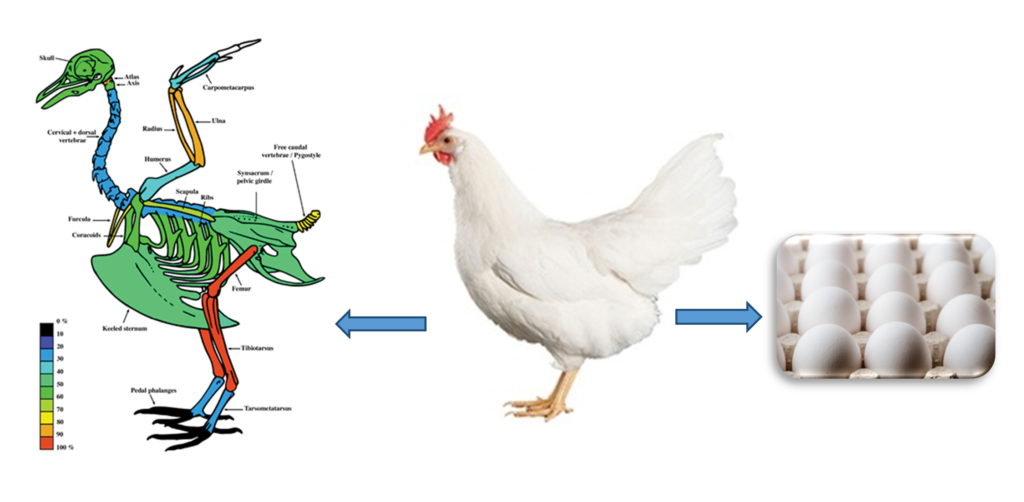
Fig:1.Distribution and prevalence of medullary bone in the different regions of the avian skeleton. Calcium is required for both egg production and bone Skeleton(Source: British Poultry Science Volume 66, 2025 – Issue 6)
The Calcium Trade-Off
Each eggshell requires roughly 2 grams of calcium, which can represent over 10% of the hen’s total body calcium.
| Aspect | Calcium Sourcing & Impact |
| Dietary Reabsorption | Around 60% of the eggshell calcium comes directly from daily feed intake. |
| Skeletal Mobilisation | The remaining 40% is drawn directly from the medullary bone. This process accelerates at night when the hen is not eating but shell calcification is peaking. |
| The Risk of Exhaustion | If dietary calcium is insufficient or if the hen has a high peak production rate, the body continuously resorbs structural bone alongside medullary bone. Over time, this leads to progressive structural loss, cortical porosity, and thinning. |
Biology of Calcium Mobilisation
An average eggshell requires roughly 2 to 2.5 grams of calcium.
- Daytime Production: When the hen is eating during the day, approximately 60% to 75% of the shell’s calcium comes directly from intestinal absorption of her feed.
- Nighttime Production: Eggshell calcification predominantly occurs during the dark period (scotophase) when the hen is asleep and not eating. To finish the shell, the hen’s body secretes organic acids to resorb up to 30% to 40% of the required calcium directly from her medullary bones.
- The Cycle: The next day, the hen replenishes this bone marrow reservoir through dietary intake before the next shelling cycle begins.
What Happens When Balance Fails?
If the daily drain of calcium outweighs structural recovery, the hen enters a state of negative mineral balance, resulting in several clinical and economic problems:
| Condition / Issue | Cause | Core Impact on Hen & Production |
| Osteoporosis | Chronic structural bone resorption surpassing regeneration. | Brittle, highly porous bones prone to fractures, particularly in cage-free aviaries due to impacts. |
| Cage Layer Fatigue | Extreme calcium depletion pulling minerals from long bones. | Paralysis due to spinal cord compression; hens collapse in their enclosures. |
| Keel Bone Deformities | High metabolic demand coupled with physical pressure from perches. | Twisted or fractured breastbone, leading to severe chronic pain and reduced mobility. |
| Drop in Egg Quality & Volume | Exhausted skeletal reserves. | High percentage of cracked, thin, soft-shelled, or unmarketable eggs. |
Management Strategies for Optimal Balance
According to Hy-Line Internationaland related poultry studies, maintaining this balance requires specialized care across the flock’s lifecycle:
1. Pullet and Pre-Lay Management
- Build Reserves Early: Long bones must reach maximum length and cortical thickness before sexual maturity (by week 15).
- Pre-Lay Rations: Switch to a pre-lay diet with 2.0% to 2.5% calcium roughly 10–14 days before the first egg. This builds a thick medullary reserve without overloading immature kidneys.
2.Nutritional and Management Strategies
- Balanced minerals: Feed a precise ratio of calcium, phosphorus, and vitamin D3.
- Particle size: Combine fine and coarse calcium sources to ensure a steady mineral supply during overnight eggshell calcification.
- Early monitoring: Track body weight, uniformity, and keel bone integrity starting from the pullet rearing phase
Phase-by-Phase Nutritional Requirements
The table below highlights how macronutrient concentrations must shift to safeguard the skeleton as the hen ages:
| Production Phase (Age in Weeks) | Target Crude Protein (%) | Calcium / Ca (%) | Available Phosphorus (%) | Metabolizable Energy (kcal/kg) |
| Pre-Lay (Weeks 16–18) | 16.0% – 17.0% | 2.0% – 2.5% | 0.40% – 0.45% | ~2,750 |
| Phase 1: Peak (Weeks 19–35) | 17.5% – 18.0% | 3.5% – 4.0% | 0.40% – 0.45% | ~2,850 |
| Phase 2: Post-Peak (Weeks 36–60) | 15.5% – 16.5% | 3.8% – 4.2% | 0.38% – 0.42% | ~2,800 |
| Phase 3: Late-Lay (Weeks 60+) | 14.5% – 15.5% | 4.2% – 4.5% | 0.32% – 0.35% | ~2,750 |
- The Pre-Lay Bridge: Jumping straight from a grower diet (0.9% calcium) to a peak layer diet (4% calcium) shocks a hen’s system. The pre-lay diet safely signals her endocrine system to begin building medullary bone reserves without causing kidney damage or a drop in feed intake.
- The Phosphorus Drop: While calcium increases in the Late-Lay phase to account for poor absorption, available phosphorus must be lowered. High blood phosphorus levels chemically inhibit the mobilization of calcium from the bone, which reduces eggshell quality.
3. Particle Size Matters
- Large Particle Calcium: Provide at least 60% to 70% of dietary calcium as large particles (2–4 mm limestone or oyster shells). Large particles dissolve slowly in the gizzard, providing a steady release of calcium overnight, protecting the bones from being heavily raided.
- Weeks 19 to 35:30% Fine limestone / 70% Coarse limestone or oyster shell.
- Weeks 36 to 60:25% Fine / 75% Coarse.
- Weeks 60+:20% Fine / 80% Coarse (ensuring maximum overnight availability to protect deteriorating bones).
4. Nutrient Co-Factors
- Vitamin D3 & Phosphorus: Calcium cannot be absorbed without Vitamin D3. Ensure available phosphorus levels are precisely balanced; too much or too little phosphorus disrupts calcium absorption and damages bone integrity.
5. Housing Adaptations
- Exercise Support: In cage-free or aviary setups, hens experience better bone density due to movement, but are at a higher risk for keel bone fractures. Ensure ramps and resting perches are ergonomically designed to reduce high-impact collisions.
- Would you like to focus on specific dietary formulations (calcium to phosphorus ratios), explore genetic strains optimized for skeletal strength, or look into managing extended laying cycles (past 90 weeks)?
ConclusionLaying hens require vast amounts of calcium for eggshell production, which directly depletes their skeletal reserves and often leads to severe osteoporosis and fractures over extended laying cycles.