Bharat L Sadarao, Venket M Shelke, Partha P Das, and R Chanthirasekaran
Kemin Industries South Asia Pvt. Ltd., Chennai, India
Water Acidification in Broiler Production
In poultry production, water is the most important nutrient, as a chicken’s body is composed of 70% water. Even if 10% of that water is lost, the bird would die1. In normal environmental conditions, poultry typically drink twice as much water as they feed, and their consumption rises linearly as the temperature rises above normal. Therefore, it is vital to ensure that poultry flocks have access to adequate amounts of clean, drinkable water throughout their rearing period to maintain their health and prevent issues related to poor water quality.
Organic acids, referred to as acidifiers, have been shown to reduce the pH levels in the gastrointestinal tract of birds. This alteration creates an unfavorable environment for the proliferation of pathogenic, pH-sensitive bacteria while simultaneously fostering the growth of beneficial microorganisms such as Lactobacillus spp. and Bifidobacterium spp.2,3. Additionally, a lower pH also increases the gastric enzymes’ proteolytic activity, which ultimately improves the absorption and digestion of nutrients4,5,2. Therefore, the application of acidifiers through drinking water not only ensures hygienic conditions within the water but also contributes to enhanced performance metrics in poultry.
In the present trial, we compared Kemin’s AcidLAC™ W Conc. Liquid (Treatment) against a competitor acidifier product (Control)to assess its efficacy in enhancing water quality. AcidLAC™ W Conc. Liquid is a blend of several organic acids and quaternary ammonium compounds (QAC) that functions as a dual agent for both water acidification and sanitation. A competitor product was kept as control had a combination of buffered organic acids, oxine copper, and essential oils, which is utilized to reduce pathogenic bacterial and fungal loads in the drinking water for poultry.
Objective of the Trial
The objective of the present trial was to assess the impact of two commercial water acidifiers, which contain a blend of organic acids, on the performance, productivity, and survival rates of broiler chickens.
Materials and Methods
A field trial was conducted in the Southern part of India in a commercial broiler farm with a capacity of 15,162 birds (VENCOBB Breed) divided into two sheds. Birds were placed in two different sheds with an open-sided house with a mud floor under the same natural environmental conditions. Two groups were maintained for water acidification, via. Control and treatment groups. The control group contains a competitor company product of water acidifier, having a combination of buffered organic acids, oxine copper, along with essential oils, whereas the treatment group consists of AcidLAC™ W Conc. Liquid (Kemin Industries South Asia Pvt. Ltd.), having a combination of different organic acids and quaternary ammonium compounds (QAC). The details of the trial are given in Table 1. The farm was chosen in response to a request from the customer to demonstrate the financial advantages of commercially available water acidifier solutions. The experiment lasted 35 days in total, beginning on the 1st and ending on the 35th day of the birds’ age. The water was treated with the products mentioned throughout the trial continuously for 12 hours per day. Each shed was provided with a separate water tank for mixing the water acidifiers. The dosage of products in this study for water acidification was based on the manufacturer’s recommendations.
Table 1: Details of the field trial and the product dosages of experimental groups
| Groups | Dosage | Treatment Days | No. of Chicks |
| Control | 1mL in 5L of drinking water | 0-35 days | 5,879 |
| Treatment | 1mL in 4L of drinking water | 0-35 days | 9,283 |
Poultry pellet feed was provided by the integrator company; it was a starter ration till 14 days old, then a grower ration till 28 days old, and finally, a finisher ration till the end of the experiment. Feed was continuously offered ad libitum daily, as the water intake was calculated at the end of the trial period, amounting to 2.5 times the weight of the total feed intake. At 35 days of age, the data from the records of body weight (g), mortality (%), and accumulated feed consumption (g) were summarized and calculated for feed conversion ratio (FCR), corrected feed conversion ratio (CFCR), European efficiency factor (EEF), and economic efficiency. Economic efficiency in terms of return on investment (RoI) was calculated for the treatment groups, and relative cost advantage/disadvantage over treatments was determined.
RESULTS
Performance results of the trial data collected during the trial period from both the control and treatment groups are presented below.
Body Weight Gain
The average body weight of broiler birds treated with water acidifier from the control vs treatment group is given in Figure 1. For the total trial period of 35 days, the treatment group AcidLAC™ W Conc. Liquid had a higher average body weight of 150g when compared to the control group.
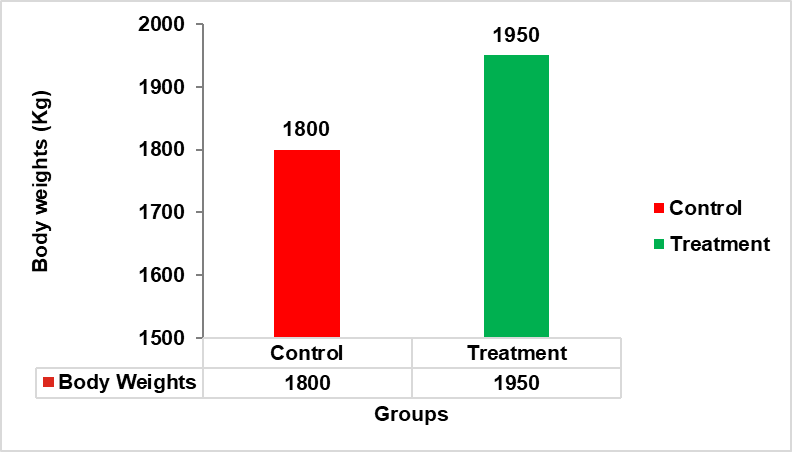
Figure 1: Effect of trial groups on live body weights of broiler birds.
Mortality Rate
Cumulative mortality data in the broiler were collected daily during the trial (Figure 2). At the end of the trial, the treatment group recorded a mortality rate of 5.73%, over 11.21% of the control group. It shows a 5.48% cumulative mortality reduction in the AcidLAC™ W Conc. Liquid treatment group than the control group during the entire trial period. The total mortality of birds in the control and treatment groups was 659 and 532, respectively.
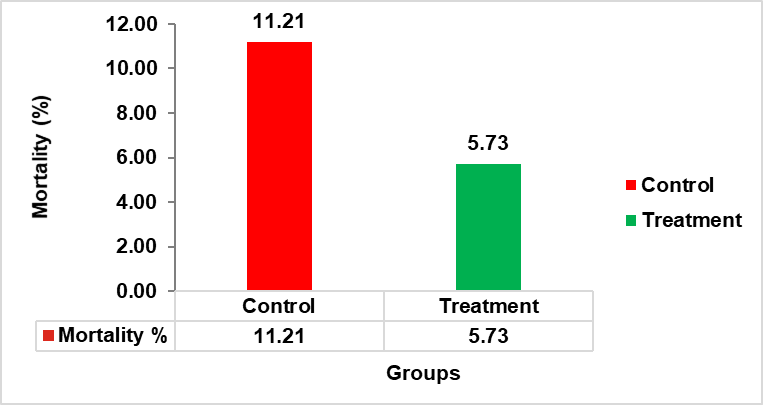
Figure 2: Effect of trial groups on the mortality percentage of broiler birds.
Feed Conversion Ratio (FCR) and Corrected Feed Conversion Ratio (CFCR)
The feed conversion ratio (FCR) of the AcidLAC™ W Conc Liquid treatment group showed 11-points improvement over the control group (Figure 3). It was noticeable that the continuous use of AcidLAC™ W Conc. Liquid in the treatment group showed a 15-point improvement in the corrected feed conversion ratio (CFCR) compared to the control group. (Figure 3).
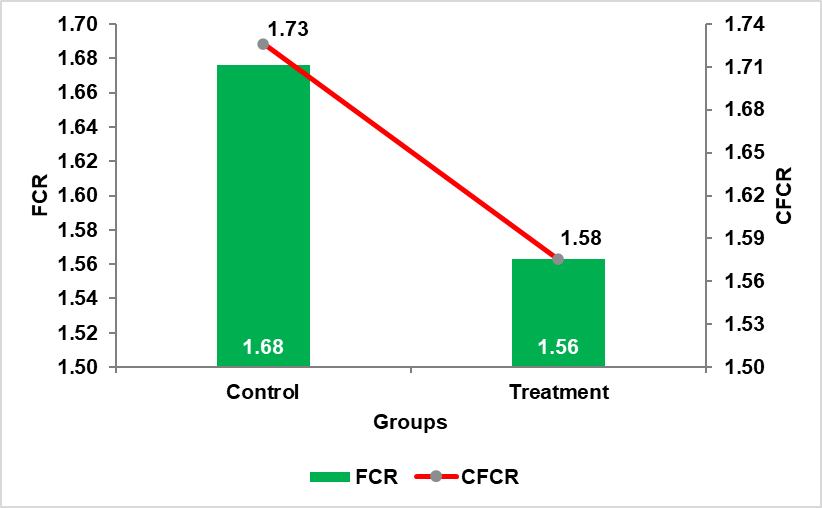
Figures 3: Effect of trial groups on FCR and CFCR of broiler birds.
European efficiency factor (EEF):
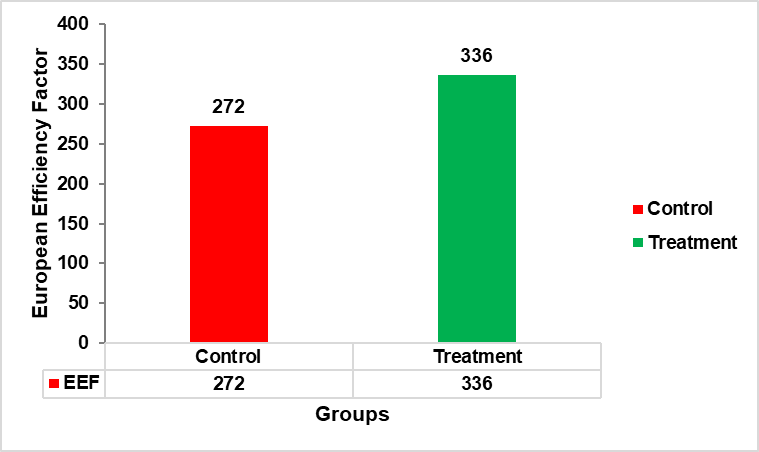
Figure 4: European Efficiency Factor.
Return on Investment (ROI)
In economic terms, the cost of production expressed per live broiler bird produced was lower by 9 rupees 11 paise (INR 9.11) in the treatment group than in the control group, which demonstrated a return on investment (ROI) of 16:1 in favour of the treatment group (Table 2).
Table 2: Economic benefits and ROI of AcidLAC™ W Conc. Liquid.
| Parameters | Control | Treatment |
| Chicks placed | 5879 | 9283 |
| Mortality (%) | 11.21 | 5.73 |
| Total birds remaining (Number) | 5220 | 8751 |
| Average body weight (kg) | 1.800 | 1.950 |
| Average feed consumed (kg) | 3017 | 3048 |
| Total feed consumed (kg) | 17737 | 28295 |
| FCR | 1.68 | 1.56 |
| CFCR | 1.73 | 1.58 |
| Day-old chick cost (INR) | 45 | 45 |
| Feed per kg (INR) | 38 | 38 |
| Total water consumption (2.5 x Feed) (L) | 44342 | 70736 |
| Total cost of water acidification (INR) | 2528 | 5040 |
| Water acidification cost per bird (INR) | 0.48 | 0.58 |
| Production cost per broiler bird (INR) | 180.28 | 171.18 |
| Net Profit (INR) | – | 79703 |
| ROI | 16:1 |
DISCUSSION
In this trial, we observed an improvement in the survival rate, body weight gain, and FCR with a decrease in production cost per broiler bird produced that received AcidLAC™ W Conc. Liquid as a treatment compared to control group. The positive outcomes in survival rate and growth performance associated with the use of acidified drinking water treatment group containing AcidLAC™ W Conc. Liquid may be attributed to the establishment of a healthier intestinal environment for the chickens, in contrast to the effects of drinking water treated with the control group. It is well-documented that drinking water supplemented with organic acids can prevent bacterial infections and have the potential to reduce bacterial colonization within the gut of poultry6,7. Furthermore, the presence of DDAC in AcidLAC™ W Conc. Liquid acts as a membrane-active agent capable of diffusing through the bacterial cell wall and disrupting the cytoplasmic membrane, causing leakage of intracellular material that leads to cell death8.
Additionally, improved FCR performance in the AcidLAC™ W Conc. Liquid treatment group may be associated with an enhancement in nutrient digestibility, as organic acid supplementation has a beneficial effect on the ileal digestibility of nutrients9. The overall improvement in livability and FCR in the AcidLAC™ W Conc. Liquid treatment group resulted in a final output of body weight gain, accompanied by better economic returns at the end of the trial period. Acidification of the drinking water with AcidLAC™ W Conc. Liquid has previously been shown to have a positive effect on water quality and growth performance in broilers, supporting outcomes of the present study10,11,12,13.
Above all, the results from the present trial reveal that the efficacy of organic acids in maintaining feed and water quality is attributed to their ability to prevent microbial and fungal contamination or degradation14.
CONCLUSION
In conclusion, the acidification of drinking water using AcidLAC™ W Conc. Liquid for broilers demonstrates positive effects on birds’ performance and represents a cost-effective strategy for enhancing production metrics. In tropical regions, AcidLAC™ W Conc. Liquid could play a crucial role in ensuring the hygiene of drinking water and mitigating pathogen loads, thereby demonstrating substantial potential as a key element of an effective biosecurity program.
References are available upon request.