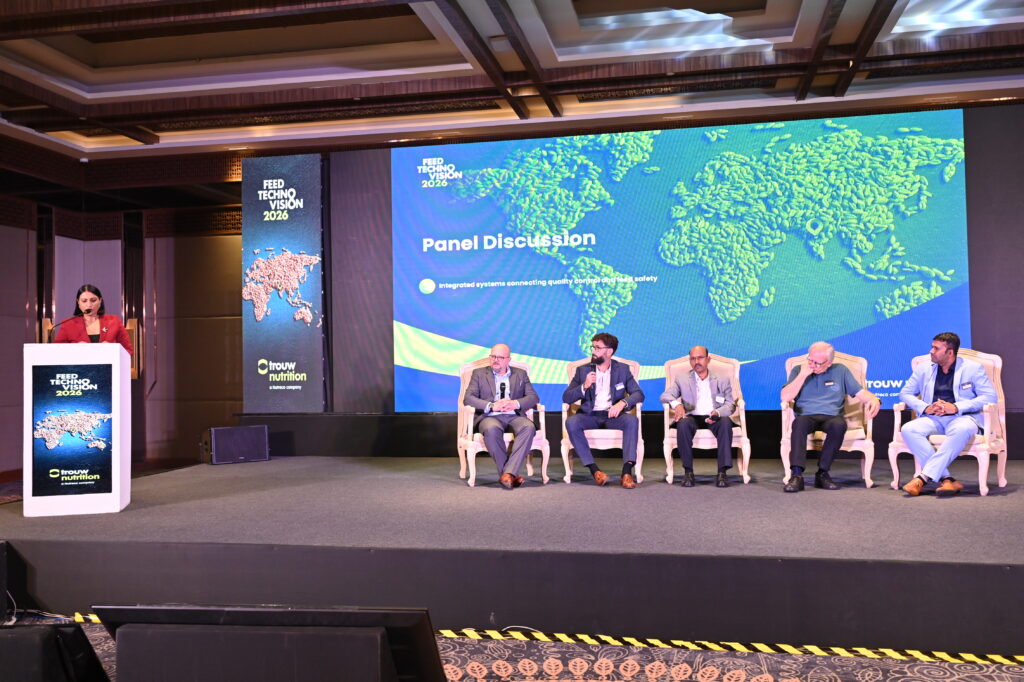
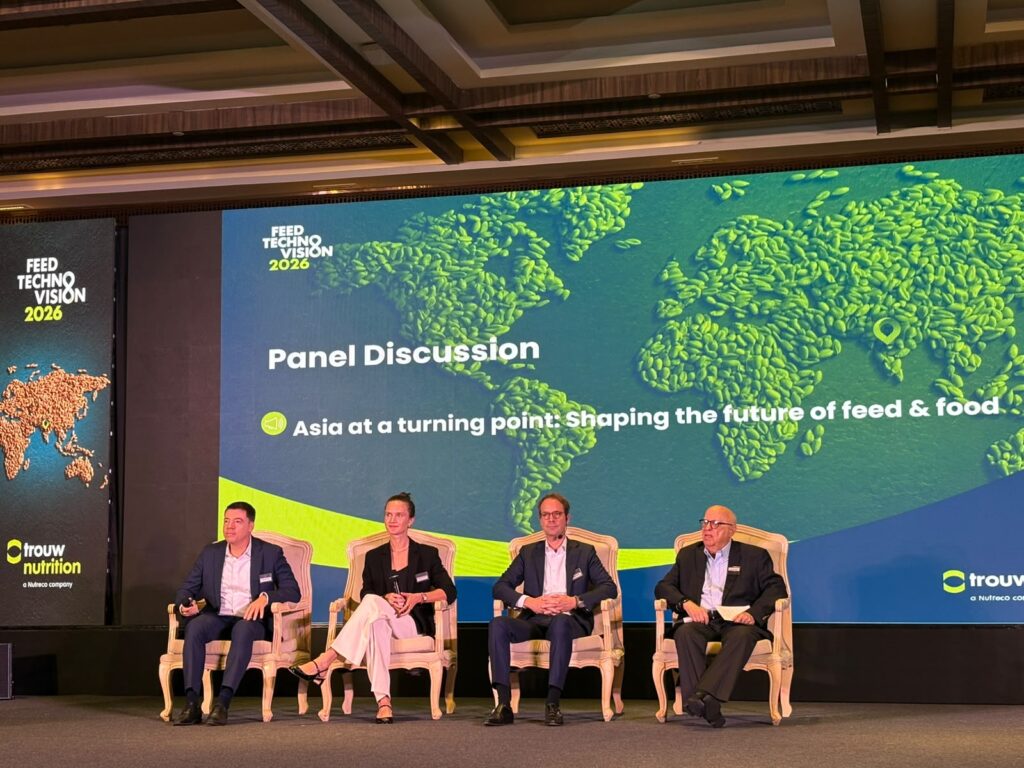
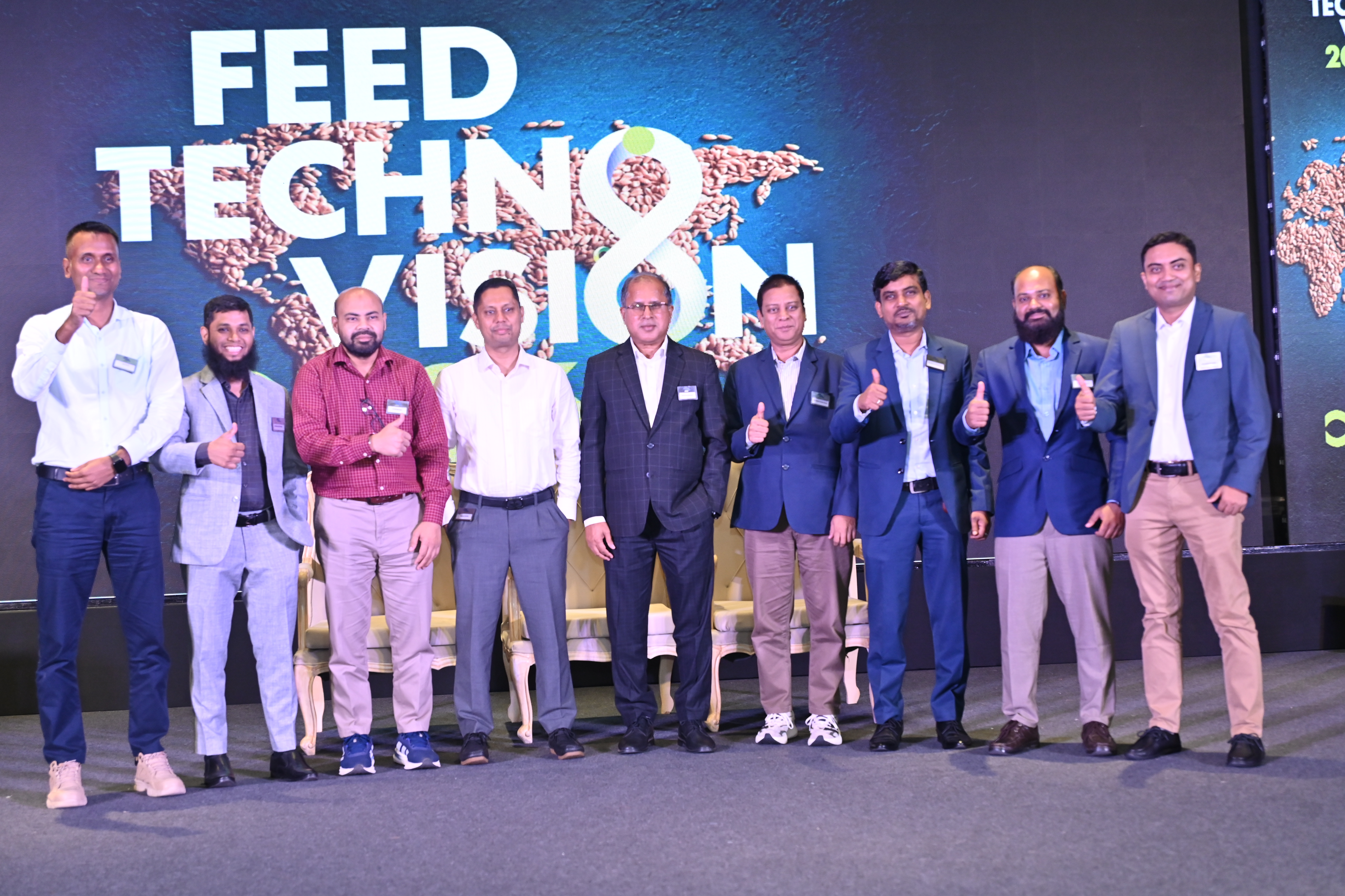
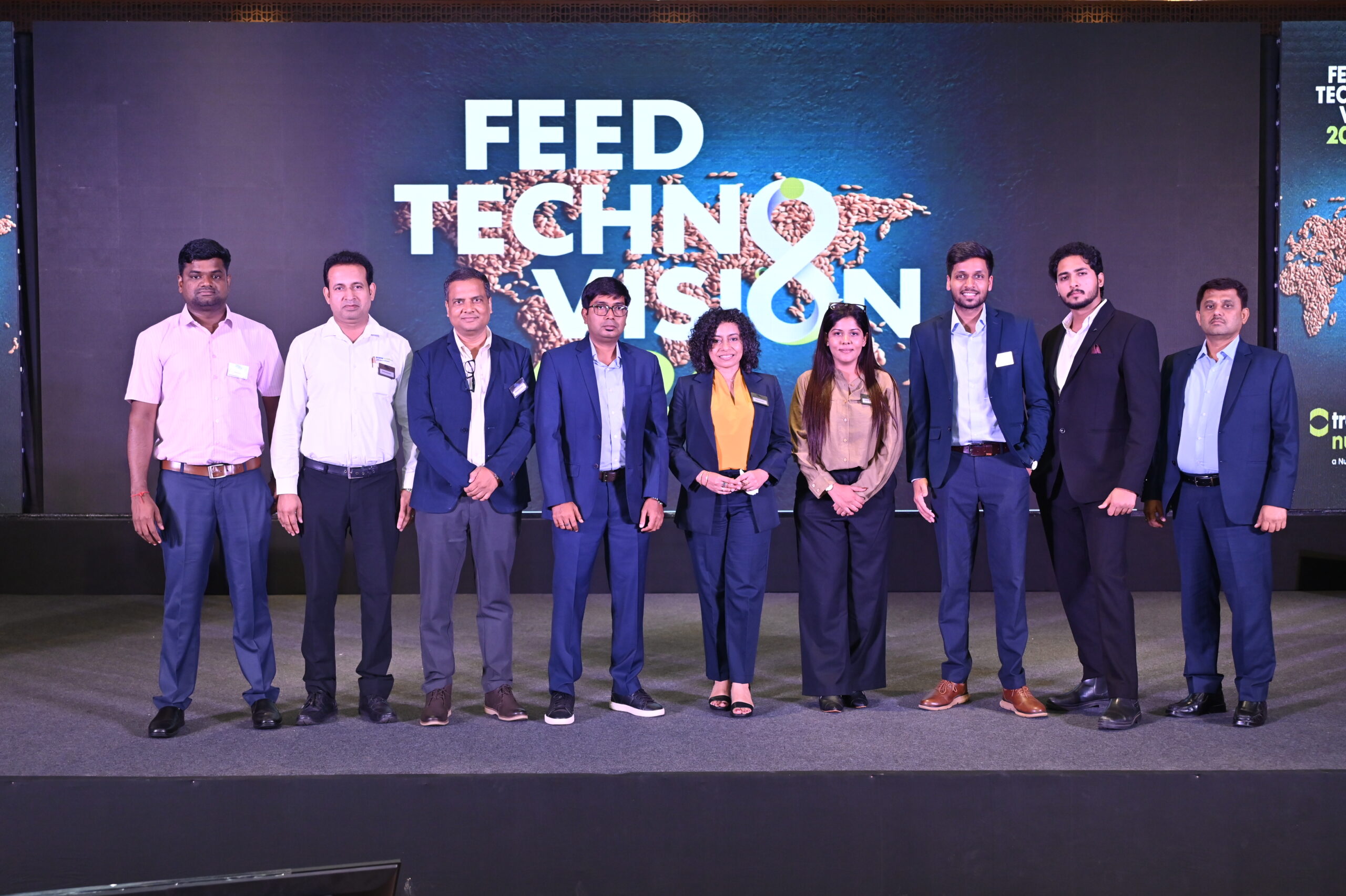
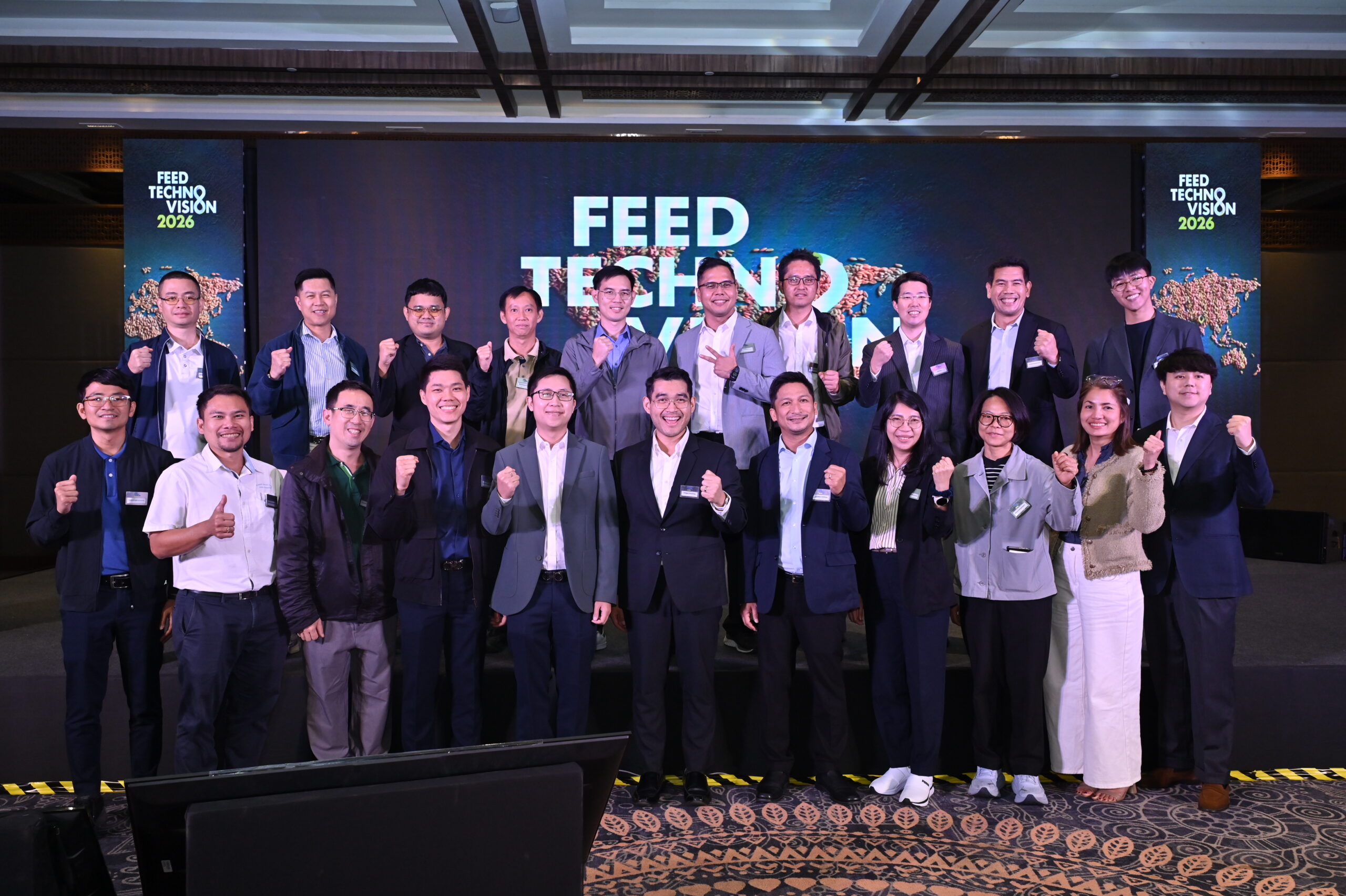
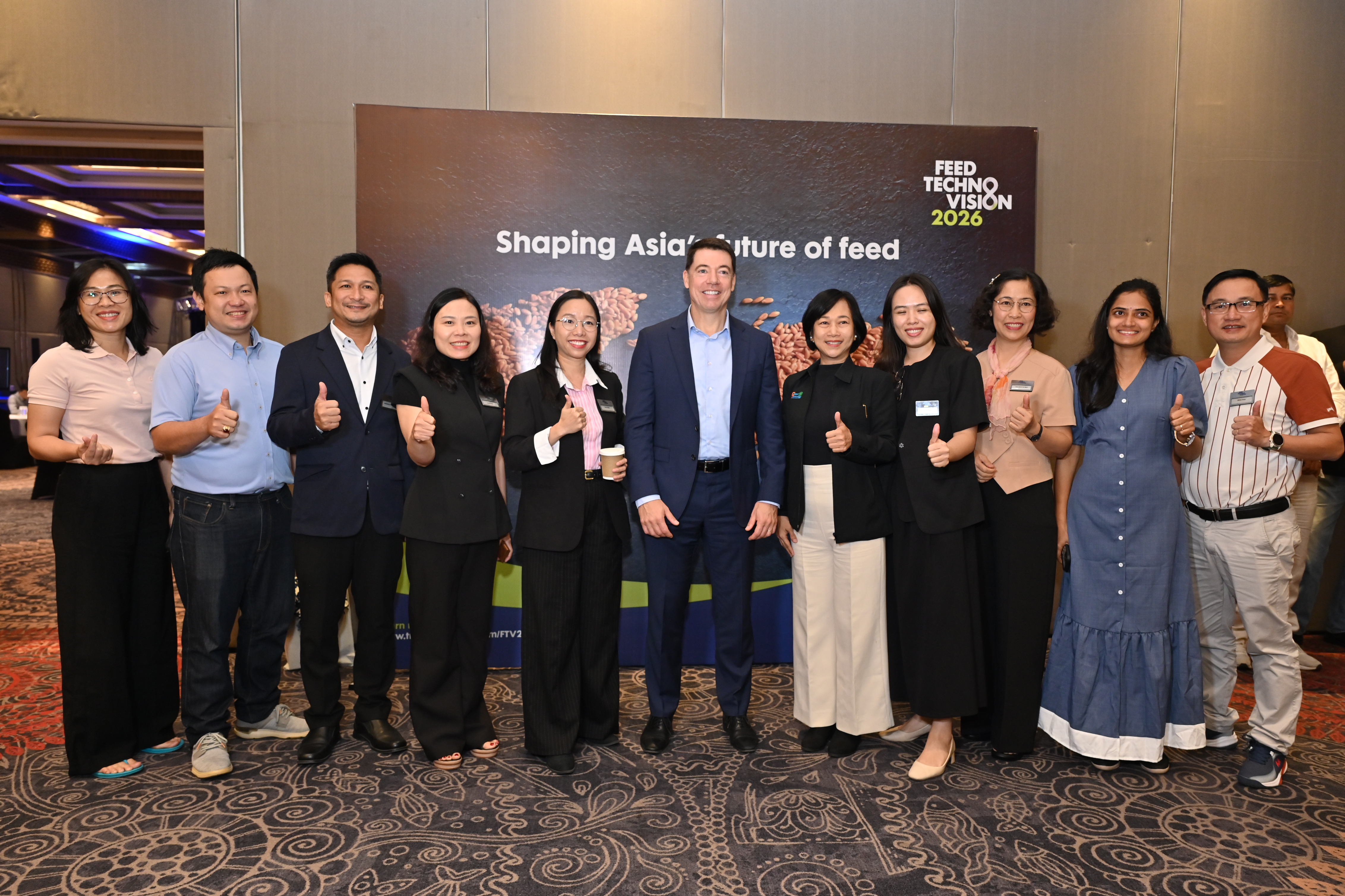
FeedTechnoVision 2026, presented by Trouw Nutrition, Nutreco’s livestock feed business, convened 180 feed industry stakeholders in Jaipur, India, 29-30 September. During the annual event, presentations and panel discussions including global feed industry experts explored the challenges and opportunities confronting Asia’s feed sector. Following are five take home messages from FeedTechnoVision 2026.
1. Asia’s opportunity: Collaborate across the feed-to-food chain to drive growth.
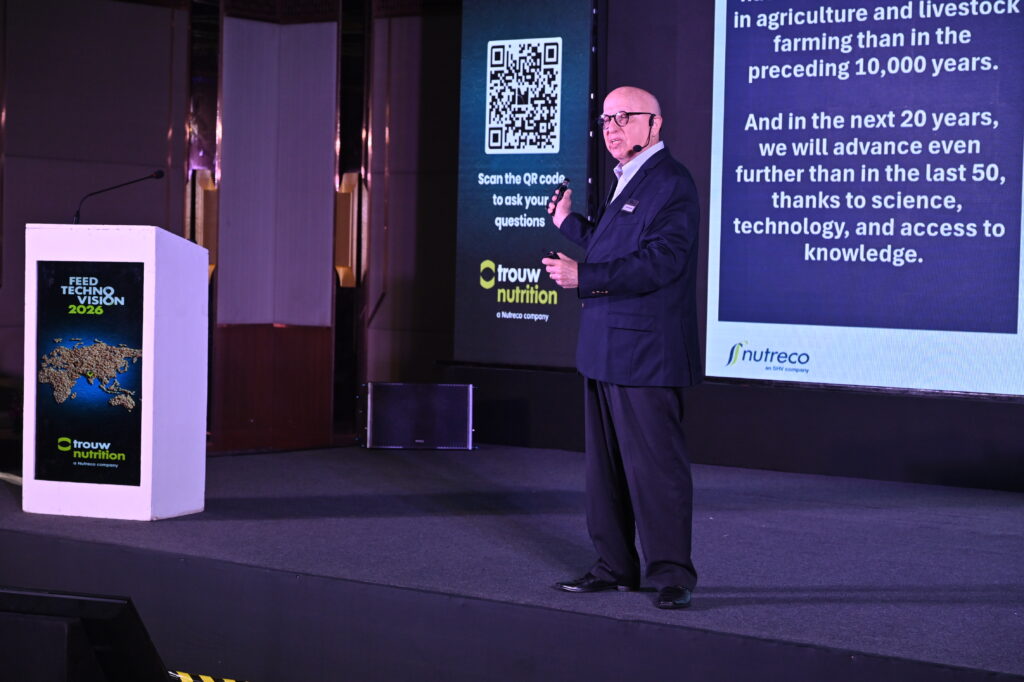
International agri-food strategist Osler Desouzart opened FeedTechnoVision 2026 by sharing his insights from his work in South America, and Brazil’s emergence as the world’s largest poultry exporter. Challenges facing Asia’s feed-to-food chain include massive variability in raw materials and production processes, and a digital revolution that is still underway. Desouzart emphasized that feed industry stakeholders must work together to achieve more predictable, safe and efficient outcomes. He challenged the industry to improve collaboration among feed manufacturers, suppliers, academia, regulators, and other stakeholders. “Hunt in a pack and defend as a pack,” Desouzart advised, noting that collaboration can help increase the value of the entire Asian feed sector.
2. Raw material variability can be transformed into predictable animal performance.
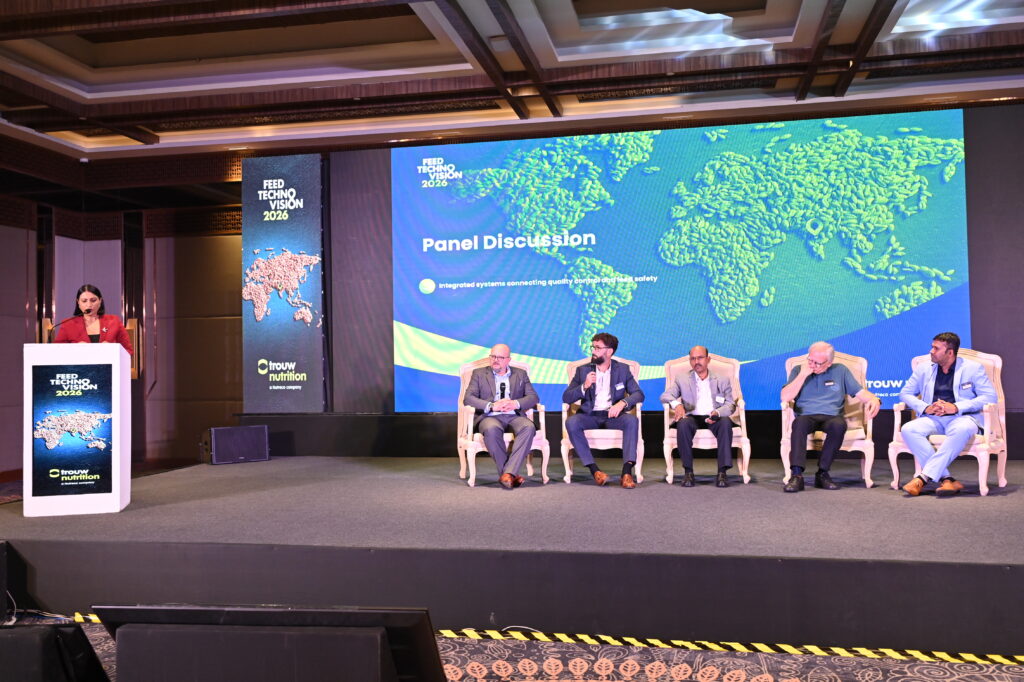
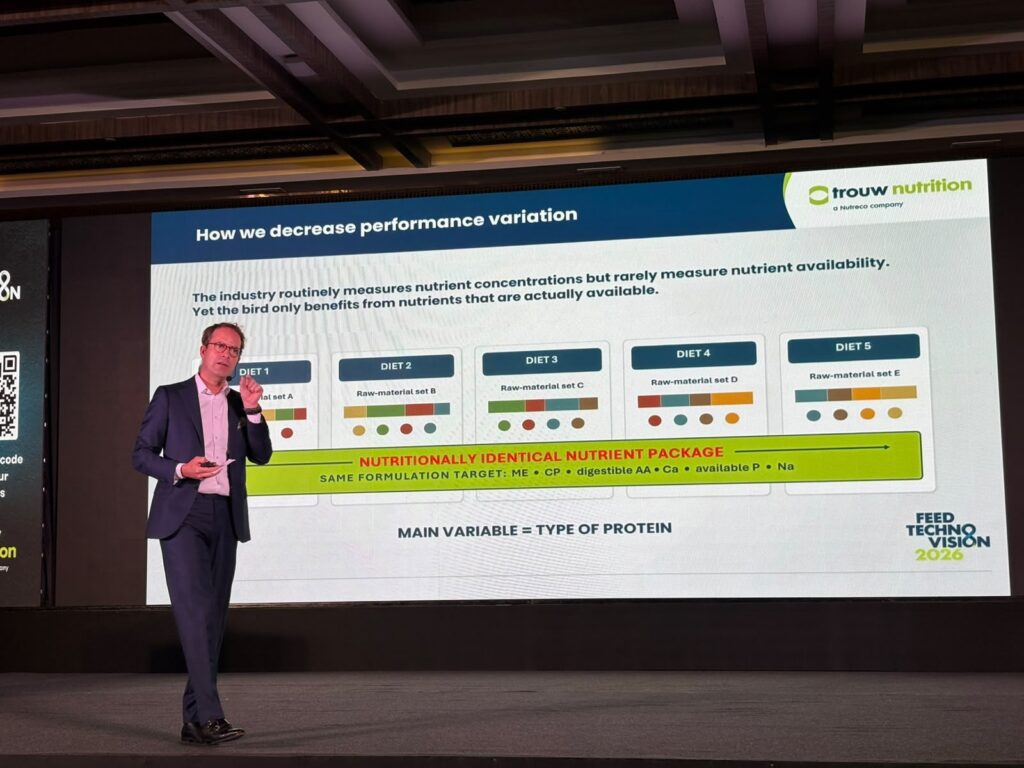
Feed ingredients’ nutritional values, microbial loads, and moisture profiles fluctuate across seasons, regions, and batches. Simply relying on ingredient “averages” when producing feed is no assurance of a finished feed’s safety, quality, or nutrient profile. Ultimately, this gap between average and actual can compromise animals’ genetic potential and performance. Reducing these risks starts with precise data. For example, there is a massive opportunity to improve FCR by reducing variability in raw materials, but the integrity of data is critical. Communication matters, too. Timely communication between procurement, quality, nutrition, and operations can identify issues earlier, bringing more precision to formulations, and more predictability to animal performance.
3. Feed safety is a system, not a single intervention.
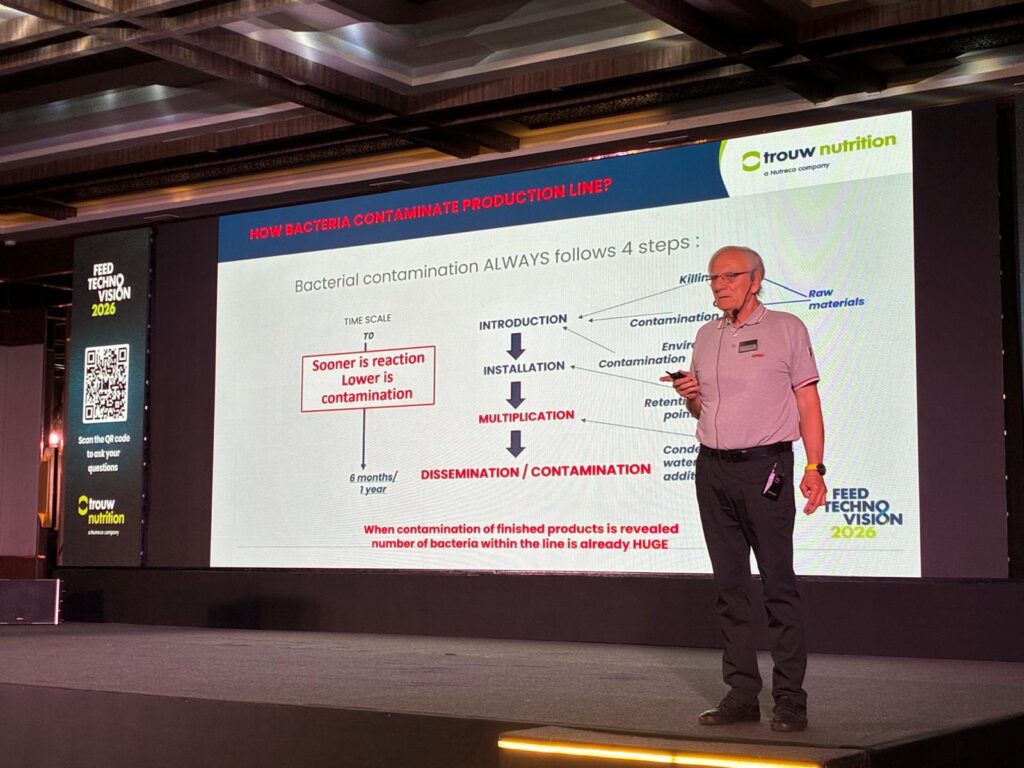
Raw ingredient quality, process variations, mould, and microbial threats must be managed in feed production. During FeedTechnoVision, Dr. Roland Koedijk, Global Head of Poultry at Trouw Nutrition, discussed how even small changes in raw ingredient quality can affect a formulation’s nutrition and impact animal performance. While feed safety is complex, the management logic that steers decisions is straightforward, moving from risk analysis, to interpretation, strategic intervention, verification and continuous improvement. An integrated approach addressing raw material quality, microbial and mycotoxin risk management, process control, monitoring, and verification offers a holistic process for supporting safe feed but is dependent on quality, nutrition, and operations teams making joint decisions and implementing integrated control measures.
4. The feed mill of the future is perpetually learning.
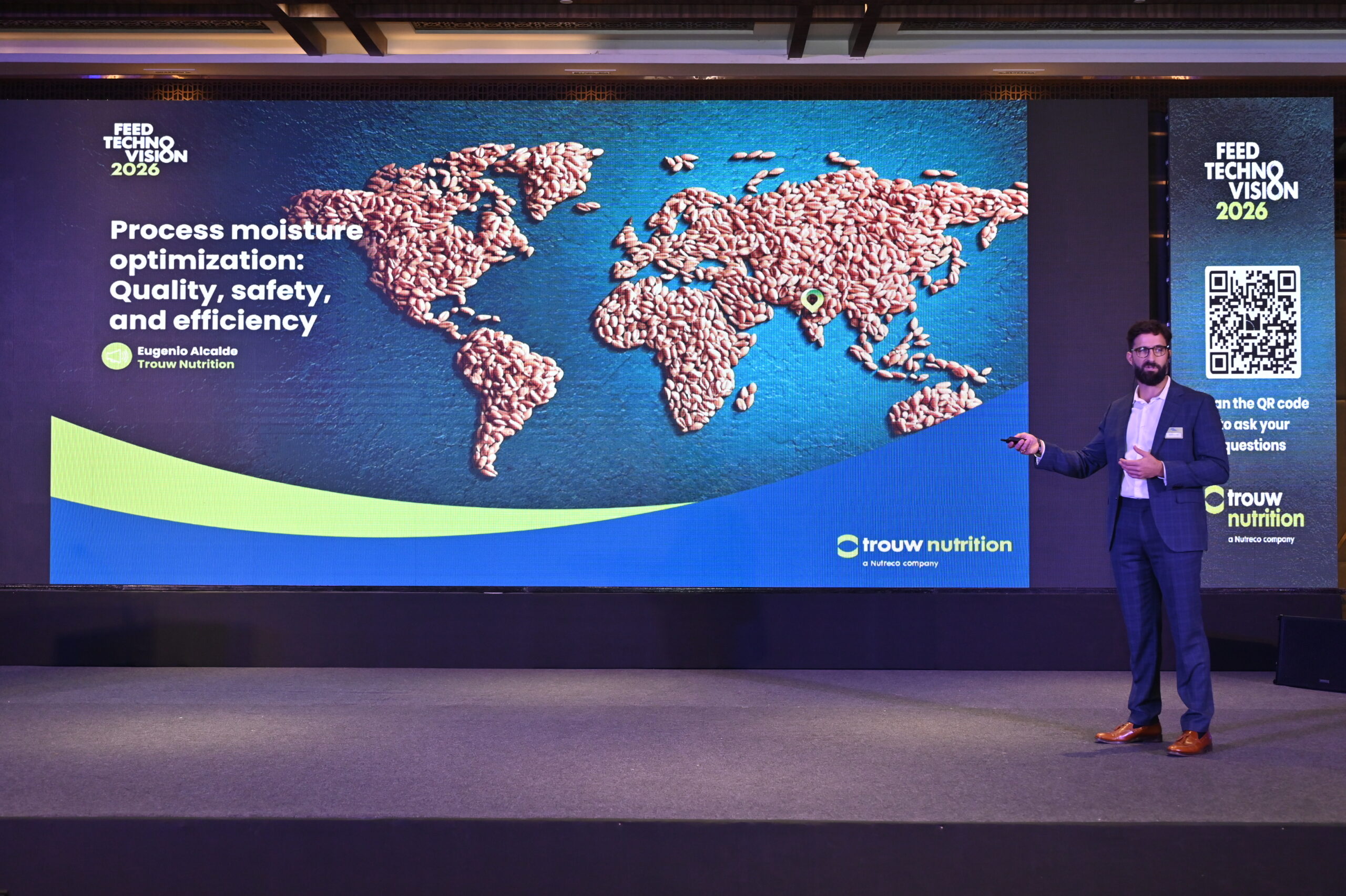
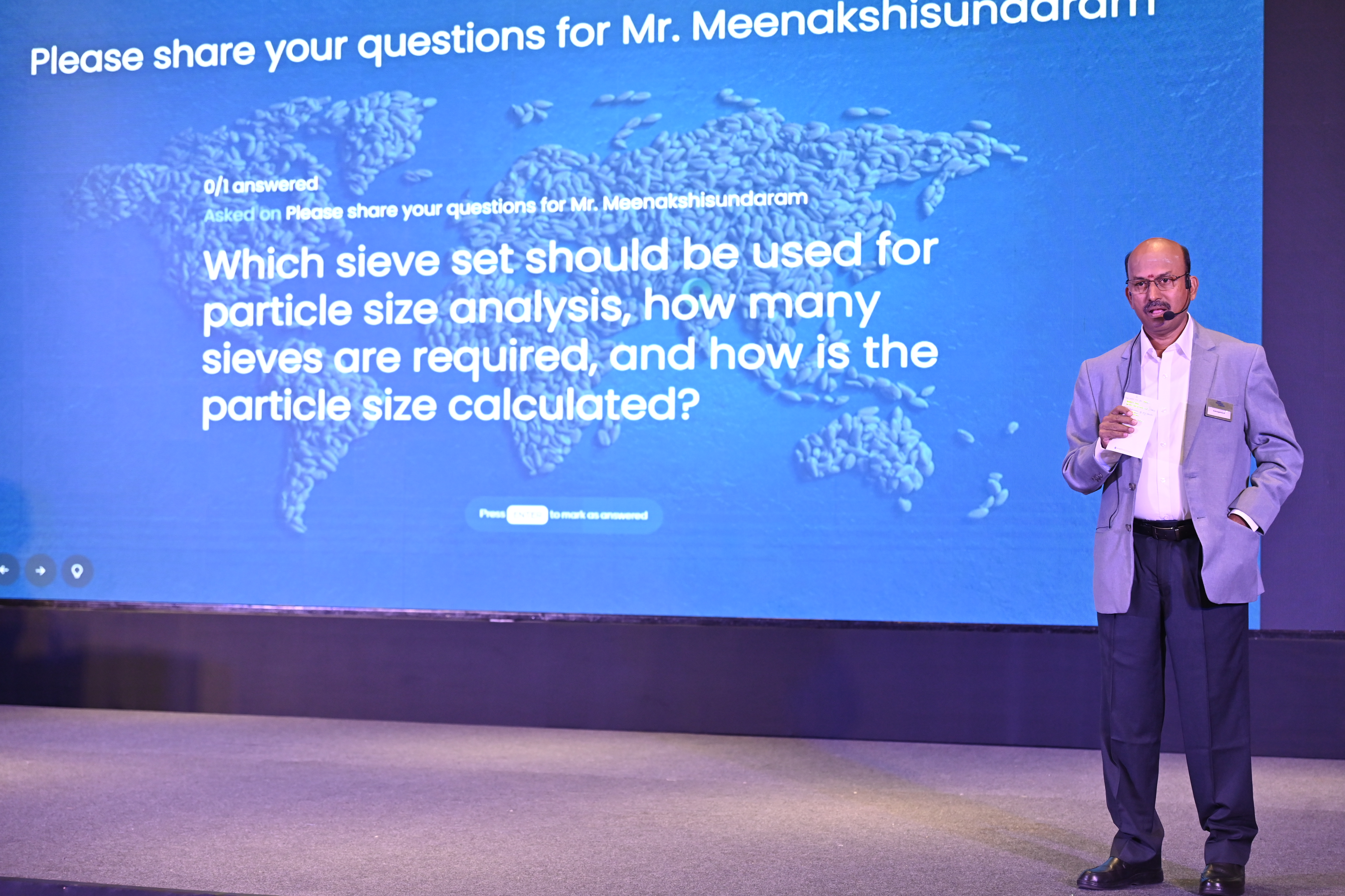
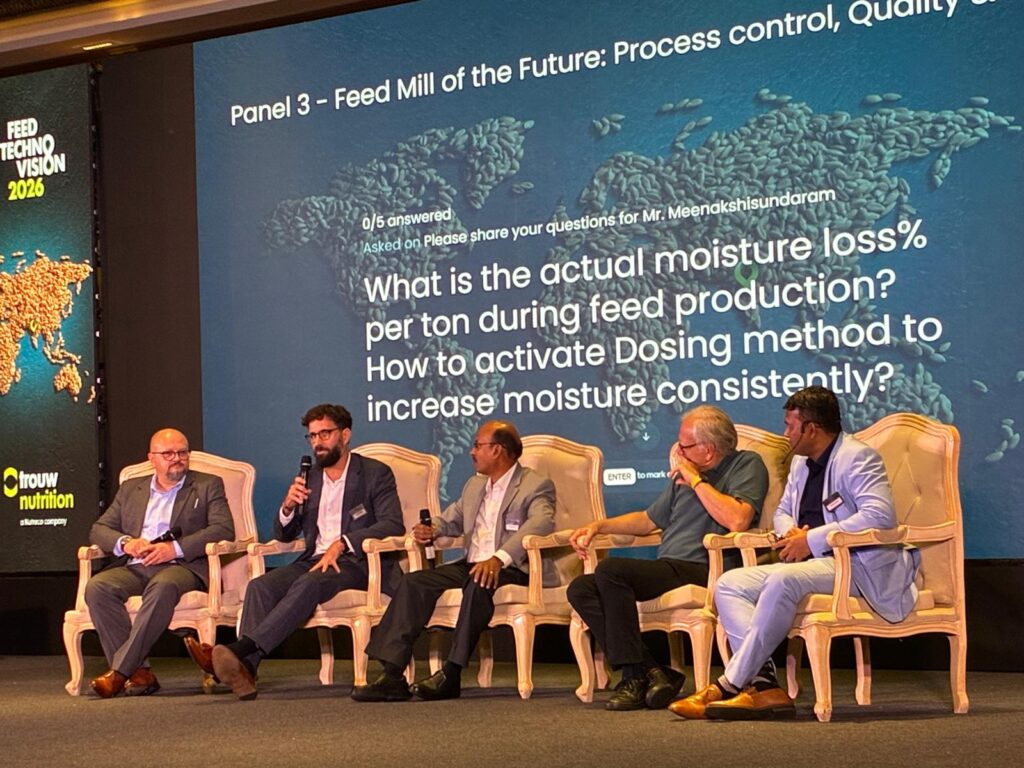
Feed-to-food safety measures must include operational processes that address microbial threats, optimize particle size, and achieve a proper moisture profile. Technology can help drive feed safety decisions but is not a panacea. The feed mill of the future will be defined by data that supports continuous improvement. Reliable data informs decisions and enhances process control. Improvements don’t end when a batch leaves the feed mill. Shared feedback about quality and animal performance support ongoing production enhancements that move a feed mill from reactive measures toward predictive strategies that further optimize feed.
5. People are at the centre of better decisions.
While data can drive insights, cross-functional collaboration among procurement, nutrition, operations, and quality teams is critical to achieve meaningful improvements. The most significant productivity gains in feed production will not come from optimising one function harder but from connecting all functions better. This view complements FeedTechnoVision’s mission to serve as a knowledge exchange that advances understanding and generates a feedback loop to address customer challenges, share scientific and technical expertise, provide practical applications, and inspire continuous learning. According to Pedro Caramona, Strategy Director – Feed to Food Safety at Trouw Nutrition, the overriding takeaway from FeedTechnoVision 2026 was the tremendous opportunity that exists to reduce variability and drive greater predictability in feed production throughout Asia. “By connecting human knowledge, precise data, enhanced processes, and collaborative teams, the feed sector can transform variability into predictable performance,” he stated. Organizers are planning to return to Latin America in 2027 for the fifth instalment of FeedTechnoVision.
About Trouw Nutrition
Trouw Nutrition is Nutreco’s livestock feed business line and a global leader in the feed, farm, and health aspects of producing quality meat, eggs, and milk. We’ve spent nearly a century developing innovative feed products and more sustainable ways of raising healthy farm animals and companion animals. We believe that animal nutrition and good farm management have the power to transform our industry and even our planet. Through our dedicated team of 8,300 experts and our global network, we work together with our customers to solve the challenges facing our feed-to-food chain and achieve our purpose of Feeding the Future.
With 71 manufacturing plants and a presence in 105 countries, Trouw Nutrition is everywhere our customers need us to be. We provide a one-stop-shop for feed specialities, feed additives, premixes, nutritional models, and customised, integrated services. Our global brands include NutriOpt™, Milkiwean™, Erliva™, Maxcare™, Sprayfo™, and Selko™. For more information, please go to trouwnutrition.com or follow us on LinkedIn.