
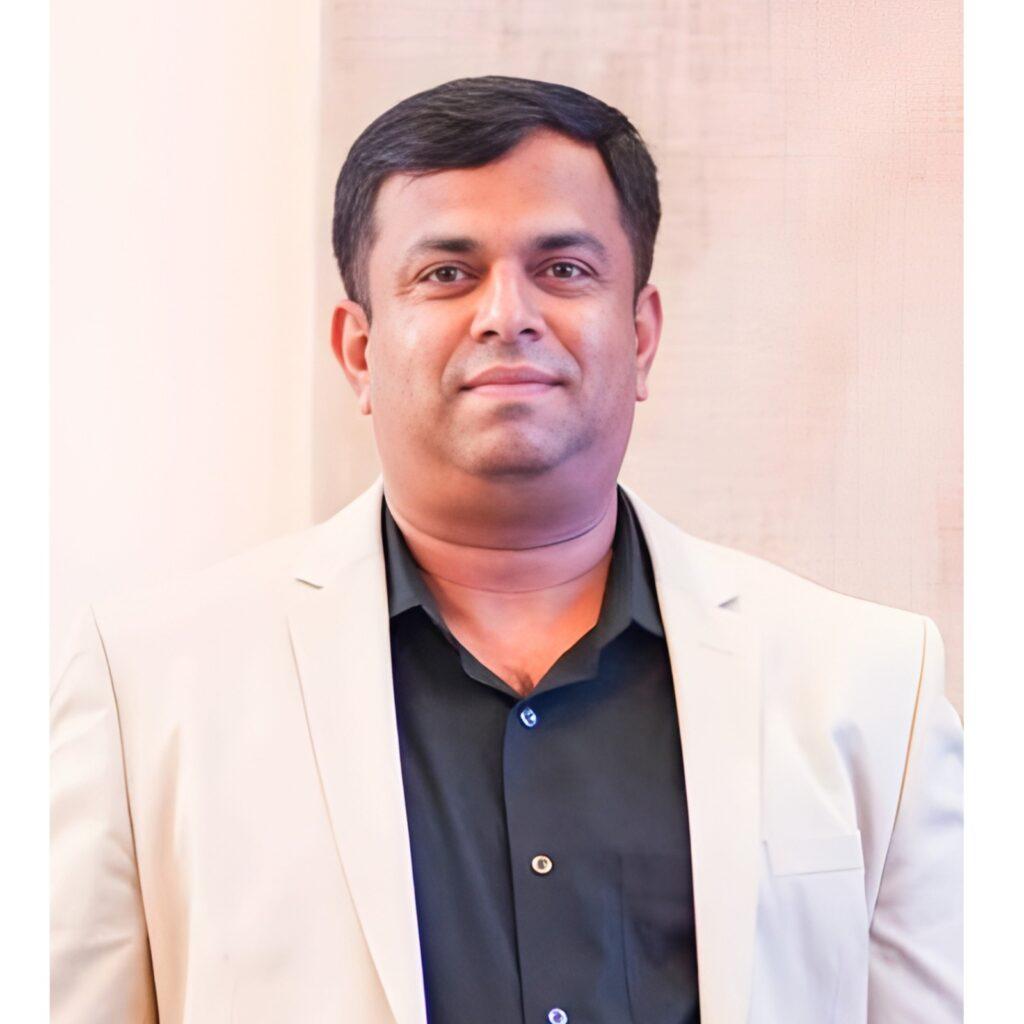
Mr. George, President
South Asia, FAMSUN Group
Q1-FAMSUN is a name synonymous with global agri-infrastructure. For those unfamiliar, could you walk us through the company’s evolution?
FAMSUN has undergone a significant transformation. We began as a specialized equipment manufacturer but have evolved into a global integrated solution provider for the agri-food and feed industries. Today, our footprint covers everything from grain handling and storage to feed milling, farming systems, oil and fat,food processing, and even ethanol and environmental solutions.
Our journey has been about moving from machines to systems, and from systems to complete ecosystems. We don’t just sell hardware; we deliver turnkey projects backed by advanced automation and digital platforms that create sustainable value across the entire agricultural chain.
Q2-In a country like India, with its diverse climatic zones, what is the realistic storage duration one can expect from modern silos?
Grain storage is a race against biology. Traditional systems often struggle beyond one season, but FAMSUN’s modern silo ecosystems enable safe storage for 12–24 months, and up to 36 months too for strategic reserves.
We achieve this through advanced aeration, ventilation, and grain chilling to counter high temperatures; real-time monitoring of temperature and humidity for preventive aeration; and early detection using CO₂ sensors to identify infestations before visible damage occurs.
Q3-Post-harvest losses are a massive pain point. What specific protection systems are mandatory to mitigate this?
We treat silos as living warehouses requiring 360-degree protection.
Pre-cleaning: Protection starts at the intake. We integrate high-efficiency pre-cleaners and dust aspiration systems to remove “dockage”—fine dust, chaff, and broken grains. These impurities are breeding grounds for insects; removing them reduces the biological load before storage begins.
Active climate management: Our systems use automated aeration triggered by PLC controllers that compare internal temperatures with the ambient dew point. We also provide fumigation recirculation systems that ensure even distribution of phosphine gas, eliminating pests without moving the grain.
Digital monitoring: With our precision Temperature Monitoring System and Moisture Monitoring system managers can easily figure out rate of change of temperature and moisture to take immediate corrective action. Besides we can provide CO2 monitoring system also which enables early detection and intervention before any spoilage.
Q4-Speed and efficiency are critical during the harvest season. What loading and unloading technologies are you deploying?
In high-turnover facilities, the handling system is the pulse of the plant. At FAMSUN, we design our material handling system for “Gentle Handling” at high speeds.
We use heavy-duty and high capacity Bucket Elevators and En-masse Chain or Belt Conveyors. For delicate crops like pulses or high-grade paddy, we optimize conveyor speeds to prevent “impact damage” and kernel breakage
One of the biggest challenges in flat-bottom silos is the grain left at the centre. FAMSUN utilizes high-torque Heavy-Duty Sweep Augers that automatically clear the silo floor, ensuring 100% discharge without manual intervention. This is a game-changer for safety and manual cleaning reduction.
While we design systems reaching 2,000 TPH for major seaport terminals, our standard installations in India typically range from 50 to 350 TPH.
Q5-FAMSUN has been very active in the Indian market recently. What is the current scale of your footprint here?
India is a top-tier strategic market. We are currently executing massive projects that support India’s mission to modernize its grain reserves. We have delivered several million tons of storage capacity across the country, serving the government’s food procurement and storage agencies, private feed manufacturers, and the flourishing ethanol industry.
The scale of our mission is clear: while total post-harvest losses are vast, the economic drain in the cereal sector (Rice, Wheat, and Maize) alone is approximately ₹65,000 Crore annually. FAMSUN by replacing unscientific “bag storage” with automated advanced silo ecosystems, we are helping save this national wealth. Every ton of grain we save is value created for the farmer, the industry, and the nation.
Q6-Beyond just “holding grain,” what are the broader economic benefits of this infrastructure?
Storage is not a cost—it is an investment in security and profitability. Modern silos can reduce post-harvest losses from 10% to 0.25%, compared to traditional methods. This stabilizes market prices, prevents distress sales, ensures year-round raw material availability for processors, and directly boosts farmer income. Furthermore, it enhances India’s export competitiveness by ensuring the grain meets international quality standards.
Q7-The market is crowded. How does FAMSUN differentiate its product portfolio and performance?
We don’t focus on individual machines; we focus on integrated systems. Our portfolio includes Grain storage silos, Feed mills, Renewable Energy (Ethanol), Oilseed processing, and smart automation.
The market today rewards performance, not just price. For instance, our systems offer 8–15% lower energy consumption compared to conventional setups. When you consider that energy can account for nearly 30% of operating costs, that efficiency becomes a massive competitive advantage for our clients. And, our grain storage silos, all undergo finite element analysis and are manufactured using ZMA Steel which best in the industry. are strongest in the market. Also, our silos are strongest in the market.
Q8- Looking at the “South Asia” lens, where do you see the next big wave of growth coming from?
The scope is immense. India has reached a tipping point where performance outweighs price. Customers now prioritize lifecycle costs and energy efficiency. With energy accounting for 20–30% of operating costs, our systems deliver 8–15% savings through high-efficiency motors and intelligent automation. Demand for “Smart Factories” is rising rapidly, driven by reliability and faster ROI.
The future belongs to solutions that are smart, efficient, and sustainable.
Q9- What is the “FAMSUN Mantra” that has sustained your growth?
It’s simple: Reliability is the strongest differentiator. In an industry that supports global food security, trust matters more than short-term gains. Our mantra is to combine long-term thinking with customer-centric execution. When our customers grow with confidence, our success follows naturally.
A key differentiator is our investment in local talent—specialized engineers and project managers who ensure global technology is backed by immediate, on-ground support.
Q10. Could you elaborate on business expansion in India?
India’s shift toward industrial-scale efficiency offers immense potential. With the animal feed market growing at 6–8% and strong policy support for ethanol blending, demand for modern infrastructure is surging. We are expanding our localized engineering footprint to serve both private and institutional clients.
Q11. How critical is quality in equipment designed to last decades?
Quality is the difference between a profitable asset and a mounting liability. In India’s varied and often harsh climates, sub-standard equipment corrodes or fails long before it pays for itself. We mitigate this through superior metallurgy—using high-grade ZMA (Zinc-Magnesium-Aluminum) coated steel and precision manufacturing. This ensures our silos operate reliably for over 30 years. As the industry saying goes: “Quality is remembered long after the price is forgotten.”
Q12. How do you navigate competition in India’s agri-tech space?
We are seeing a sophisticated shift in the market: customers are moving away from simple machine-to-machine price comparisons toward “integrated system evaluations.” Our edge is that we aren’t just a vendor; we are a full-lifecycle partner. Through our Flawless Project Delivery (FPD) system and 24/7 local service teams, we provide something a lower-priced competitor cannot: peace of mind and guaranteed uptime.
Q13. What does your distribution and support network look like?
Our network is built not just to sell, but to support. We operate on the principle of ‘customer proximity,’ ensuring that we are never more than a phone call away from our project sites. In India and across South Asia, this infrastructure includes strategically located regional offices, a dedicated force of trained service engineers, and specialized project execution teams.
Beyond human expertise, we have prioritized a robust supply chain for genuine spare parts. This ensures that our clients experience maximum uptime and smooth plant operations. For us, long-term customer satisfaction is the only metric that truly matters, and our local network is the engine that drives that reliability.
Q14. What are FAMSUN’s future goals in India?
Modern Grain Logistics: Leading the nationwide transition from labour-intensive “bag” storage to scientific & efficient “bulk” silo systems.
Renewable Energy Security: Expanding our turnkey ethanol systems to directly support the government’s ethanol blending mandates.
Provide efficient and hygienic processing solutions for edible oil, creating a healthy lifestyle for the people of India.
Smart Manufacturing: Deploying IoT-enabled automation and advanced extrusion technologies specifically for the high-growth aquafeed and pet food sectors. Provide more efficient and energy-saving solutions for livestock and poultry rumination systems
Q15. What is FAMSUN’s mantra for success?
The mantra of success for FAMSUN is long-term thinking combined with customer-centric execution and continuous improvement. In an industry that supports global food security, trust and reliability matter more than short-term gains. By prioritizing sustainable engineering, reliability, smart systems and strong partnerships, FAMSUN continues to build lasting value for all stakeholders.
About the Author
Mr. George – President – South Asia, FAMSUN Group Co., Ltd.
Mr. George is a veteran of the global agri-infrastructure industry, currently leading FAMSUN Group’s strategic initiatives across South Asia. His journey with FAMSUN began in 2007, where he spearheaded major feed milling and grain handling installations in China and the Middle East, gaining deep expertise in the technical demands of varied climates. He subsequently served as President for the Asia-Pacific region and led FAMSUN HUALI FARMING. Since taking the helm as President – South Asia in 2023, Mr. George has focused on aligning FAMSUN’s global technological prowess with India’s transition to bulk grain handling, overseeing turnkey silo projects for both government agencies and private MNCs. He is a key figure in the modernization of grain storage and feed production systems in the region.
Country Head – Famsun, India
Mr. Arun Kumar
Mob: +91 99019 16554
email: arunkumar@famsungroup.com