Dr. Bharat Sadarao, Dr. Venket Shelke, Dr. Partha Das, and Dr. R. Chanthirasekaran
Kemin Industries South Asia Pvt. Ltd., Chennai, India
ABSTRACT
A commercial field trial was conducted to evaluate the effects of KURACO™ Dry supplementation on the growth performance, intestinal health, and economic efficiency of Vencobb 430Y broiler chickens. A total of 17,932 birds were selected from two sheds having same age and divided into two groups: a control group (8,958 birds) receiving regular breed standard feeding and a treatment group (8,974 birds) receiving regular breed standard feeding supplemented with KURACO™ Dry during 7 days trial period (beginning from 27th to 33rd day of the birds’ age) at a dosage of 5g per 100 birds in the water. Key performance indicators, including body weight (BW), feed intake, feed conversion ratio (FCR), corrected FCR (CFCR), livability, and European Efficiency Factor (EEF), were assessed. However, the outcomes of the trial were calculated only considering the average performance of the seven-day trial. The treatment group showed a positive improvement in body weight (1590g) compared to the control group (1510g), with a lower FCR (1.53 vs. 1.62), CFCR (1.64 vs. 1.74), and EEF (313 vs. 280), indicating better feed efficiency. The mortality rate was lower in the treatment group (1.07%) compared to the control (1.54%). Furthermore, a significant reduction in dysbacteriosis was observed in the treatment group (1.00 vs 1.67), along with improved intestinal health, reflected by lower TMLS values. In economic terms, the cost of production per live bird was reduced by 30 paise (INR 0.30), resulting in a return on investment (ROI) of 1.55:1 for the treatment group. These positive results suggest that KURACO™ Dry supplementation enhances growth performance, intestinal health, and economic efficiency in broiler production, indicating its potential to enhance overall poultry productivity.
INTRODUCTION
Commercial chicken production is vital for its nutritional and socio-economic contributions, providing high-quality protein and income for poultry producers. A critical factor for maintaining optimal performance in poultry is gut health; disturbances here can lead to production losses through impaired growth, reduced feeding efficiency, and higher infection risks. Common gut disorders such as necrotic enteritis and dysbiosis are significant challenges for poultry health and overall farm productivity. In response to social pressures for a total ban on in-feed antibiotics, particularly due to concerns over antibiotic resistance and residues, there has been a rapid shift towards using antibiotic alternatives in poultry production.
As a result, natural alternatives like probiotics, prebiotics, and phytochemicals have gained recognition for maintaining gut health. Prebiotics stimulate the growth of beneficial gut bacteria such as bifidobacteria and lactobacilli, with fructo-oligosaccharides (FOS) specifically enhancing populations of bifidobacteria and promoting better gut function. Probiotics, defined as live microorganisms that confer health benefits to the host, improve gut flora, assist digestion, boost immunity, and increase infection resistance. Phytochemicals derived from plants offer antimicrobial, anti-inflammatory, and antioxidant benefits, which can alleviate gut inflammation and improve intestinal integrity. Collectively, these alternatives represent a comprehensive strategy to uphold gut health in poultry, reduce antibiotic dependence, and minimize antibiotic resistance risks.
This study’s objective is to evaluate the effects of KURACO™ Dry, a Kemin Industries-developed product that incorporates a unique blend of prebiotics (FOS), probiotics (Bacillus subtilis PB6), and phytochemicals (Boswellia serrata), on the performance and gut health of broiler chickens. KURACO™ Dry aims to enhance gut health and control dysbacteriosis by incorporating active probiotics, which help maintain beneficial microflora through competitive exclusion of pathogenic bacteria and using functional polysaccharides to create an environment conducive to beneficial microbes, along with gut-centric phytogenic compounds that support the management of inflammatory conditions.
OBJECTIVES
The primary objective of the present study is to evaluate and validate the efficacy of KURACO™ Dry under field conditions, incorporating various management practices, and assessing its impact on performance metrics and improvements in gut health (specifically dysbacteriosis status). Additionally, the study aims to analyze the economic returns associated with the use of KURACO™ Dry in commercial broiler production.
MATERIALS AND METHODS
A field trial was conducted in the Southern part of India in a commercial broiler farm using Vencobb 430Y broiler chickens, housed in two commercial broiler sheds (control group and treatment group). At the start of trial day, the control group consisted of 8,958 birds, while the treatment group contained 8,974 birds. The experimental trial design, classification in groups, trial period, and dosage regimen are mentioned in groups in Table 1. The farm was chosen in response to a request from the customer to demonstrate the financial advantages of commercially available gut health symbiotic solutions. The experiment lasted 7 days in total, beginning on the 27th and ending on the 33rd day of the birds’ age.
Table 1. Experimental Groups and Dosage Regimen.
| Groups | Description | Treatment Period | Number of Days | No. of Chicks |
| Control Group | Breed Standard | 27-33 days | 7 Days | 8,958 |
| Treatment Group | Breed Standard + KURACO™ DRY (5gm per 100 birds in drinking water) | 27-33 Days | 7 Days | 8,974 |
Birds were offered standard commercial broiler finisher pellet feed and clean drinking water ad libitum. To preserve the trial’s flow, zootechnical measures such as body weight gain (BWG) and feed conversion ratio (FCR) were calculated cumulatively from the first day of the bird’s placement age. However, the outcomes of the trial were calculated only considering the average performance of the seven-day trial. During the seven-day study, the actual mortality rate was considered. The corrected feed conversion ratio (CFCR), European efficiency factor (EEF), economics in terms of ROI, and relative cost advantage/disadvantage over control were estimated for the treatment group based on the average trial results of seven days.
At the end of 7 days of trial, intestinal lesion scoring, dysbacteriosis scoring, droppings consistency, and feed passage were assessed in both groups to monitor improvements in bacterial enteritis (BE) and dysbacteriosis scores. Three birds each from the control and treatment groups were randomly chosen, and their intestines were removed after cervical dislocation, following ethical practices, and measured for gut lesion scoring. The gastrointestinal tract (GIT) of each bird was thoroughly examined for lesions indicative of coccidiosis, as well as for signs of bacterial enteritis/dysbacteriosis. Coccidiosis lesions were scored and recorded based on severity following the method of Johnson and Reid (1970), while dysbacteriosis lesions were scored according to the protocol established by Teirlyncket. al. (2011). Feces consistency was recorded based on observations of feces from both groups.
RESULTS
Broiler performance:
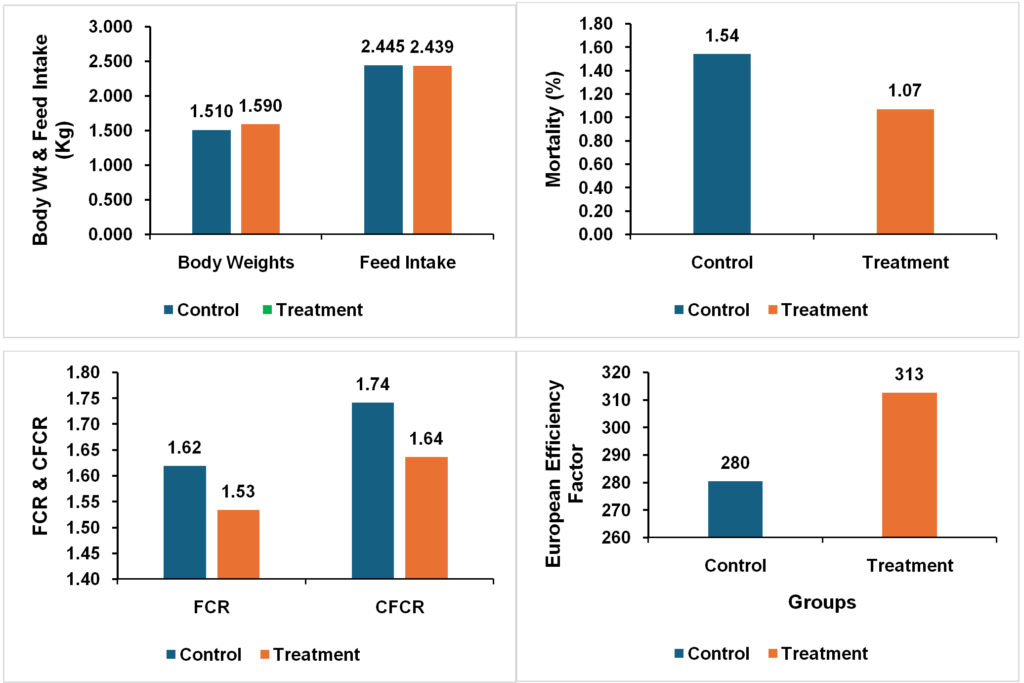
The analysis of data about body weight (BW), feed intake, feed conversion ratio (FCR), corrected feed conversion ratio (CFCR), livability percentage or mortality, and European efficiency factors (EEF), which were collected from control and treatment groups, is presented in table figures(Table 2 and Figure 1). For the total trial period of 7 days, the treatment group KURACO™ Dry had a higher average body weight of 80g and lower feed intake of 6g when compared to the control group. Similarly, the treatment group recorded a mortality rate of 1.07% over 1.54% of the control group, showing better livability in the treatment group. It shows a 0.47% cumulative mortality reduction in the KURACO™ Dry group compared to the control group. The total mortality of birds in the control and treatment groups was 138 and 96, respectively. The positive effect on body weight and mortality in the KURACO™ Dry treatment group resulted in an 8.5-point feed conversion ratio (FCR) improvement and 10.5 points corrected feed conversion ratio (CFCR) improvement over the control group. The European efficiency factor (EEF) was observed to be 32 points higher in the KURACO™ Dry treated group compared to the control group. Specifically, the treatment group demonstrated a numerical increase in all performance measures, suggesting a beneficial impact of KURACO™ Dry supplementation on broiler growth and health.
Table 2: Effects of KURACO™ Dry on Broiler Growth Performance
| Parameters | Control | Treatment |
| Body Weight (BW) | 1.51 | 1.59 |
| Feed Intake | 2.445 | 2.439 |
| Feed Conversion Ratio (FCR) | 1.62 | 1.53 |
| Corrected Feed Conversion Ratio (CFCR) | 1.74 | 1.64 |
| Mortality (%) | 1.54 | 1.07 |
| European Efficiency Factor (EEF) | 280 | 313 |
Figure 1: Effect of control and treatment groups on broiler performance parameters.
Evaluation of fecal characteristics:
The excreta consistency was monitored randomly throughout the trial by visual observation. Images of the poultry droppings of respective groups are shown in Figure 2. As per observation, the droppings from the control group show abnormalities in terms of loose droppings, semi-solid droppings, along with undigested feed particles, accompanied by orange-colored mucoid matter, indicative of poor digestive health. In respect to the control group, the treatment group had better excreta consistency, characterized by normal, well-formed droppings, reflecting enhanced gut health, which shows a better nutrient utilization by the birds.
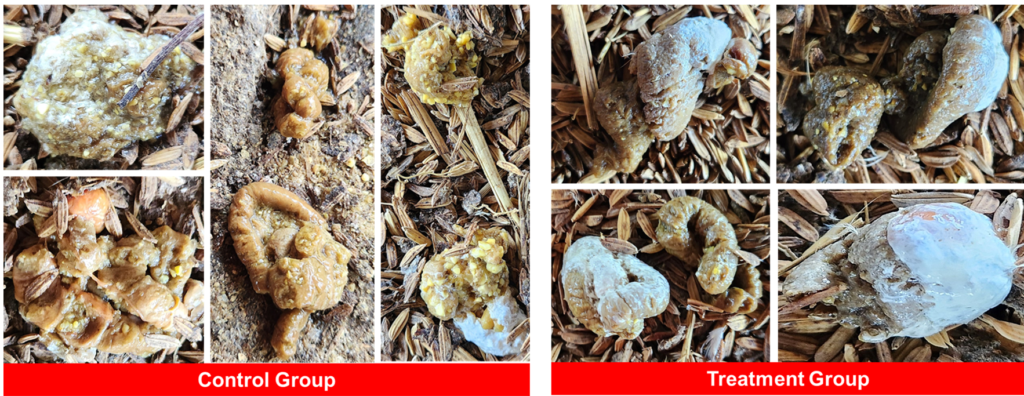
Figure 2: Evaluation of fecal characteristics in the control and treatment groups32
Intestinal lesion and dysbacteriosis score:
The intestinal lesion and dysbacteriosis scores for the birds in the control and treatment groups were measured, and the results are shown in Figure 3. Conspicuously, the TMLS (total mucosal lesion score) values were similar (TMLS – 0.33) in both groups,<1.00, showing better management in the coccidiosis program. Similarly, the improvement in dysbacteriosis or bacterial enteritis scores was also assessed for both control and treatment groups during the trial. A dysbacteriosis score of 1.67 was observed in the control group when compared to the treatment group score (1.00).
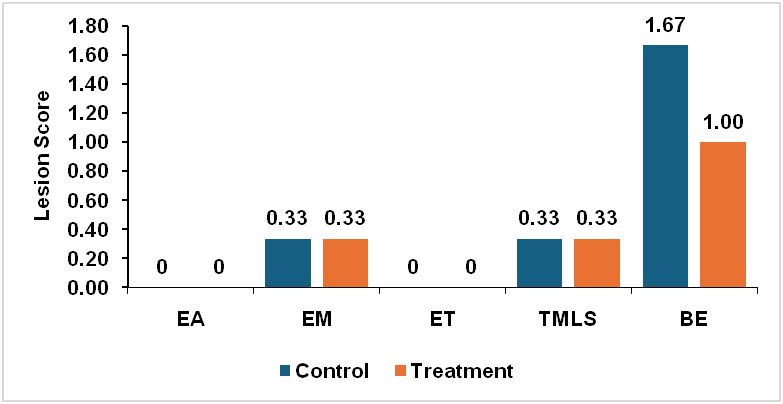
Figure 3: Intestinal and dysbacteriosis lesion scores in trial groups
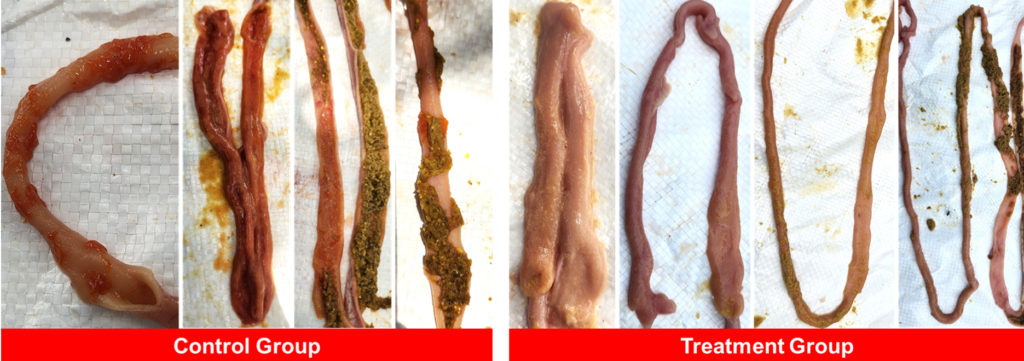
In Figure 4, it is shown that the intestinal wall is more inflamed and contains orange mucoid content compared to the treatment group. This improvement in the intestinal health score may be attributed to treatment with the KURACO™ Dry group for a week, which helped improve the overall intestinal lesion score and maintain gut integrity.
Figure 4: Condition of the intestinal wall and content in trial groups32
Cost of production (CoP) and return on investment (ROI):
In economic terms, the cost of production expressed per live broiler bird produced was lower by 30 paise (INR 0.30) in the treatment group than in the control group, which demonstrated a return on investment (RoI) of 1.55:1 in favor of the treatment group (Table 3).
Table 3:Economic calculations and return on investment (ROI) details
| Parameters | Control | Treatment |
| Chicks Placed | 8958 | 8974 |
| Mortality (%) | 1.54 | 1.07 |
| Total Birds Remaining (N) | 8820 | 8878 |
| Average Body Weight (kg) | 1.51 | 1.59 |
| Average Feed Consumed (kg) | 2445 | 2439 |
| Total Feed Consumed for 7 days (kg) | 8125 | 8086 |
| FCR | 1.62 | 1.53 |
| CFCR | 1.74 | 1.64 |
| Chick Cost (INR) | 25 | 25 |
| Average Feed cost per kg (INR) | 36 | 36 |
| Total Water Consumption (2.5x of feed) (L) | 20312 | 20214 |
| Cost of KURACO™ DRY treatment (INR) | – | 1727 |
| KURACO™ DRY treatment cost per bird (INR) | 0 | 0.19 |
| Total Production Cost (INR) | 516447 | 515431 |
| Production Cost per broiler bird (INR) | 58.55 | 58.25 |
| Production Cost Saving per broiler bird (INR) | – | 0.3 |
| Net Profit from treatment group (INR) | – | 2685 |
| ROI | – | 1.55:1 |
DISCUSSION
This study demonstrates that administering KURACO™ Dry via drinking water significantly improved broiler chicken performance, particularly in terms of livability. The positive effects of KURACO™ Dry are linked to several factors, including increased beneficial gut bacteria, reduced harmful bacteria, and better gut health, leading to improved nutrient absorption. Birds in the KURACO™ Dry group exhibited improved droppings, with fewer undigested particles and reduced inflammation.
Previous research indicates that the use of probiotics like Bacillus subtilis PB6 can enhance poultry health and performance by lowering harmful bacteria such as Clostridium perfringens and E. coli in the gut. In line with previous studies, Melegyet. al. (2011) and Jayaraman et al. (2017) demonstrated that dietary supplementation of Bacillus subtilis PB6 resulted in a significantly (P<0.05) improved body weight gain, feeding efficiency, and lower mortality. Such improvement in poultry performance, along with reduced intestinal lesions by adding Bacillus subtilis PB6 (ATCC-PTA 6737) to the diet at the level of 5 × 10¹¹ cfu/kg, resulted from a significant increase in the villi height (VH) and the ratio between the crypt depth (CD) and VH. The VH/CD ratio serves as a reliable indicator of optimal gut morphology, with a higher ratio typically associated with improved nutrient absorption and intestinal function. Probiotics show beneficial effects on chicken performance under both healthy and infected conditions due to their ability to secrete helpful compounds like digestive enzymes, antibacterial substances, and/or other growth-promoting factors, such as short-chain fatty acids.
FOS (fructooligosaccharides) is a prebiotics that promote the growth of beneficial gut bacteria like Lactobacillus and Bifidobacteria in the large intestine. This enhancement leads to improved gut microbial balance and suppression of harmful pathogens, positively affecting overall health. Studies, including those by Li et. al. (2008), demonstrate that FOS combined with Bacillus subtilis significantly improves growth performance and feed conversion in broilers by increasing beneficial bacteria and reducing harmful pathogens. Further reviews by Soren et. al. (2023) substantiates these findings regarding improved gut health and nutrient absorption.
In broilers, adding Boswellia serrata to their diet helped improve body weight, energy digestibility, and carcass quality by enhancing overall antioxidant levels and digestive enzymes. The use of KURACO™ Dry also improved fecal consistency, indicating better gut health and fewer loose droppings. Similarly, EEF accounts for the overall flock performance, measured by mortality, live weight, and feed conversion ratio (FCR), which showed better results in the treatment group, confirming findings from earlier studies by Jayaraman et. al. (2017) and Darsi et. al. (2021), which suggest these improvements benefit farmers’ profitability.
The addition of PB6 not only boosted broiler performance but also improved return on investment (ROI). In agreement with present results, studies by Zaghari et al. (2017) and Darsi et. al. (2021) revealed that Bacillus subtilis treatment enhanced ROI by reducing feed cost per kg weight gain in broilers and feed cost (about 4.5%) per hatchling number in breeders compared to controls. However, challenges in broiler production arise from high density and feces accumulation, and antibiotic restrictions make it harder to maintain production levels. This has led the poultry industry to explore alternative and safer additives like probiotics, prebiotics, and phytochemicals.
KURACO™ Dry, which contains prebiotics, probiotics, and anti-inflammatory elements, showed positive improvements in livability, dropping consistency, and gut health in commercial broilers, indicating its potential to enhance overall poultry productivity.
CONCLUSION
The inclusion of KURACO™ Dry in the present study supports its application in commercial poultry farming, indicating that KURACO™ Dry not only boosts performance metrics but also promotes health and disease resistance. KURACO™ Dry could lead to the development of antibiotic-free feeding programs, thereby enhancing flock performance and return on investment in commercial poultry operations.
References are available upon request.