Abstract
Antimicrobial resistance (AMR) has become a major global challenge in both human and veterinary medicine. The frequent and excessive use of antibiotics in livestock production has contributed to the development of resistant bacteria and raised concerns about antibiotic residues in food products such as meat and eggs. As a result, consumers and regulatory authorities are increasingly demanding antibiotic-free and sustainable animal production systems.
Naturally sourced novel biopolymers have recently gained attention as promising antimicrobial alternatives due to their biodegradability, biocompatibility, multifunctional antimicrobial mechanisms, and low probability of resistance development. NeoGut is formulated using a novel naturally sourced biopolymer the second most abundant biopolymer on Earth after cellulose—to support complete gut health and manage antimicrobial resistance through a unique dual-action mechanism targeting bacterial cell walls and DNA.
Unlike conventional antibiotic growth promoter (AGP) alternatives that function through a single pathway, NeoGutworks through a multi-target antimicrobial strategy, making resistance development highly unlikely while ensuring no antibiotic residues remain in meat and egg products. This article examines the antimicrobial mechanisms of biopolymers, their role in reducing resistance development, their applications in veterinary systems, and the significance of NeoGut as a sustainable solution for antibiotic-free animal production.
1.Introduction
Modern consumers are increasingly aware of the risks associated with antibiotic residues in food products. As a result, the demand for antibiotic-free meat and eggs has grown significantly across global markets. This has placed considerable pressure on the livestock industry to adopt alternative strategies that can maintain animal health and productivity while reducing dependence on conventional antibiotics.
These challenges highlight the growing need for reliable and standalone solutions capable of effectively managing antimicrobial resistance (AMR) without compromising animal performance. Consequently, research has increasingly focused on alternative antimicrobial strategies derived from natural sources. Among these, biopolymers have emerged as promising candidates due to their biological compatibility, environmental safety, and multifunctional antimicrobial mechanisms, making them suitable for supporting sustainable and antibiotic-free livestock production.
2. Biopolymers: Natural Antimicrobial Materials.
Biopolymers are naturally occurring macromolecules derived from biological sources. Among them, polysaccharide-based biopolymers composed of repeating poly-glucosamine units are widely studied for their natural antimicrobial properties.
Notably, the biopolymer present in NeoGut belongs to a class of naturally occurring polymers that are the second most abundant biopolymer on Earth after cellulose. Their abundance in nature and biological compatibility make them attractive for safe applications in animal nutrition and health.
Key characteristics of these biopolymers include:
- High biodegradability
- Excellent biocompatibility
- Strong interaction with microbial membranes
- Ability to modulate gut microbiota
- Immunomodulatory properties
3. Mechanisms of Antimicrobial Activity
A key advantage of biopolymers present in NeoGut is their ability to exert antimicrobial activity through multiple mechanisms simultaneously. This differs significantly from conventional antibiotics that typically act on a single biochemical pathway.
3.1 Cell Wall and Membrane Disruption
Biopolymers possess positively charged functional groups that interact with negatively charged microbial cell walls. This electrostatic interaction disrupts membrane integrity, increasing permeability and causing leakage of intracellular components.
This mechanism represents the first antimicrobial barrier that weakens microbial cells.
3.2 Intracellular Metabolic Interference
Following initial membrane disruption, lower molecular weight biopolymer fractions can penetrate the microbial cell and interact with intracellular targets. These interactions interfere with critical cellular processes including:
•DNA replication and transcription
• Enzymatic activity essential for cellular metabolism
• Key metabolic pathways required for bacterial growth and survival
By disrupting these fundamental biological processes, the biopolymer inhibits bacterial proliferation and ultimately leads to the suppression of microbial growth.
3.3 Biofilm Inhibition
Biofilms are protective microbial communities that significantly contribute to antimicrobial resistance. Biopolymers have demonstrated the ability to
- prevent bacterial adhesion
- disrupt established biofilms
- reduce microbial persistence in the gut environment.
3.4 Quorum Sensing Interference
Biopolymer present in NeoGut may also disrupt bacterial communication systems known as quorum sensing, which regulate virulence and biofilm formation.
The simultaneous disruption of multiple microbial processes significantly enhances antimicrobial effectiveness.
4. Multi-Target Mechanism and Low Probability of Resistance
A major limitation of conventional antibiotics is that they target single molecular pathways such as protein synthesis or cell wall formation. Because the target is specific, bacteria can develop resistance through
- target site mutation
- enzyme production
- efflux pump activation.
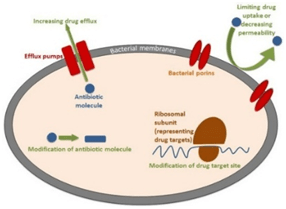
Mechanisms of Action:
Antimicrobial Defense Strategies
5. Immunomodulatory and Gut Health Benefits
In addition to direct antimicrobial effects, biopolymer contribute to improved host defense mechanisms.
They can:
- stimulate macrophage activation
- enhance cytokine signaling
- improve mucosal immunity.
This immunomodulatory activity strengthens the animal’s natural defense systems and reduces pathogen colonization pressure without creating selective pressure for resistant strains.
Furthermore, biopolymers help maintain a healthy gut microbiota balance by promoting beneficial microbial populations while suppressing pathogenic bacteria. Improved gut microbiota leads to better nutrient absorption, improved intestinal health, and enhanced overall performance in livestock.
Additionally, Biopolymer present in NeoGut supports
- biofilm disruption
- beneficial microbiota balance
- enhanced immune response
- improved gut health.
6. Addressing Antibiotic Residue Concerns in Meat and Eggs
One of the major concerns associated with antibiotic use in animal production is the presence of drug residues in animal-derived food products. These residues can pose health risks to consumers and contribute to antimicrobial resistance.
Biopolymer in NEOGUT provide a significant advantage in this context. Being naturally sourced macromolecules, they are:
- biodegradable
- metabolically compatible
- non-antibiotic in nature.
As a result, they do not accumulate as pharmacological residues in meat or eggs, making them highly suitable for antibiotic-free livestock production systems.
The use of natural biopolymer-based solutions therefore aligns with modern food safety expectations and consumer demand for residue-free animal products.
NeoGut: A Novel Biopolymer-Based Solution
NeoGut represents a new generation complete gut health program designed to support antimicrobial resistance management in livestock production.
The formulation utilizes a novel naturally sourced biopolymer with a dual-action antimicrobial mechanism.
Unlike conventional AGP alternatives that operate through a single mechanism, NeoGut employs a multi-target antimicrobial approach.
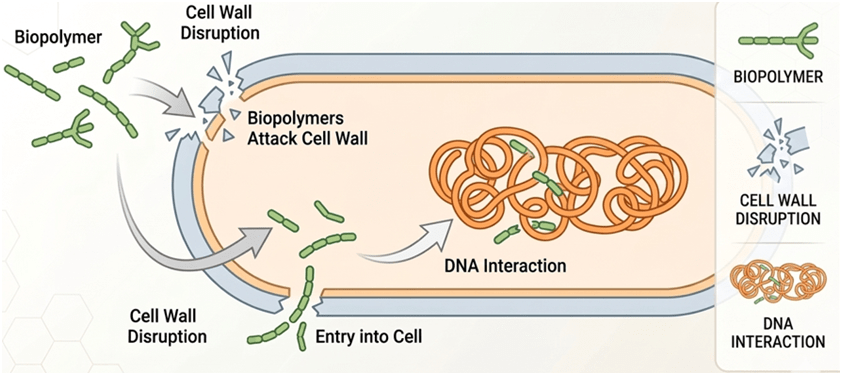
NeoGut: Bidirectional Antibacterial Activity
Dual Action Mechanism
- Bacterial Cell Wall Targeting
The positively charged biopolymer interacts with negatively charged bacterial membranes, disrupting membrane integrity and increasing permeability.
- DNA and Metabolic Interference
Following membrane destabilization, the biopolymer interferes with bacterial DNA replication and key metabolic pathways, preventing bacterial proliferation.
This dual mechanism—cell wall disruption followed by intracellular interference—creates multiple antimicrobial stresses, making it extremely difficult for bacteria to adapt or develop resistance
NeoGut the Future of Antibiotic-Free Animal Production
As consumer awareness grows regarding antibiotic residues in food products, the demand for antibiotic-free meat and eggs will continue to increase. The livestock industry therefore requires innovative solutions that maintain productivity while ensuring food safety and sustainability.
NeoGut addresses these requirements by combining:
- a naturally derived biopolymer
- multi-target antimicrobial mechanisms
- no residue risk in animal products
- low probability of resistance development
Conclusion
The growing threat of antimicrobial resistance demands innovative, sustainable strategies that go beyond conventional antibiotic approaches in animal production. NeoGut represents a new generation solution built on the power of naturally derived biopolymers. By utilizing the second most abundant biopolymer after cellulose, NeoGut delivers a unique multi-target antimicrobial action that disrupts bacterial cell walls and interferes with intracellular processes such as DNA replication and metabolic activity. This dual-mode mechanism significantly reduces the possibility of microbial adaptation and resistance development.
Importantly, the biopolymer present in NeoGut ensures no pharmacological residues in meat and eggs, aligning with global demands for safer, antibiotic-free animal products. With its versatile applications in poultry health and nutrition, NeoGut stands as the first-of-its-kind biopolymer-based strategy designed to combat antimicrobial resistance while supporting sustainable and responsible animal production systems.