Trace minerals such as zinc, copper, and manganese are fundamental to animal physiology, influencing enzymatic activity, immune response, and metabolic processes. Historically, these minerals have been supplied through inorganic sources such as sulphates and oxides, which, despite their widespread use, present significant limitations in terms of bioavailability and stability. The evolution of mineral supplementation has led to the development of hydroxy trace minerals, exemplified by Excential SMART, which offers a scientifically advanced solution to overcome these challenges. This article provides an in-depth review of the chemical characteristics, functional benefits, and comparative advantages of hydroxy trace minerals over previous generations, supported by peer-reviewed studies and empirical data.
The progression of mineral sources can be categorized into three generations. The first generation, comprising inorganic sulphates and oxides, is characterized by ionic bonding and high solubility in the case of sulphates (Figure 1). While this property facilitates rapid ionization, it also predisposes these compounds to undesirable interactions within feed matrices, leading to degradation of vitamins and the formation of insoluble complexes. Furthermore, oxides exhibit extremely low solubility, resulting in poor bioavailability and limited physiological efficacy. These drawbacks have prompted the search for alternatives that minimize antagonistic effects and enhance nutrient utilization[SK1] [SP2] .
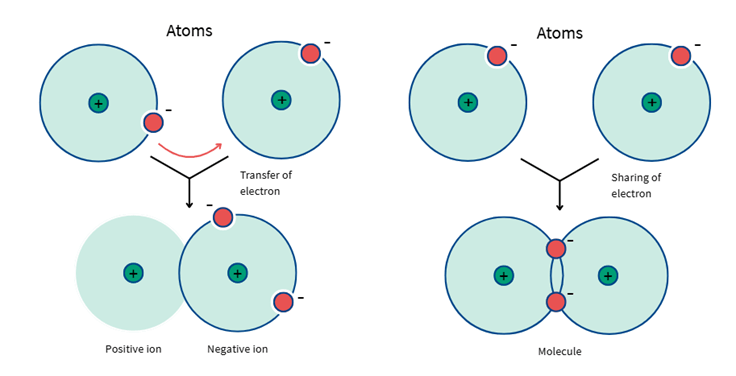
Figure 1: Comparing ionic bond – transfer of electron – which is considered as weak bond as compared to covalent bond – sharing of electrons.
The second generation introduced organic complexes/chelates, which employ covalent bonding with organic ligands such as amino acids or peptides. This structural modification significantly improved mineral absorption and reduced antagonistic interactions compared to sulphates. Organic trace minerals have a ligand with a high molecular weight, leading to low concentration of trace elements in the product. This can cause higher inclusion costs compared to other trace mineral sources.
[Jv3] Additionally, variabilities of the ligands [Jv4] have raised concerns regarding consistency and quality control, limiting their widespread adoption despite their nutritional advantages[SK5] [SP6] (Table 1).
Table 1: Various ligands of organic trace minerals which could lead to uncertainty in bond strength.
| Types | Descriptions or examples |
| Proteinate complex | Proteinate or peptide from hydrolyzed soybean protein |
| Amino acid chelates or complexes | Specific or non-specific amino acid(s) chelate or complex e.g. Glycinates |
| Organic acid complex | Propionic acid-metal |
| Sugar complex | Polysaccharide-metal |
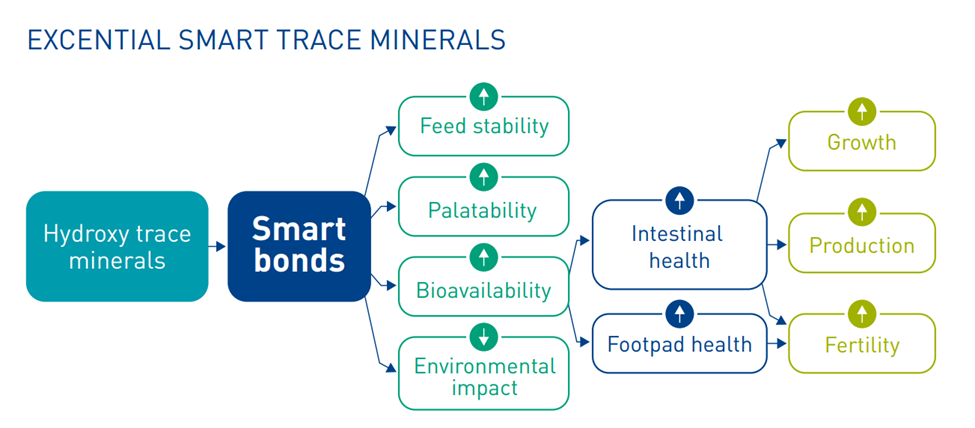
The third generation, represented by hydroxy trace minerals such as those in Excential SMART, incorporates covalent bonding within a crystalline matrix of hydroxyl ligands[SK7] [SP8] (Table 2). This configuration confers exceptional physicochemical stability, ensuring minimal reactivity at neutral pH and controlled solubilization under conditions in the gastrointestinal tract. The result is a sustained release of mineral ions, optimized for absorption in the small intestine. In ruminants, it has been shown that Excential SMART hydroxy trace minerals do not affect gas production in the rumen, allowing for normal fiber fermentation while both sulphates as well as organic trace minerals reduce gas production in the rumen. Hydroxy trace minerals also exhibit superior feed stability, preventing oxidative degradation of sensitive nutrients such as vitamins A and E. Their high mineral concentration and cost-effectiveness further reinforce their position as the preferred choice for modern animal nutrition.
Table 2: Crystalline matrix of hydroxyl ligands[SK9] [SP10] and trace element components of Excential SMART products.
| Product | Excential SmartC | Excential SmartZ | Excential SmartM |
| Component | Tri basic copper chloride | Zinc hydroxychloride | Manganese hydroxychloride |
| Content | Cu 58%, minimum | Zn 58%, minimum | Mn 45%, minimum |
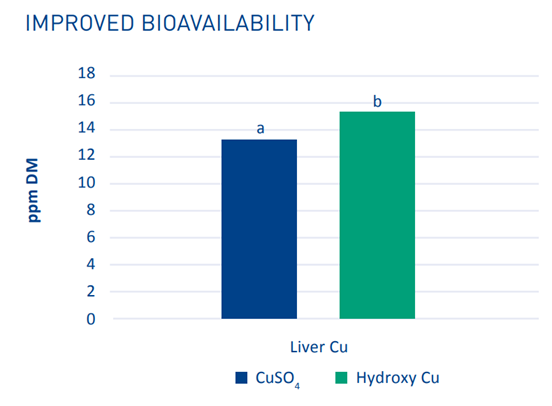
A variety of trials evidence highlights the efficacy of hydroxy trace minerals in improving animal performance and health. In vivo trials have demonstrated that hydroxy copper supplementation results in significantly elevated copper deposition compared to copper sulphate (P<0.05). Figure 2 shows higher Cu deposited in liver from hydroxy source, as compared to sulphate source.
Similar findings have been reported for zinc and manganese, where hydroxy forms exhibit enhanced tissue deposition and enzymatic activity. In poultry studies, broilers receiving hydroxy minerals achieved comparable or superior growth metrics at reduced inclusion rates, highlighting their efficiency in nutrient delivery.
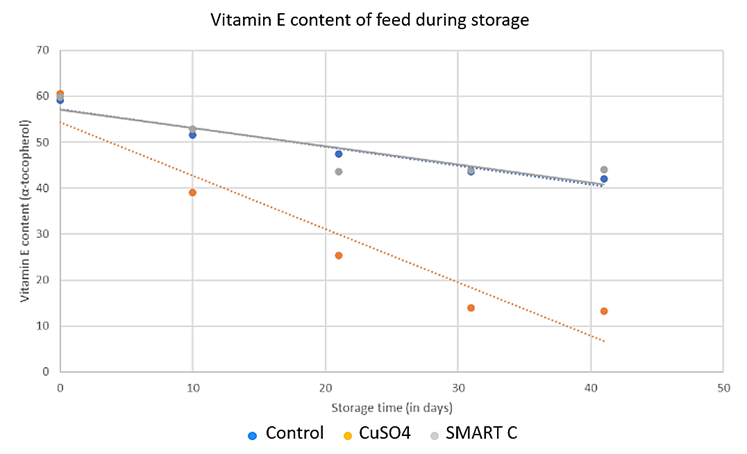
Vitamin stability is another critical parameter influenced by mineral sources. A recent Orffa trial indicates that hydroxy minerals reduce degradation of fat-soluble vitamins, preserving up to 90% of vitamin A and E content over extended storage period, whereas sulphate-based formulations exhibit marked losses within weeks (Figure 3a and 3b). This attribute is particularly relevant in premix manufacturing, where nutrient integrity directly impacts feed quality and animal health outcomes.
Figure 3a: Vitamin A content in 2 premixes with identical composition of trace minerals from SMART source and Inorganic source of Zn, Cu, and Mn, at 14000, 18000, and 10000 ppm, respectively in 3 months storage duration.
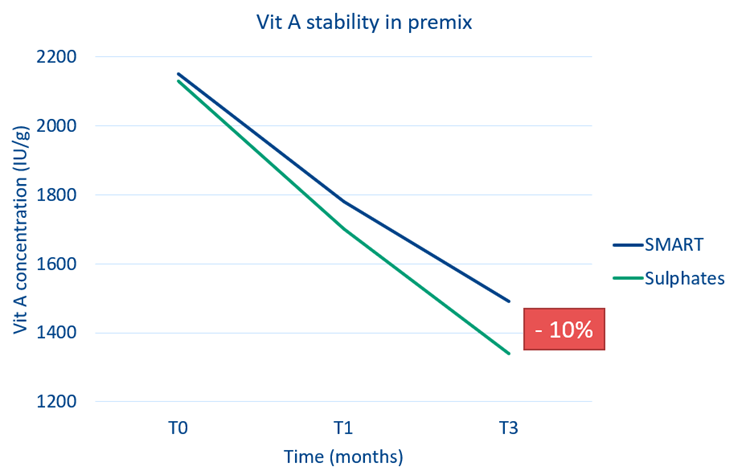
Figure 3b: Vitamin E content in feed during storage.
Palatability and feed intake have also been shown to be better with hydroxy mineral supplementation compared to other sources. Studies involving calves revealed a preference for hydroxy-based formulations over sulphates and organic complexes/chelates, suggesting that these other sources may be more soluble in the mouth, saliva which can cause an adverse taste, while hydroxy trace minerals will not.
Beyond nutritional efficacy, hydroxy trace minerals contribute to environmental sustainability by reducing mineral excretion. Lower fecal output of copper, zinc, and manganese translates into decreased accumulation in soil and water systems, aligning with global initiatives aimed at mitigating heavy metal pollution and eutrophication. This environmental benefit, coupled with improved feed efficiency, positions hydroxy minerals as a strategic component of sustainable livestock production systems.
Summary
Hydroxy trace minerals, as represented by products like Excential SMART, offer significant advantages in animal nutrition due to their unique crystalline structure and covalent bonding, which enhance stability and bioavailability. Studies demonstrate that these minerals improve animal performance and health, maintain vitamin integrity during storage, and support better palatability and feed intake. Additionally, hydroxy trace minerals promote environmental sustainability by reducing mineral excretion and the associated risks of soil and water contamination, making them an optimal choice for modern and sustainable livestock production.
References available upon request.