Dr. Sharad Durge, PhD
Poultry Technical Manager South Asia
dsm-firmenich
Heat stress is not just a biological problem in poultryit is a major economic threat to the poultry industry in India and the broader South Asian region. Because this region experiences prolonged summers, high humidity, and increasing frequency of heat waves, the financial impact is recurrent and seasonal (annual) rather than occasional.Heat stress is recognized as a major cause of economic loss in poultry globally and particularly in tropical regions like India (Journal of Thermal Biology, 2019). It leads to losses through reduced production, poor feed efficiency, increased mortality, and compromised egg quality (Wasti et al., 2020). Indian-focused research highlights that modern high-producing poultry genotypes are highly sensitive to rising temperatures, increasing the financial burden annually (Pawar et al., 2016). In practical terms, this translates into thousands of crores (billions of INR) of indirect and direct losses every year across the poultry value chain in India.
Heat stress causes losses through multiple pathways. These are cumulative and often overlap:
Loss in egg production- Reduction in laying percentage (often 5–20% during peak summer), decrease in egg mass and egg weight. Delay in onset of lay. Even a 5% drop in egg production across large commercial farms translates into massive revenue loss annually.
Egg quality losses- thin shells, higher breakage, reduced albumen quality, increased downgraded eggs. These losses directly affect market price realization, especially in organized retail and branded egg segments.
Feed efficiency losses- Birds eat less during heat stress, feed Conversion Ratio (FCR) worsens. Producers spend money on feed but get lower output per unit feed, increasing production cost per egg.
Mortality losses- Heat waves can cause sudden mortality spikes, especially when temperature exceeds 38°C and above. Loss of high-value layer birds results in direct capital loss.
Reproductive and hatchery losses- Reduced fertility and hatchability. Lower chick quality. This affects future production cycles, multiplying economic impact.
Increased health and veterinary costs- Increased disease susceptibility, higher medication and preventive costs.
Infrastructure and mitigation costs- Farmers invest heavily in:Cooling systems (fans, foggers, pads), modified housing and electrolytes and supplements. These adaptation costs add to annual economic burden.
Estimated magnitude of losses in India & South Asia
Industry-level estimates suggest summer losses can reduce profitability by 10–30% in layer farms (industry observations & ICAR reports). Poultry sector is larger and more temperature-sensitive, implying comparable or higher total losses nationally.
| Parameter | Impact during summer |
| Egg production | ↓ 5–15% |
| Egg weight | ↓ 2–5 g |
| Mortality | ↑ 2–5% |
| Feed efficiency | ↓ 5–10% |
| Net profit | ↓ 10–30% |
For a 100,000-layer farm, this can mean loss of ₹10-25 lakh per season scaled nationally thousands of crores annually. Heat stress losses are increasing due to rising average temperatures, more frequent heat waves, longer summer duration. A recent UN-backed report highlights that extreme heat is already pushing food systems in South Asia toward crisis levels, affecting livestock productivity and farmer livelihoods (news.un.org). This indicates that annual poultry losses are likely to increase significantly in coming years.
Let’s understand heat stress in detail as it is one of the most critical environmental challenges affecting commercial layer poultry, particularly in tropical and subtropical regions. It occurs when birds are unable to dissipate excess body heat generated from metabolism and environmental exposure, leading to physiological imbalance. Unlike mammals, poultry lack sweat glands and rely primarily on panting and limited heat dissipation mechanisms, making them highly susceptible to elevated ambient temperatures (Azzam et al., 2019; Estrada-Pareja et al., 2007).In modern high-producing layers, metabolic heat production is already high due to continuous egg formation. When ambient temperature exceeds the thermoneutral zone (typically 20-26°C), birds experience stress that negatively affects health, welfare, and productivity. Heat stress not only reduces feed intake and egg production but also induces profound biochemical and physiological alterations, including oxidative stress, endocrine disruption, and organ dysfunction (Mashaly et al., 2004; Khan et al., 2014).
Pathophysiology of heat stress in layers
Heat stress results from an imbalance between heat production and heat loss. Birds attempt to regulate body temperature through panting, vasodilation, and reduced activity. However, prolonged exposure leads to reduced feed intake (to minimize metabolic heat), increased water intake, respiratory alkalosis due to excessive panting and redistribution of blood flow toward peripheral tissues. This redistribution reduces blood supply to vital internal organs such as the liver, intestine, kidney, and reproductive tract, resulting in hypoxia and metabolic disturbances (Rostagno, 2020).
Biochemical changes in blood due to heat stress
Heat stress induces significant alterations in blood biochemical parameters, reflecting systemic metabolic disruption.Energy and Metabolic Indicators, increased blood glucose, triglycerides, and cholesterol, reduced insulin levels and decreased protein metabolism efficiency. These changes indicate altered energy metabolism and stress-induced endocrine imbalance (Khan et al., 2011).
Electrolyte and acid–base imbalance
Decreased Na⁺ and K⁺, increased Cl⁻, development of respiratory alkalosis due to CO₂ loss during panting. Electrolyte imbalance affects nerve function, muscle activity, and eggshell formation (Wolfenson et al., 2001).
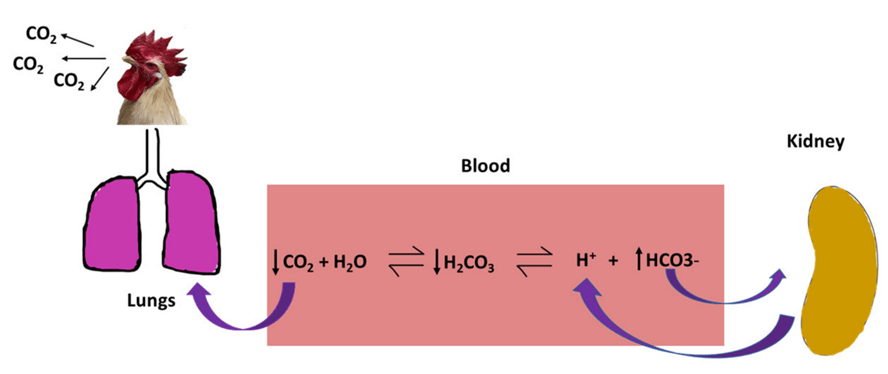
Fig. 1. Schematic diagram showing an acid-base imbalance in poultry under heat stress (Wasti et al., 2020).
Hormonal changes
Increased corticosterone (stress hormone), decreased triiodothyronine (T₃) and altered thyroxine (T₄) levels. These changes reduce metabolic efficiency and growth (Lin et al., 2007).
Hematologicalchanges
Reduced white blood cell count, increased heterophil/lymphocyte ratio (indicator of stress), damage to red blood cell membranes due to oxidative stress. Heat stress weakens immunity and increases susceptibility to diseases (Mashaly et al., 2004).
Mineral and vitamin alterations
Decreased serum calcium and phosphorus, reduced vitamins and trace minerals. This contributes directly to poor eggshell quality and bone metabolism (Azzam et al., 2019).
Oxidative stress and free radical production
One of the most critical consequences of heat stress is oxidative stress, characterized by excessive production of reactive oxygen species (ROS) beyond the antioxidant defense capacity.Reactive Oxygen Species (ROS) generated, superoxide radical (O₂⁻), hydrogen peroxide (H₂O₂), hydroxyl radical (OH•) and reactive nitrogen species (RNS). These radicals are primarily generated in mitochondria during oxidative phosphorylation and increase significantly under heat stress conditions (Akbarian et al., 2016). Rapid oxidative processes and increased oxidative radicles causes oxidative damage via lipid peroxidation of cell membranes, protein oxidation, DNA damage, enzyme inactivation. Heat stress reduces antioxidant enzymes such as superoxide dismutase (SOD), glutathione peroxidase, and catalase, leading to accumulation of ROS (Emami et al., 2020).ROS production increases significantly in heat-stressed hens, indicating oxidative damage at the cellular level (Lin et al., 2007).Oxidative stress can increase TBARS (thiobarbituric acid reactive substances), creatine kinase (CK) and their elevated levels act as stress biomarkers.
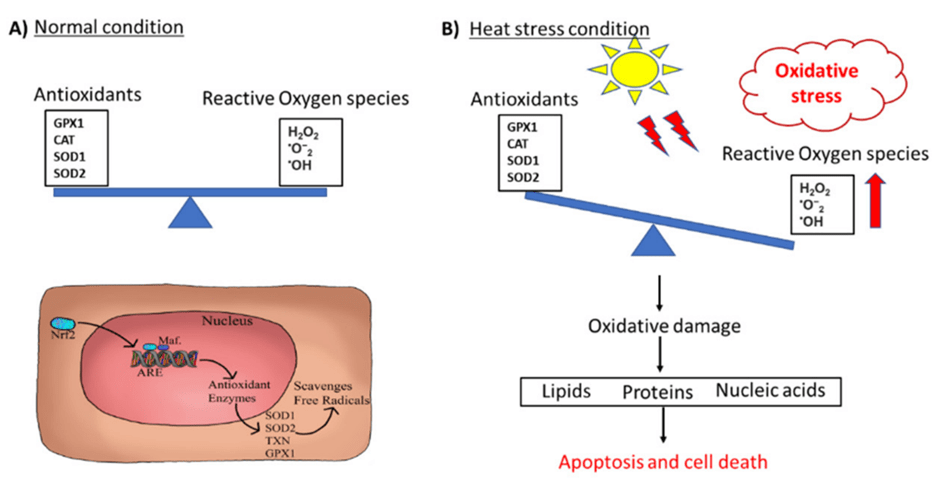
Fig. 2. Schematic diagram showing the redox system. (A) Normal condition, and (B) under heat stress (Wasti et al., 2020).
Organs at risk due to heat stress
Heat stress affects multiple organ systems due to hypoxia, oxidative damage, and metabolic disturbances.Liver – impaired lipid metabolism, reduced synthesis of egg yolk precursors, oxidative damage to hepatocytes. Kidney – Renal dysfunction and fibrosis, increased creatinine levels, impaired excretion of toxins, chronic heat stress has been shown to cause significant kidney damage and reduced albumin levels (Zhang et al., 2024).Intestine – reduced nutrient absorption, increased gut permeability, altered microbiota. Reproductive system (Ovary and Oviduct) – reduced follicular development, impaired shell gland function, decreased calcium deposition. Cardiovascular system – Altered blood flow distribution, increased heart rate. Immune organs – suppression of immune response, increased disease susceptibility. Severe heat stress can lead to death due to dehydration, electrolyte imbalance, and organ failure (Khan et al., 2011).
Managemental strategies to reduce heat stress
Effective management is essential to mitigate the adverse effects of heat stress in layer poultry.Environmental Management includes proper ventilation and air movement to reduces heat accumulation, use of fans and tunnel ventilation systems. Cooling systems for evaporative cooling (foggers, misters, cooling pads). Sprinklers for roof cooling. Housing Design – East-west orientation of sheds, reflective roofing materials, adequate spacing between birds (birds placement). Nutritional management – Electrolyte supplementation, Sodium bicarbonate, potassium chloride, maintains acid–base balance. Antioxidants – Vitamin C, Vitamin E, selenium. Enhance antioxidant defence system – antioxidant supplementation improves physiological responses under heat stress (Felver-Gant et al., 2014).Energy-Dense DietsReduce heat increment of feeding – increase fat content, mineral supplementation calcium, phosphorus, zinc, magnesium – improve eggshell quality and metabolic function. Water management – provide cool, clean water continuously, increase number of drinkers, add electrolytes during peak heat, water intake is critical for thermoregulation and survival.
Feeding Management – feed during cooler hours (early morning, evening), avoid feeding during peak heat, wet mash feeding to increase intake. Health management – vaccination and biosecurity, Monitoring stress indicators (H/L ratio, corticosterone), early detection of heat stress symptoms
Heat stress is a multifactorial challenge that significantly impacts layer poultry through complex physiological, biochemical, and oxidative mechanisms. It induces profound changes in blood biochemistry, including altered electrolyte balance, hormonal disruption, and increased oxidative stress due to excessive production of reactive oxygen species. These changes lead to damage in critical organs such as the liver, kidney, intestine, and reproductive system, ultimately reducing egg production, egg quality, and overall bird health.Effective mitigation requires an integrated approach combining environmental control, nutritional strategies, antioxidant supplementation, and improved management practices. As climate change continues to increase the frequency of heat waves, adopting scientific and proactive measures will be essential for sustaining poultry productivity and welfare.