*Tanmay Mondal¹, Mokshata Gupta², Chetna Mahajan¹, Rachana Sharma¹ and Ravindra Kumar3
¹Assistant Professor, Department of Veterinary Physiology & Biochemistry, College of Veterinary Science, Rampura Phul, GADVASU, Punjab, India
²Assistant Professor, Department of Animal Nutrition, College of Veterinary Science, DUVASU, Mathura, Uttar Pradesh, India
3Professor, Department of Veterinary Physiology & Biochemistry, College of Veterinary Science, Rampura Phul, GADVASU, Punjab, India
*Corresponding Author: tanmay@gadvasu.in
Dairy farming success depends greatly on the health and productivity of animals. Among the various health problems, metabolic diseases are often overlooked because they develop internally and are not contagious. These disorders mainly arise when the animal’s nutrient intake does not match its physiological needs, particularly during the transition period around calving. High-yielding cows and buffaloes are more vulnerable due to their higher demand for energy, calcium, and minerals. If these requirements are not properly met, the animal starts mobilizing body reserves, which ultimately affects milk production, fertility, and overall health. However, most of these diseases can be prevented through proper feeding and timely management.
Major Metabolic Diseases and Their Nutritional Management
Milk fever, or hypocalcaemia, is caused by a sudden decline in blood calcium levels immediately after calving due to heavy calcium loss in colostrum and milk. Nutritional management plays a crucial role in its prevention. During the dry period, especially in the last two to three weeks before calving, animals should be fed a low-calcium diet mainly consisting of dry fodder such as wheat straw. This helps activate the body’s calcium mobilization mechanism. Excess feeding of calcium-rich green fodder like berseem and lucerne should be avoided during this stage. In addition, the use of anionic salts can help maintain proper calcium balance. Around calving, oral calcium supplements should be provided before and after parturition to meet the sudden demand. Maintaining an optimum body condition score and ensuring regular exercise further improves calcium metabolism.
Ketosis is primarily an energy deficiency disorder that occurs in early lactation when feed intake is insufficient compared to the high energy requirement for milk production. Nutritional management focuses on maximizing energy intake and preventing excessive fat mobilization. During the transition period, gradual increase in concentrate feeding (steaming up) helps the rumen adapt to high-energy diets. After calving, animals should be offered highly palatable and digestible feed, including good quality green fodder and balanced concentrates. Supplementation with energy sources such as propylene glycol during late pregnancy and early lactation is highly beneficial. Inclusion of nutrients like niacin, cobalt, and vitamin B12 supports liver function and efficient energy metabolism. Avoiding over-conditioning of animals before calving is equally important, as fat animals are more prone to ketosis.
Pregnancy toxaemia occurs due to severe energy deficiency during late pregnancy, particularly in animals carrying multiple fetuses or those with excessive body fat. Nutritional management aims at ensuring continuous and adequate energy supply despite reduced feed intake. Feeding small, frequent meals of energy-rich and easily digestible feed helps maximize intake. Supplementation with propylene glycol during the last few weeks of pregnancy provides an additional glucose source. Maintaining proper body condition throughout the dry period is essential, as both underfeeding and overfeeding increase the risk. Inclusion of balanced minerals and vitamins supports overall metabolic health and reduces complications.
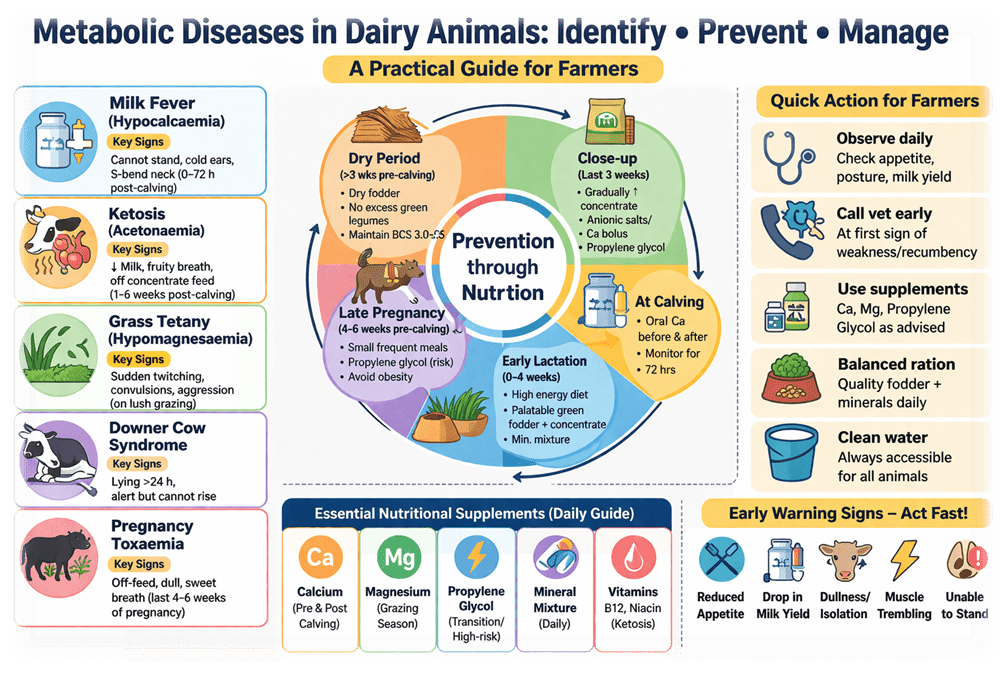
Grass tetany is associated with low magnesium levels and is commonly seen in animals grazing on lush pastures. Nutritional prevention revolves around maintaining adequate magnesium intake. Regular supplementation of magnesium oxide in feed or mineral mixture is essential during high-risk periods. Animals should not be abruptly shifted to young green pasture; instead, gradual adaptation is recommended. Feeding dry roughage along with green fodder improves rumen function and magnesium absorption. Application of magnesium-containing fertilizers in pasture fields can also enhance the mineral content of fodder. Providing free-access mineral blocks ensures continuous intake of essential minerals by grazing animals.
Downer cow syndrome, though not a primary disease, requires strong nutritional and supportive care. Proper feeding helps in faster recovery and prevents further complications. Affected animals should be provided with easily accessible, highly palatable feed and clean water, as their movement is restricted. Diets should be balanced with adequate calcium, phosphorus, and energy to support muscle and nerve function. In cases where phosphorus deficiency is suspected, appropriate supplementation becomes necessary. Good nutritional support along with soft bedding and frequent repositioning improves the chances of recovery and reduces muscle damage.
| Disease | Key Nutritional Cause | Important Signs | Immediate Action | Preventive Nutrition |
| Milk Fever | Low blood calcium | Cannot stand, cold ears | IV calcium | Low Ca diet pre-calving + Ca supplement |
| Ketosis | Energy deficiency | Low milk, fruity smell | Glucose/propylene glycol | High-energy diet, steaming up |
| Grass Tetany | Magnesium deficiency | Convulsions, twitching | IV magnesium | Mg supplementation + gradual grazing |
| Downer Cow | Secondary (Ca/P deficiency) | Cannot rise >24 hrs | Supportive care | Balanced minerals + good management |
| Pregnancy Toxaemia | Energy shortage in late pregnancy | Off-feed, dull | Glucose therapy | Energy-rich diet + propylene glycol |
Conclusion
Metabolic diseases are largely preventable and mainly result from improper nutritional management, especially during the transition period. Balanced feeding, gradual dietary changes, and timely supplementation of minerals and energy sources are key to prevention. Regular observation of animals for early signs such as reduced appetite, drop in milk yield, or abnormal behavior is equally important.