


Introduction:
Heat stress is one of the most critical environmental challenges affecting modern poultry production, particularly in tropical and subtropical regions. Heat stress occurs when the bird’s heat production exceeds its capacity for heat dissipation, leading to disruption of homeostasis. Once ambient temperatures rise above the thermoneutral zone (18–25°C), birds initiate physiological mechanisms to maintain body temperature, often at the cost of productivity and health. Heat stress (HS) is classified as Acute (1–24 hrs, 27–38°C), Moderate (up to 7 days), or Chronic (over 7 days), causing significant economic losses (Oluwagbenga et al., 2023)
In layers and breeders, these physiological disturbances directly impair egg production, shell quality, fertility, and hatchability. Understanding these internal changes is essential for designing effective mitigation strategies.
Thermoregulatory Physiology in Poultry:
Unlike mammals, poultry lack sweat glands and rely primarily on the following:
- Respiratory evaporation (panting)
- Peripheral vasodilation
- Behavioral adaptations (wing spreading, reduced activity)
When environmental temperature rises:
- Sensible heat loss (radiation, convection, conduction) becomes ineffective
- Evaporative cooling becomes the primary mechanism
However, this shift leads to serious physiological imbalances, particularly in acid–base status and metabolism (Wasti et al., 2020)
a.Acid–Base Imbalance: Heat stress-induced excessive panting causes respiratory alkalosis, lowering CO₂ and raising blood pH. This reduces ionized calcium, impairing eggshell formation and enzyme activity, resulting in thin, poor-integrity shells. Heat stress reduces egg quality, lowering egg weight (3.24%), shell thickness (1.2%), shell weight (9.93%), and egg shell percent (0.66%), thereby significantly increasing breakage (Ebeid et al., 2012).
b. Metabolic Alterations: Heat stress in poultry disrupts energy and nutrient metabolism by decreasing feed intake to reduce metabolic heat. This shifts the state to catabolic, increasing body fat and lowering protein. Energy reallocates from production (e.g., egg formation) to survival (thermoregulation), severely compromising performance.
- Layers: Experience lower haugh unit, egg weight, poorer albumen, and thinner shells.
Quantified Decline: Egg production progressively decreases: 13.2% (8–14 days), 26.4% (30–42 days), and 57% (43–56 days) (Sesay et al.,2022). Additionally, Lara et al.(2013) reported a reduction of 31.6% in feed conversion, 36.4% in egg production, and 3.41% in egg weight.Haugh unit scores also decrease by 5–8% (Almatary et al.,2026)
- Breeders: Show poor body condition uniformity and reduced reproductive efficiency.
c. Neuroendocrine Response: Heat stress activates the Sympathetic-Adreno-Medullary (SAM) and Hypothalamic-Pituitary-Adrenal (HPA) axes, causing the release of glucocorticoids (corticosterone).
d. Immune Suppression: Heat stress weakens immunity, leading to reduced lymphocyte proliferation and antibody production, increased infection susceptibility, vaccination failure, and chronic disease due to immunosuppressive glucocorticoids.
e. Gut Disruption: Heat stress causes “leaky gut” (increased permeability, disrupted tight junctions) and dysbiosis (reduced beneficial bacteria, increased pathogens), resulting in poor nutrient absorption and systemic inflammation.
f. Reproductive Decline: Heat stress in layers decreases egg production (15–25%), worsens shell quality, and increases breakage by impairing hormonal secretion (GnRH, LH, FSH) and calcium metabolism. Breeders are highly sensitive, experiencing reduced fertility (10–20%), lower hatchability, and increased embryonic mortality. This is due to reduced sperm quality/motility in males and impaired yolk formation in females. Aswathi et al. (2019) reported a reduction in fertility percentage (-7.22%) and hatchability of fertile egg sets (-2.51%) in breeders. Maternal stress also impacts offspring. For example, breeders show 48% lower sperm penetration at 27°C versus 21°C. (Mcdaniel et al., 1996 and Oluwagbenga et al., 2023).
g. Cellular Adaptation: Heat stress triggers protective heat shock proteins (HSPs) to maintain cellular homeostasis, but prolonged stress overwhelms this mechanism, causing cellular dysfunction.
Nutritional Strategies for Managing Heat Stress:
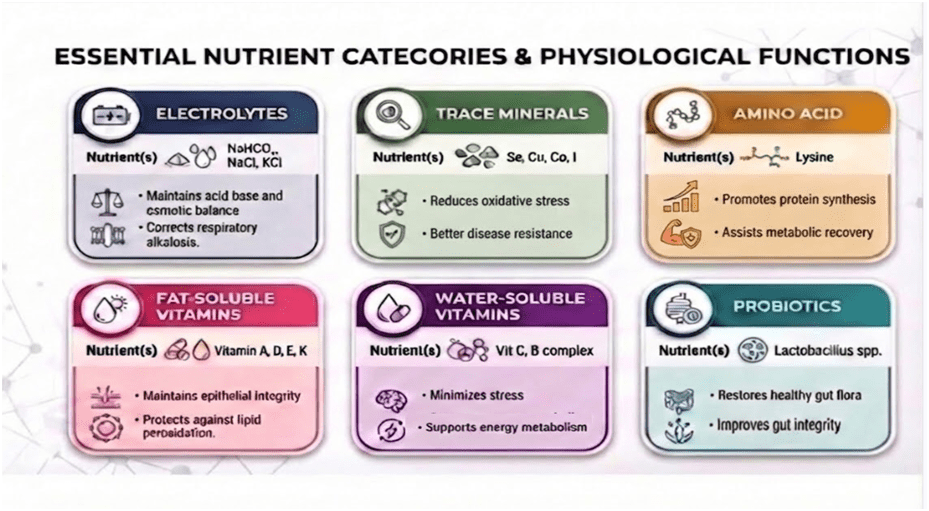
Nutritional strategies are crucial for managing heat stress by correcting the internal physiological imbalances it causes. The primary goals are to restore electrolyte and acid–base balance, minimize oxidative stress, and maintain gut health. This is achieved through the targeted use of essential nutrients, including electrolytes; vitamins (C, E), minerals (zinc, selenium), amino acids, and probiotics.
The impact of heat on water intake is significant: birds increase their water consumption by 1.2% for every 1°C rise in the temperature range of 22–32°C and by 5% for every 1°C rise between 32 and 38°C (Sohail et al.,2012). This elevated water intake is a natural mechanism to help control body temperature in hot environments. Since feed intake typically drops during heat stress, delivering these critical nutrients, which must be optimally utilized alongside the increased water intake and a sufficient oxygen supply, is most effective via drinking water, ensuring rapid absorption.
Some proprietary formulated anti-stress preparations could be the choice for preventing heat stress in poultry. Selection of the ingredients and concentration of critical ingredients in the water-soluble antistress formula are key important factors. The following nutritional and non-nutritional components have specific roles in managing heat stress in poultry in general.
A study across three commercial layer farms during summer heat (40°C) evaluated the efficacy of water-soluble antistress formula (Pollstress® Dry) manufactured by Bentoli in reducing high-temperature stress mortality. Analysis of daily bird mortality 10 days before and during the 10-day application showed:
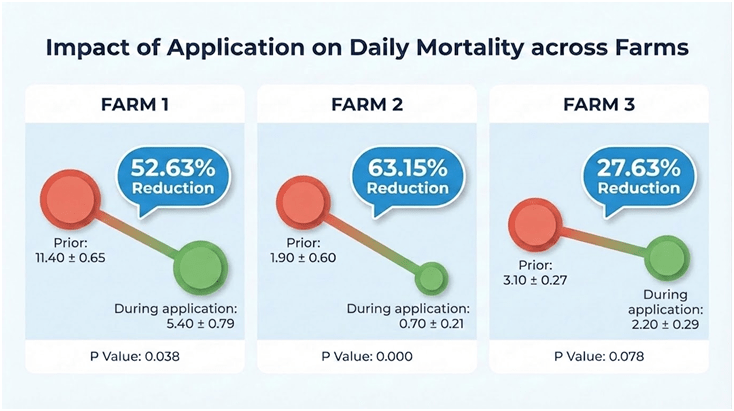
It was evident that the antistress formula, suitably designed, can successfully reduce bird mortality and can manage the flock health at an optimum level.
Conclusion:
Heat stress severely impacts layers and breeders, harming metabolism, immunity, gut, and reproductive health. While environmental control is vital, water-based nutritional strategies offer the fastest way to restore balance and maintain homeostasis. Immediate water supplementation corrects fluid/electrolyte imbalances. A water soluble antistress product can provide a comprehensive solution by restoring electrolyte/acid-base balance, supporting osmoregulation, reducing oxidative stress, and stabilizing neuroendocrine function. Administer antistress product through drinking water during peak heat, alongside continuous access to clean, cool water, to ensure effective management and sustained productivity.
References:
Will be provided on request