Dr. Bharat Sadarao, Dr. Partha Das, Dr. Venket Shelke, and Dr. R. Chanthirasekaran
Kemin Industries South Asia Pvt. Ltd., Chennai, India
INTRODUCTION
In the context of poultry production, commercial avian species face heightened susceptibility to heat stress due to physiological characteristics and environmental factors associated with their intensive growth and production rates. The growing demand for poultry meat and eggs has driven the selection of birds that grow quickly and produce more, resulting in strains particularly vulnerable because of their increased metabolic activity and heat generation. This selective breeding has improved economic traits, leading to enhanced body weight gain, efficiency, and breast yield, but has also resulted in undesirable fat accumulation, which is economically wasteful and affects consumer perception.
In poultry, excessive fat can impair reproductive performance, prompting investigations into dietary strategies to regulate lipid metabolism and decrease abdominal fat. With the rising costs of conventional feed ingredients like maize and soybean, researchers have turned to alternative feeds such as agro-industrial by-products, specifically broken rice, which is economically viable and provides comparable protein and energy content. The use of broken rice has shown similar energy efficiency in poultry diets but poses challenges due to its high oil content, risking oxidative rancidity in hot climates.
Studies have indicated that substituting maize with alternative sources like broken rice can lead to increased fat accumulation in poultry, contributing to issues like fatty liver-hemorrhagic syndrome (FLHS) and sudden mortality. Additionally, the unique digestibility characteristics of rice, combined with heat stress effects, exacerbate fatty tissue proportions within poultry. Therefore, this revision aims to educate poultry owners about factors influencing abdominal fat deposition and propose potential solutions for managing these issues, especially during the summer months.
MECHANISM OF FAT DISTRIBUTION
In avian species, the majority of fat synthesis, almost 90%, occurs in the liver, with adipose tissues primarily serving as fat storage. In species such as commercial poultry, especially when dietary fat intake is low, the liver’s role in fatty acid production becomes even more critical. Once formed, fatty acids are transformed into triacylglycerol (TG) and packaged into very low-density lipoprotein (VLDL) for distribution to tissues for immediate energy use or storage. An increase in liver fat synthesis results in heightened transportation of triacylglycerol to adipose tissues via VLDL. However, insufficient VLDL production to manage the liver’s TG output can cause lipid buildup and hepatic steatosis. Birds lack a well-developed lymphatic system, so fat absorption occurs directly in the gastrointestinal tract, with lipids transported to the liver as portomicrons through the hepatic portal system. This unique physiology means that well-fed avian species, notably commercial poultry, are more prone to liver fat deposition. The accumulation of body fat in birds is influenced by the availability of plasma lipid substrates sourced from the diet or synthesized in the liver. Consequently, the lipid sources in poultry diets significantly affect overall body fat distribution.
EFFECT OF SUMMER STRESS ON FAT DEPOSITION
Modern broiler chickens have undergone significant artificial selection for traits such as rapid growth and feed efficiency, leading to weights that are over four times heavier than those of broilers from 1957 by the shipping age of 56 days. High ambient temperatures minimize energy expenditure for thermoregulation, resulting in excess energy being stored as ectopic fat, which is utilized for thermogenesis at lower temperatures. Chronic heat stress alters the fatty acid profile in tissues, increasing saturated fatty acids and causing a rise in overall fatness while reducing unsaturated fatty acids. Studies indicated that chronic heat exposure negatively affects muscle composition, notably decreasing breast muscle proportion while increasing thigh muscle. Interestingly, even with reduced feed intake, fat deposition in poultry can escalate due to heat stress; broilers maintained at 34°C retained 25% more dietary energy as body fat compared to those in thermoneutral conditions (22°C). Heat stress explicitly enhances abdominal fat deposition, as shown by a ~20% increase in adiposity after just a week of exposure. Prolonged exposure to heat can lead to an 80% increase in abdominal fat after three weeks. Concurrently, heat-exposed broilers display alterations in hormone levels, with lower plasma triiodothyronine and elevated corticosterone, which may drive further fat.
Additionally, environmental factors contribute to conditions like fatty liver-haemorrhagic syndrome (FLHS), which is more prevalent in summer; high temperatures increase lipid accumulation in laying hens. Data from farms indicate that mortality rates are significantly influenced by extreme summer climate changes, particularly in older chickens (over 27 days) during critical fattening periods. Previous studies report elevated mortality linked to FLHS under higher ambient temperatures, underscoring the essential role of environmental heat in these adverse outcomes.
ROLE OF EMULSIFIERS ON FAT MOBILIZATION
The digestion of fats presents significant challenges because fats are not water-soluble, yet the process occurs in an aqueous environment within the small intestine. Emulsifiers, particularly bile salts, and the enzyme lipase play crucial roles in fat digestion by facilitating emulsification, which is influenced by factors such as the chain length of fatty acids, their placement on triglycerides, and saturation levels. However, certain factors can hinder the effectiveness of these natural emulsifiers, notably in young birds, where limitations in bile salt and lipase production restrict fat digestion until their gastrointestinal tracts mature. This immaturity prevents the formation of mixed micelles essential for effective fat breakdown and nutrient absorption.
Additionally, epithelial damage and inflammation can compromise the intestinal barrier, leading to increased pathogen entry, heightened inflammatory responses, and impaired nutrient absorption—particularly affecting fat and fat-soluble vitamins more than macronutrients like carbohydrates or proteins. Non-starch polysaccharides (NSPs), being indigestible carbohydrates, contribute to increased gut viscosity, enclosing nutrients and fostering the growth of anaerobic bacteria, which adversely affect fat digestion by deconjugating bile acids, leading to increased excretion of bile.
This situation has sparked interest in exogenous emulsifier preparations to enhance fat utilization. These emulsifiers can assist bile salts in both emulsion and micelle formation, positively impacting lipid digestibility and performance. Emulsifiers can lower surface tension, promote micelle formation, and facilitate nutrient transport across intestinal membranes. They can be classified into natural emulsifiers (e.g., bile and phospholipids, and those from food materials such as soy lecithin) and synthetic ones (e.g., modified emulsifiers like lysolecithin or lysophosphatidylcholine blends of hydrolyzed lecithin, glycerol polyethylene glycol ricinolate).
The selection of emulsifiers often relies on their hydrophilic-lipophilic balance (HLB), which indicates their solubility characteristics; lower HLB values correlate with more lipophilic properties, while higher values indicate increased hydrophilicity. Research suggests that combining suitable emulsifiers can enhance stability better than using individual emulsifiers.
CHALLENGES WITH CURRENT MOLECULES AND SOLUTIONS
Dietary supplementation of bile salts has been shown to enhance lipid utilization in chickens; however, its commercial application is limited due to economic constraints. Lecithin, being a more lipophilic emulsifier, is considered unsuitable for poultry because of its structure, which comprises two lipophilic tails and one hydrophilic head. Despite improvements in fat digestion attributed to bile salt supplementation, it remains economically unfeasible as a feed additive. In chickens, the gut functions as an oil-in-water emulsion system, necessitating high HLB emulsifiers, since birds consume approximately double the amount of water compared to feed. Research indicates that the addition of polyethylene glycol (PEG)-based emulsifiers may inadvertently lead to the inhibition of lipase activity due to steric hindrance in emulsified components. Moreover, safety concerns arise from the potential formation of 1,4-dioxane, a carcinogenic compound produced during the synthesis of PEG-based emulsifiers, compelling the cosmetic industry to explore alternatives that do not involve PEG.
To fully harness the growth potential of broilers, cost-effective exogenous emulsifiers are being explored, with lysophospholipids (LPL) emerging as a promising candidate. LPLs sustain superior emulsifying properties compared to bile salts and soy lecithin due to the removal of one hydrophobic tail, resulting in greater stability within the gastrointestinal tract’s aqueous environment. They exhibit a higher hydrophilic-lipophilic balance and better oil-water emulsification capability than standard phospholipids and have a lower critical micelle concentration, facilitating smaller micelle formation. The efficacy of LPLs as emulsifiers is contingent on the appropriate ratio of lecithin to lysolecithin, typically maintained within an HLB range of 8 to 16.
Additionally, novel compounds like polyglycerol derivatives of fatty acid esters have been assessed, demonstrating improved surfactant properties compared to polyethylene-based emulsifiers due to the presence of secondary hydroxyl groups in their glycerol components. Metabolic studies indicate that these polyglycerol esters undergo hydrolysis in the gastrointestinal tract, with the fatty acid moieties metabolizing normally. A two-year dietary study on these esters confirmed their non-carcinogenic nature and the absence of adverse effects at concentrations up to 5%.
KEMIN SOLUTION FOR FAT MANAGEMENT
The published results of the above-mentioned solutions led to the hypothesis that polyglyceryl emulsifiers of fatty acids at optimal amounts in the LYSOFORTE® formulation could be an ideal nutritional emulsifier to improve lipid emulsification and hydrolysis, thereby maximizing Lysoforte’s nutrient absorption capacity. To our knowledge, polyglycerol fatty acid esters have never been evaluated before as a nutritional emulsifier in the feed industry. LYSOFORTE®, which utilizes lysolecithin (HLB 8 – 11), has been shown to increase fat digestibility by facilitating the formation of small oil-in-water micelles in the intestines of animals. Additionally, lysolecithin is known to promote collagen expression and villus length in the jejunum of broiler chickens (Brautigan et al., 2017). Recently, a new version of LYSOFORTE®, namely LYSOFORTE® Extend Dry, containing a specific ratio of lysophospholipids, monoglycerides, and synthetic emulsifiers, was patented by Kemin Europa, claiming to maximize nutrient absorption by lysolecithin.
LYSOFORTE® Dry functions as a natural biosurfactant consisting of a patented molecular blend of various lysophospholipids, enhancing fat digestibility and absorption, with its effectiveness supported by several farm trials on broilers. Alternatively, LYSOFORTE® Extend Dry blends lysophospholipids, monoglycerides, and synthetic emulsifiers, theorized to work synergistically, improving fat and nutrient absorption in avian species. Furthermore, since birds consume approximately twice the amount of water compared to feed, their gastrointestinal tract operates as an oil-in-water emulsion system where high HLB emulsifiers are advantageous. This aligns with Bancroft’s principle (1912), which posits that emulsifiers should be soluble in the continuous phase to reduce interfacial tension and enhance micelle formation. Therefore, it is expected that high HLB emulsifiers would further enhance fat absorption in the gut. Therefore, along with LYSOFORTE® EXTEND, Kemin came out with a new molecule with a new molecule, LYSOFORTE® 2.0, with a synergistic combination of lysophospholipids, polyglycerides, and synthetic emulsifier in an ideal HLB ratio for best efficiency in all stages of fat digestion and nutrient absorption.
LYSOFORTE®
Composition:
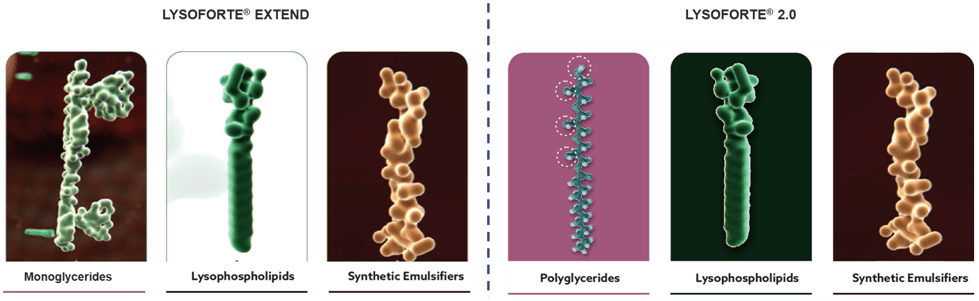
Figure 1: LYSOFORTE® variants composition for the market need.
Fat Digestion and Absorption Process:

Figure 2: LYSOFORTE® process in fat digestion and nutrient absorption.
Mode of Action_Emulsification:
LYSOFORTE® helps to improve each step of the fat digestion process. When animals consume food that contains LYSOFORTE®, the biosurfactant molecules and bile salts in the stomach create a stable oil-in-water emulsion (Figure 4), which emulsifies lipids and creates smaller fat droplets in the intestine.
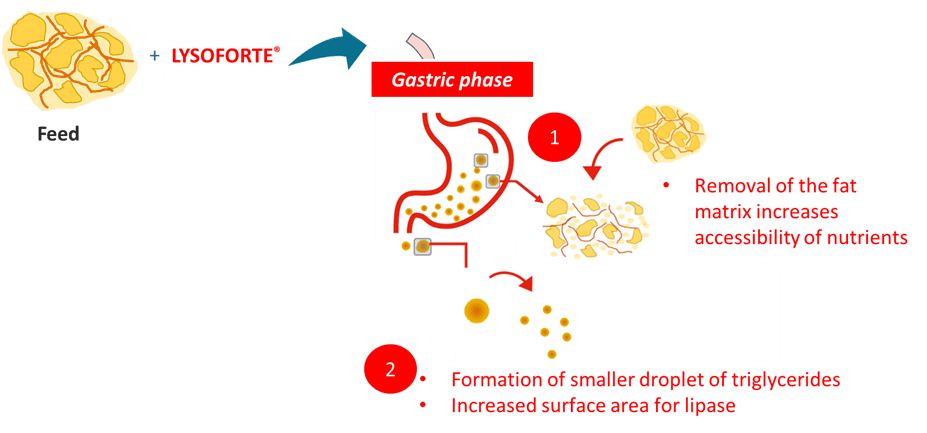
Figure 3: LYSOFORTE®: Emulsification.
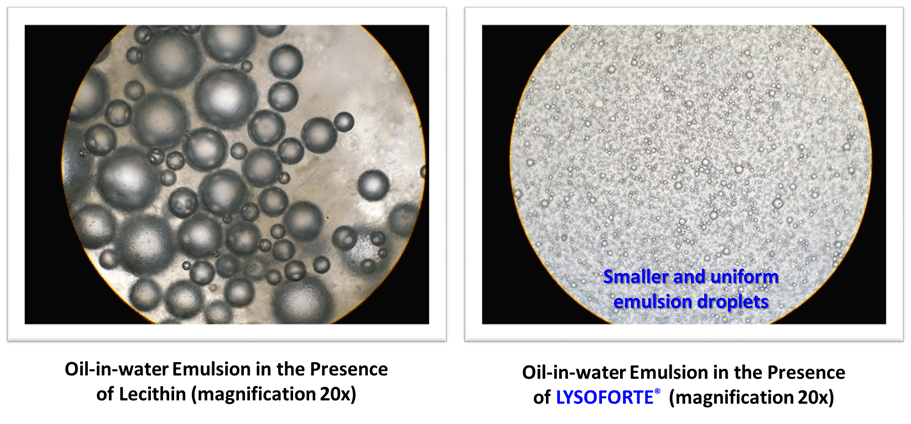
Figure 4: LYSOFORTE®: Emulsification in vitro.
Mode of Action_Lipid Hydrolysis:
LYSOFORTE® emulsions feature smaller fat droplets. Together, these tiny droplets give lipases a greater surface area to interact with the molecules, facilitating the more effective breakdown of fatty acids in the intestinal liquid phase.
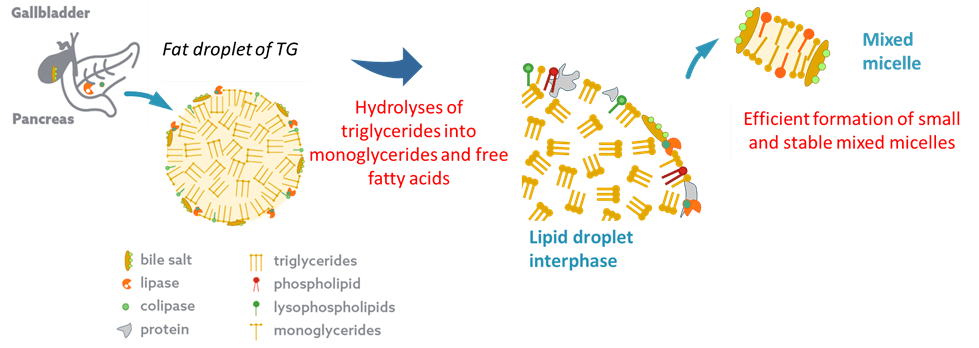
Figure 5: LYSOFORTE®: Lipid hydrolysis process in the small intestine.
Mode of Action_Nutrient Absorption:
Following hydrolysis, fatty acids aggregate to form micelles. LYSOFORTE® lowers the critical micelle concentration, which supports the formation of smaller and more stable micelles. This helps improve the absorption of fats, oils, and fat-soluble nutrients by the intestine, and has the best efficiency in all stages of fat digestion and absorption of nutrients.
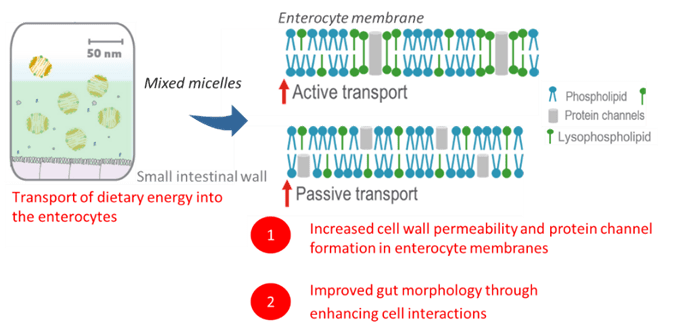
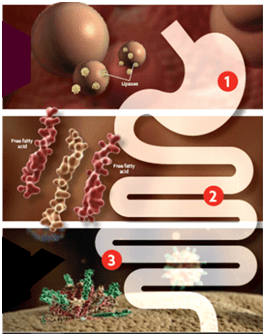
Figure 6: LYSOFORTE®: Nutrient absorption process in the small intestine.
Mode of Action_Gut Integrity:
The intestinal villi are covered with a single layer of absorptive and secretory cells in mammals. The more prominent collagen fibrils in the villi that we observed correspond to the lengthening of the villi. LYSOFORTE® significantly increases the villi collagen fibers and the villi length in the Jejunum. Longer villi would provide an improved absorptive area for the uptake of nutrients. An increase in tensile strength of the villi through increased deposition of collagen fibrils would enhance the overall structural health of the intestine.
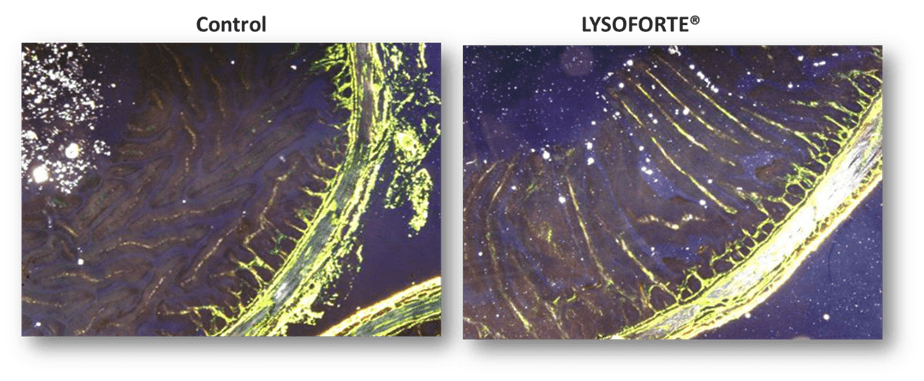
Figure 7: LYSOFORTE®: Collagen synthesis and Villi length.
Mode of action assists and promotes the absorption:
LYSOFORTE® plays an important role in promoting more efficient utilisation of feed. It facilitates the absorption of nutrients after enzymatic breakdown in the performance of several different species, including broilers, piglets, and fish. Its main mode of action is to assist and promote the absorption of nutrients that have been broken down by enzymatic digestion. LYSOFORTE® may act synergistically with other feed supplements, such as enzymes, which will improve nutrient breakdown in the gastrointestinal tract, but which will not necessarily influence absorption.
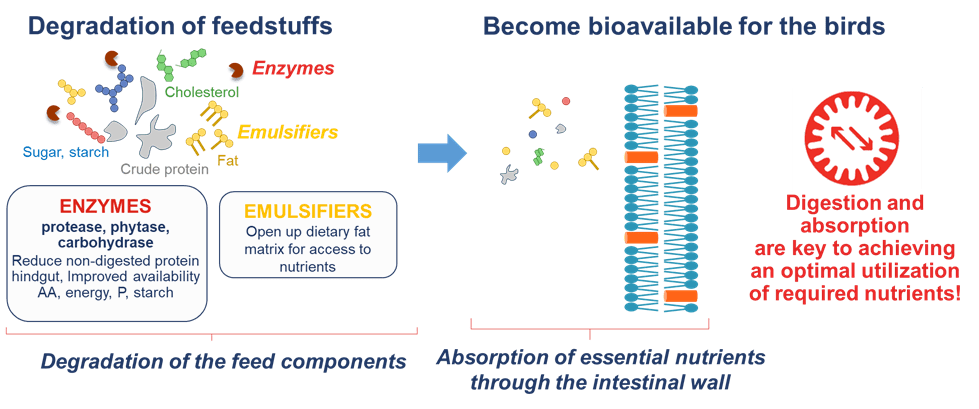
Figure 8: LYSOFORTE®: Synergism with enzymes for better absorption.
CONCLUSION
In summary, poultry production is significantly affected by thermal stress, particularly under high ambient temperatures and humidity, which adversely affect bird performance and fat utilization. Mortality rates are notably higher during the summer, especially towards the end of the fattening period, indicating an urgent need for effective monitoring and regulation of microclimates in housing through modern technology systems. Moreover, the efficiency of glucose absorption is linked to fat deposition in the liver, and the impact of various starch sources on fat deposition in poultry warrants further investigation. Existing research has predominantly focused on natural emulsifiers; however, both natural and synthetic emulsifying agents should be explored to enhance optimal emulsification in diets. LYSOFORTE, a natural biosurfactant, enhances feed utilization by promoting better and faster emulsification, fat hydrolysis, and overall nutrient absorption and can work synergistically with other supplements, or even without added dietary fat. Additionally, it may further reduce fat deposition from oil components in feed or partially substitute for excess starch to reduce body fat deposition in hot & humid climates. Additionally, exogenous emulsifiers can lower feed costs by partially replacing expensive fats, emphasizing their economic potential in the poultry industry through improved digestion of animal and vegetable fats.References are available upon request.