Dr. Rohit Rathod, Dr. Gopal Potdar*, Dr. Hardik Patel
*= Contact to know more about dosage, information or references:
Dr. Gopal Potdar, Regen Biocorps AHI (P) Ltd., Vadodara
Mob. No.: 9510964755 / 9824657585
E mail ID: drgopal.potdar@regenbiocorps.com
Abstract
Heat stress is a major environmental challenge in the poultry industry, causing substantial economic losses globally. It triggers a cascade of physiological changes, including oxidative stress, acid-base imbalances, and immunosuppression, which lead to increased mortality, reduced feed efficiency, lower body weight gain, decreased feed intake, diminished egg production, and compromised meat and egg quality. Various mitigation strategies have been implemented with varying degrees of success, including nutritional interventions like feed restriction, wet or dual feeding, dietary fat inclusion, and supplementation with vitamins, minerals, osmolytes, and phytochemicals. Genetic approaches, such as incorporating naked neck (Na) and frizzle (F) genes in certain breeds, have also shown promise. This review compiles scientific evidence on the effects of heat stress on poultry health and performance, while evaluating effective mitigation strategies for broiler chickens and laying hens.
Introduction
Heat stress represents a significant threat to the poultry sector, adversely affecting bird health, welfare, and productivity. It occurs when poultry cannot achieve a balance between body heat production and dissipation, primarily due to high ambient temperatures combined with factors like humidity, radiant heat, and poor air circulation (Lara et al., 2013). Poultry species maintain a core body temperature of about 41-42°C, with optimal growth in the thermoneutral zone of 18-22°C (N.R. Kumari et al., 2018). Temperatures above 25°C are known to induce heat stress (Donkoh, 1989). In commercial settings, this stressor reduces feed intake, impairs body weight gain, and elevates mortality rates. Broilers are especially susceptible due to their rapid metabolism and high physiological demands.
Globally, heat stress results in billions of dollars in losses annually through decreased production efficiency and increased veterinary costs. With climate change exacerbating high-temperature events, particularly in tropical and subtropical regions, the poultry industry faces escalating challenges. This review delves into the physiological, neuroendocrine, and behavioral impacts of heat stress, followed by an exploration of mitigation strategies, including the role of innovative supplements like Thermogard.
Physiological, Neuroendocrine, and Behavioural Changes in Poultry Under Heat Stress
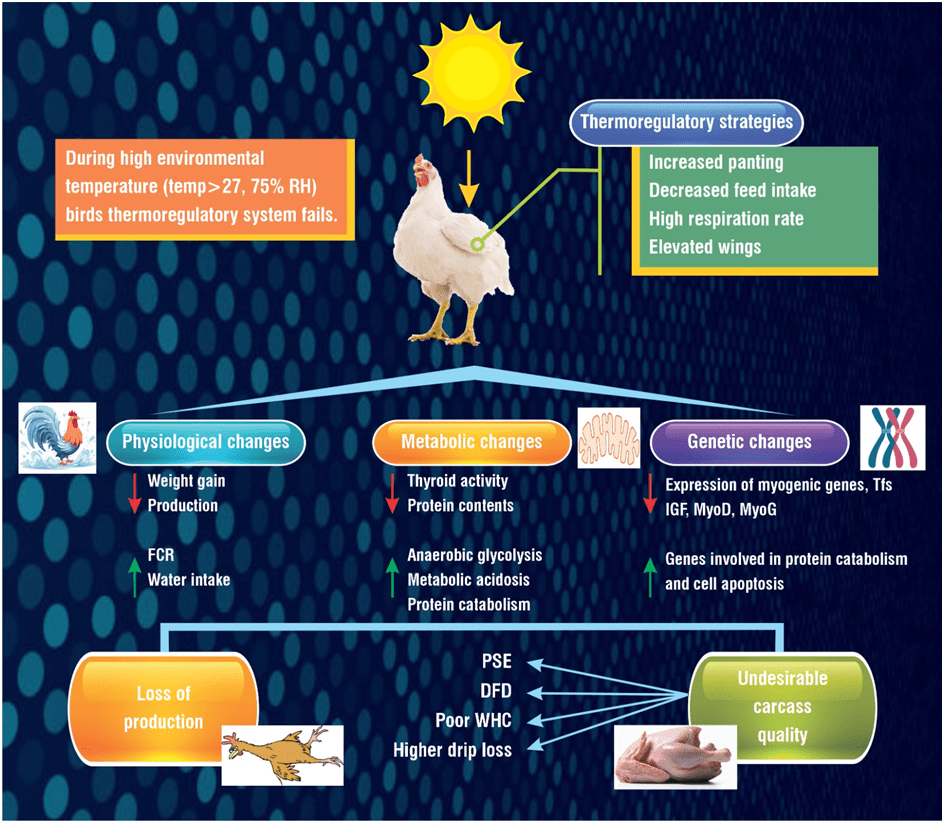
Heat stress disrupts homeostasis in poultry, eliciting profound physiological, neuroendocrine, and behavioral responses that culminate in performance declines.
Major Effects of Heat Stress
- Oxidative Stress: Overproduction of reactive oxygen species (ROS) damages cells, leading to health disorders and reduced growth.
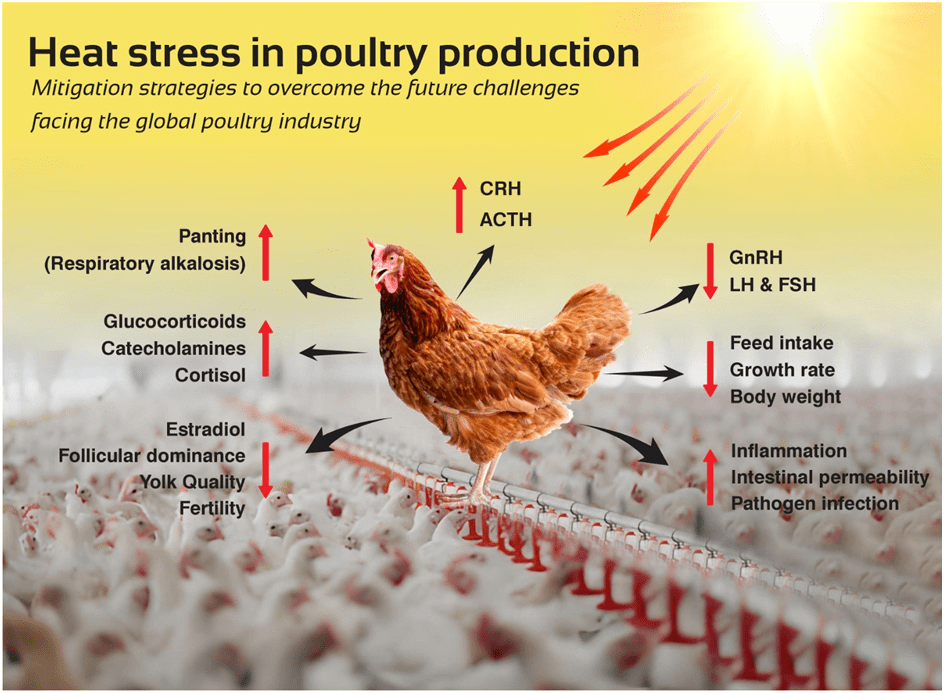
- Acid-Base Imbalance: Panting causes respiratory alkalosis, disrupting blood pH and impairing production.
- Suppressed Immunity: Shrinking of immune organs, reduced antibodies, and heightened disease risk.
- Performance Decline: Lower feed intake, body weight gain, egg production, and higher mortality.
Physiological Changes
Oxidative Stress
ROS, such as free radicals and peroxides, are byproducts of normal metabolism. Under thermoneutral conditions, the transcription factor Nrf2 enhances antioxidant production to maintain balance (Surai et al., 2019). Heat stress, however, increases ROS production or diminishes antioxidant defenses, resulting in oxidative stress (Mishra et al., 2019). In poultry, this leads to cellular damage, including protein, lipid, and DNA oxidation (Estevez, 2015). Severe cases can trigger reversible dysfunction, apoptosis, or necrosis (Lennon et al., 1991), contributing to stunted growth, health issues, and economic losses.
Acid-Base Imbalance
Poultry, lacking sweat glands and covered in feathers, struggle with thermoregulation. They rely on panting-rapid respiration with open beaks to evaporate heat from the respiratory tract (Richards, 1970). This expels excess CO2, altering the bicarbonate buffer system: reduced CO2 lowers H2CO3 and H+ while raising HCO3–, causing respiratory alkalosis. The kidneys compensate by excreting HCO3– and retaining H+, but this exacerbates imbalances, negatively affecting production (Borges et al., 2007).
Suppressed Immunocompetence
Heat stress weakens the immune system (Lara et al., 2013), increasing vulnerability to diseases like Newcastle and Gumboro, especially in hot seasons (Badruzzaman et al., 2015). It causes atrophy of organs such as the spleen, thymus, and lymphoid tissues (Ghazi et al., 2012), lowers antibody levels (Bartlett et al., 2003), reduces white blood cells, and raises the heterophil-to-lymphocyte (H/L) ratio, a key stress marker (Mashaly et al., 2004). Heat exposure can also lead to gut barrier dysfunction, increasing susceptibility to enteric infections (Song et al., 2012).
Neuroendocrine Changes
The neuroendocrine system plays a crucial role in stress response. Acute heat activates the sympathoadrenal medullary (SAM) axis, releasing catecholamines from the adrenal medulla, leading to hyperglycemia, glycogen depletion, increased respiration, vasodilation, and heightened neural activity (N.R. Kumari et al., 2018). Chronic stress engages the hypothalamic-pituitary-adrenal (HPA) axis: hypothalamus releases CRH, pituitary secretes ACTH, and adrenals produce corticosteroids for gluconeogenesis and elevated glucose (Smith et al., 2006). Heat also reduces thyroid hormones (T3 via decreased T4 deiodination) (Decuypere et al., 1988; Quinteiro et al., 2012), impairs gonadotrophin-releasing hormone (Nawab et al., 2018), and lowers sex hormones like progesterone, testosterone, and estradiol (Rozenboim, 2007), impacting growth and reproduction (Quinteiro et al., 2012; Yoshida et al., 2011).
Behavioural Changes
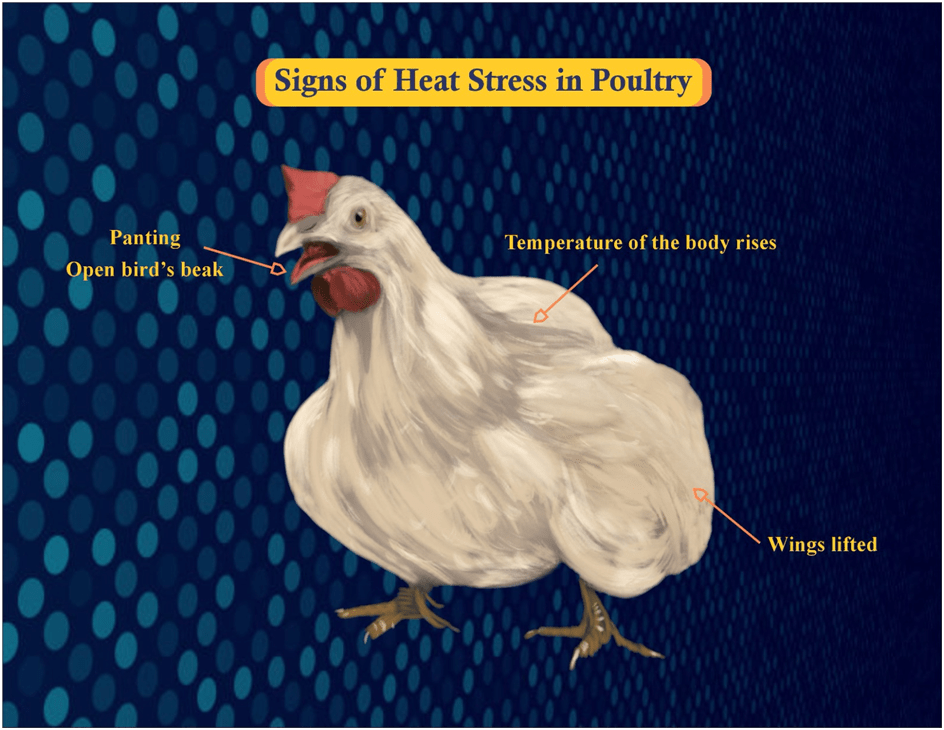
To cope with heat, poultry exhibit adaptive behaviors: reduced activity (less walking/standing), decreased feed intake with increased water consumption, wing spreading for airflow, and litter wallowing for cooling. Panting is prominent, often with lethargy and reduced social interactions (Lara et al., 2013). While this aid survival, they reduce nutrient intake and energy for production, worsening losses.
These changes collectively result in higher mortality, poor feed efficiency, reduced body weight, inferior product quality, and elevated FCR. Amid rising global temperatures, heat stress poses an ongoing economic threat.
Comprehensive Heat Stress Protection with Thermogard
Thermogard offers multifaceted protection against heat stress:
- Antioxidant Defense: Neutralizes free radicals, reducing oxidative damage.
- Immune Support: Bolsters immunity, lowering disease susceptibility.
- Metabolic Balance: Maintains pH, electrolytes, and hydration.
- Performance Enhancement: Boosts feed intake, growth, egg production, and efficiency.
Strategies to Mitigate Heat Stress in Poultry
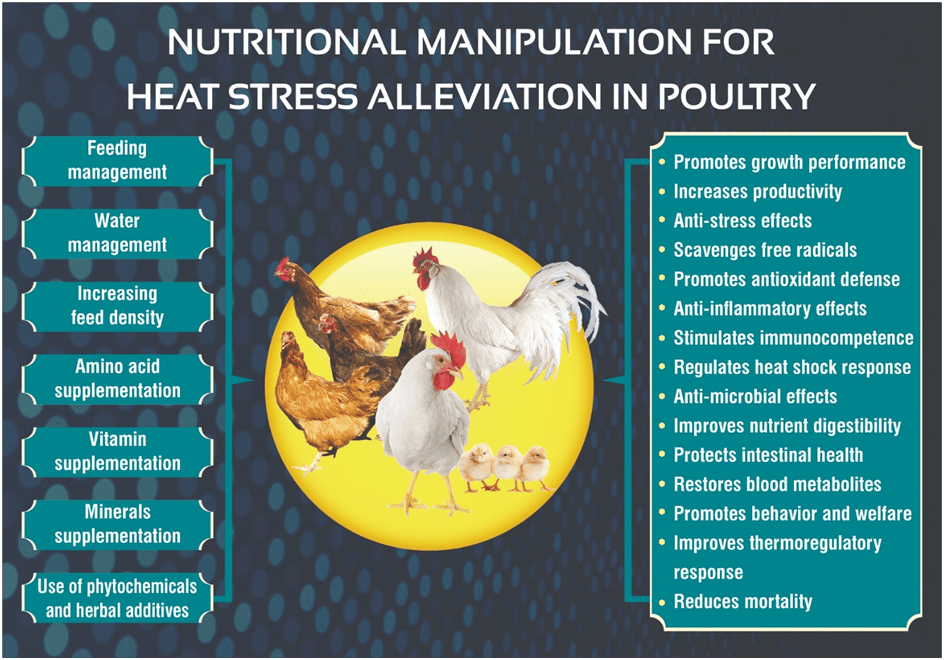
A combination of nutritional and management strategies can alleviate heat stress effects.
Feed Restriction
Restricting feed during hot periods (e.g., 8 a.m.- 5 p.m.) reduces metabolic heat, lowering rectal temperature and mortality (Uzum et al., 2013) while decreasing abdominal fat (Mohamed et al., 2019). However, it may slow growth (Uzum et al., 2013). Dual feeding-protein-rich in cool hours (4 p.m.- 9 a.m.) and energy-rich in warm- reduces temperature and mortality but not necessarily growth (Basilio et al., 2001; Lozano et al., 2006).
Adding Fat in the Diet
Fat produces less metabolic heat than proteins or carbs (Musharaf et al., 1999). At 5%, it slows digesta passage for better utilization (Mateos et al., 1982) and increases energy density (Attia et al., 2018). In layers, it boosts feed intake by 17% (Daghir, 2008); in broilers, it enhances performance (Ghazalah, 2008).
Vitamins
Vitamin E
A fat-soluble antioxidant, it neutralizes radicals and reduces inflammation (Dalolio et al., 2015). At 250 mg/kg in layers, it improves egg quality by protecting liver and vitellogenin (Khan et al., 2011; Bollengier et al., 1999; Yardibi et al., 2008; Mishra et al., 2019). In broilers, it lowers MDA and raises vitamin levels (Sahin et al., 2001).
Vitamin A
Supports immunity and radical neutralization (Sklan, 1994; Palace et al., 1999). Doses of 6000- 9000 IU/kg enhance egg weight and antibodies (Lin et al., 2002); in broilers, it improves growth and reduces MDA (Kucuk et al., 2003).
Vitamin C (Ascorbic Acid)
Scavenges ROS and boosts immunity (Traber et al., 2011; Carr, 2017). Heat stress depletes endogenous synthesis (Khan et al., 2012). At 250 mg/kg, it enhances growth, egg quality, immunity, and antioxidants, while reducing corticosterone.
Minerals
Zinc
Vital for enzymes, antioxidants, immunity, and bones (Prasad, 2002). Induces metallothionein for scavenging (Oteiza et al., 1996) and aids eggshell formation (Balnave et al., 1997). Organic zinc (40 mg/kg) boosts growth, lowers peroxides, and raises SOD (Rao et al., 2016; Lee, 2018).
Chromium
Enhances insulin and metabolism (Vincent, 2000; Hayirli, 2005). 200-1200 µg/kg improves broiler weight, intake, carcass, and hormones (Sahin et al., 2002); in layers, 0.4-2 mg/kg boosts immunity and egg quality (Sahin et al., 2002; Torki et al., 2014). It optimizes glucose use and reduces metabolic disturbances.
Selenium
Key for selenoproteins like glutathione peroxidase (Zhou et al., 2013). 0.3 mg/kg enhances FCR and weight in broilers (Rahimi et al., 2011) and layer performance (Attia et al., 2010).
Electrolytes
Mitigate alkalosis with NH4Cl, NaHCO3, KCl (Ahmad et al., 2008). NaHCO3 (0.5%) restores pH, improves eggshell (Balnave et al., 1997; Mushtaq et al., 2013), and broiler performance (Benton et al., 1998). They maintain hydration, nerve/muscle function, and thermoregulation.
Betaine
An osmolyte, it preserves cell water, donates methyl, reduces inflammation, and supports gut (Craig, 2004; Ratriyanto, 2018; Zhao, 2018). 0.05-0.20 % boosts intake, carcass, and eggs (Ratriyanto, 2018; Chand et al., 2017). With vitamin C (1000 + 200 mg/kg), it enhances layers (Attia et al., 2016).
Herbs and Phytogenics
Phytogenics scavenge ROS, activate antioxidants, and inhibit oxidants (Thring et al., 2011; Schewe et al., 2008). Key ones include fennel, amla, thyme, rosemary, bael, giloy, lemon, moringa, and menthol.
Key Ingredients and Their Benefits
- Amla (Indian Gooseberry): Rich in vitamin C and antioxidants, combats oxidative stress, enhances immunity, improves digestion, supports liver, and aids stress adaptation.

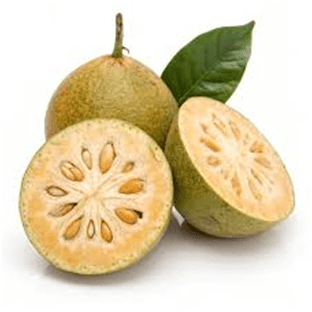
- Bael (Aegle marmelos): Improves gut health and absorption, maintains electrolytes, reduces GI issues, and provides cooling.
- Giloy (Tinospora cordifolia): Immunomodulator that strengthens disease resistance, has antipyretic effects, boosts antioxidants, and enhances resilience.


- Lemon (Citrus limon) Extract: Maintains digestive pH, provides vitamin C, supports electrolytes, and improves feed palatability.
Expected Results
- Reduced mortality during heat periods
- Improved feed intake and FCR
- Enhanced egg production/quality in layers
- Better growth and carcass in broilers
- Stronger immunity and resistance
- Increased profitability via efficiency
Conclusion: Thermogard is a scientifically formulated supplement blending herbal extracts, vitamins, minerals, and nutrients to address heat stress holistically. Drawing from traditional herbs and modern science, it targets all key disruptions. Regular use ensures bird health, performance, and profitability in harsh conditions. Amid global warming, no single strategy works; Thermogard, from Z-Level Summer Protection, integrates amla, bael, giloy, lemon, betaine, vitamin C, chromium, electrolytes, menthol, and more. Pair with optimized nutrition, housing, and management for best results.