By -Dr. Amit Kumar (Technical Manager Trouw Nutrition)
Introduction
In India, throughout the year availability of good quality fodder is the biggest challenge for dairy farmers because feeding quality fodder is a necessity to maintain and improve milk production in the dairy animals,specifically high-producing animals need better quality forage. In that scenario preservation of fodder becomes a necessity to meet the nutritional demand for milk production. Where making silage comes into the picture to fulfil the demand for green fodder which has good quality nutrients.
Content
Silage is a type of preserved green fodder that is made up of fodder crops that are high in non-structural carbohydrates (like Maize, Bajra, Oat, andSorghum) prepared in anaerobic conditions. Fodder crops which are having thick and juicy stems are preferred in making silage.
The anaerobic bacteria in the absence of oxygen utilizes carbohydrates to convert into lactic and acetic acids which reduces the PH and further inhibits the growth of microorganisms making stable nutrient value of the fodder crop.
But there are microbes in the fodder that can tolerate a wide range of pH (pH 2 to 10) likeyeast&moulds which can remain alive even after huge temperatures and Ph variation, when they get a suitable environment (Oxygen), they start growing and produce toxins which are harmful for the animal health directly and indirectly for public health.
Silage development process can be divided into four phases….
The silage development process can be divided into four phases….
A) Aerobic phase 1 – The phase may last from a few hours to 24 hours dependingupon the amount of oxygen present.
B) Initial Anaerobic phase 2 – In this phase anaerobic bacteria start producing acetic acid which starts reducing PH, The period of this phase ranges from 1 to 3 days normally
C) Main Anaerobic Phase 3- due to the previous phase pH reduces below 5.7 which supports the growth of Lactic acid producing bacteria which produces lactic acid and rapidly reduces the pH of silage up to 4. The period of the phase ranges from 3 to 6 days. D) Storage Phase- The period for this phase ranges from 7 to 21 days, in this phase pH of silage goes below 4 that inhibits the growth of harmful microorganismsthus making silage nutrients more stable. The storage phase completes up to 21 days but keeping silage closed for a longer period of up to 45 days makes nutrients more digestible and increases palatability for the animals. Production of lactic acid may continue up to 6 months in the silage which improves the shelf life and digestibility of silage.
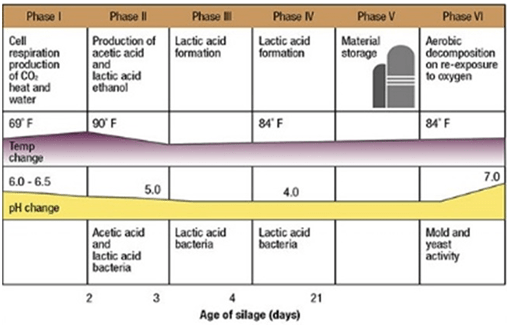
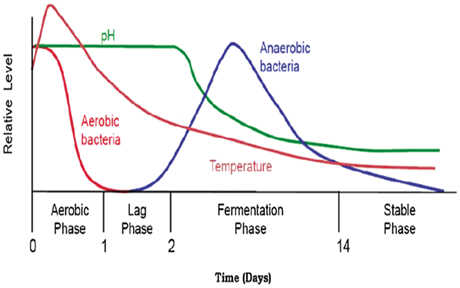
| Fig 1: Silage phases | Fig 2: Silage phases |
So, it’s important to keep phase 1st for a very short time because in this phase due to aerobic oxidation nutrient value goes down, for this chopping of fodder crop within the length of 2 to 4 cm is required for better pressing and to remove oxygen from the silage. Proper pressing will ensure very little oxygen for the first phase and shorter the duration. For making good quality silage selection of crop, harvesting at the right time (½ to 2/3rd bloom stage) is favourable for better nutritive value. Dry matter content in b/w 65 to 70 % is considered good for maize silage making.
High-quality silage should have minimum fermentation losses, In the silage-making process nutrient loss (Dry matter) may range up to 5 to 10% and we aim to keep the losses towards the minimal side. High starch content in the maize crop in b/w 26 to 30 % will ensure proper production of lactic acid by lactic acid-producing bacteria.
Proper packing of silage with polyethylene material or concrete and properly pressing with sandbags or tires is good for preventing ballooning on the top to avoid oxygen entrance and better anaerobic conditions for the fermentation process. Also filling of silo in a dome shape is favourable to avoid water seepage and proper drainage of rainwater.
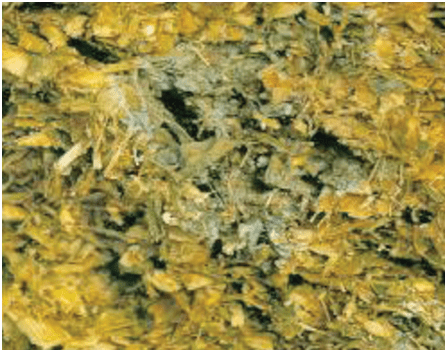
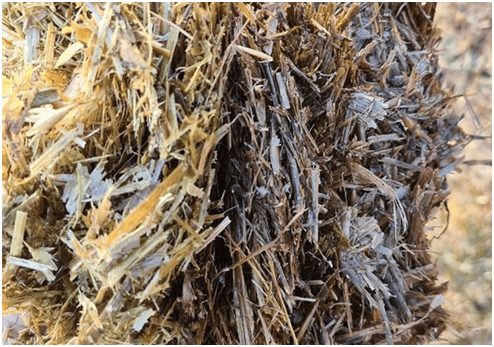
when the silo pit is opened for the feeding of animals that side comes in contact with oxygen that promotes growth of bad microorganisms like yeast and moulds which produces the toxins like aflatoxin and othersthat are harmful for animal health as well for human healthdirectly and indirectly respectively.
Acti Prop Technology in fylax forte
Organic acids like formic, sorbic, propionic, lactic and acetic acids are being used singly or in combination to efficiently preserve silage and avoid spoilage by protecting damage from bad microorganism like clostridia, yeast &moulds.
Since these bad microorganisms cannot grow at lower pH and lower pH is also suitable for the growth of lactic acid producing bacteria which is required for very good quality silage, optimumpH for very good quality silage range from 3.8 to 4.2.
| Organic acids when added in the silage directlyreduce thepH supporting growth of lactic acid producing bacteria and inhibiting growth of harmfulmicroorganisms(Cazzato et al., 2011). Propionic acid has been used for aerobic stability of silage by inhibiting growth of bad microorganism and competing on active sites with amino acids for bindingor through altering the cell permeability of organisms (Queiroz et al., 2013). Adding propionic acid based organic acid combination has shown positive association for aerobic stability of silage, quality of fermentation and less nutrient loss (Gheller et al., 2021), simple organic acid have pungent smell and corrosive nature which can harm the handling person. But inhibition of growth itself is not sufficient to avoid spoilage by yeast and moulds since when these microorganism comes in conducive environment (in oxygen) theystart growing and produces toxins and cause spoilage of silage. So, the Acti Prop technology where propionic acid molecules are activated by patented technology disintegrates the cell wall and destabilizes the cell membrane making it more permeable for organic acids to enter into the cell of the organism and ultimately killing the microorganism which ensures even if the environment is conducive for growth but there are very few organisms to grow that ensures better quality silage with longer shelf life and maintains nutritive value. Additionally, it contains buffered organic acid which makes it safe to handle, less corrosive, and less evaporative so they will stay longer in silage for longer protection. |
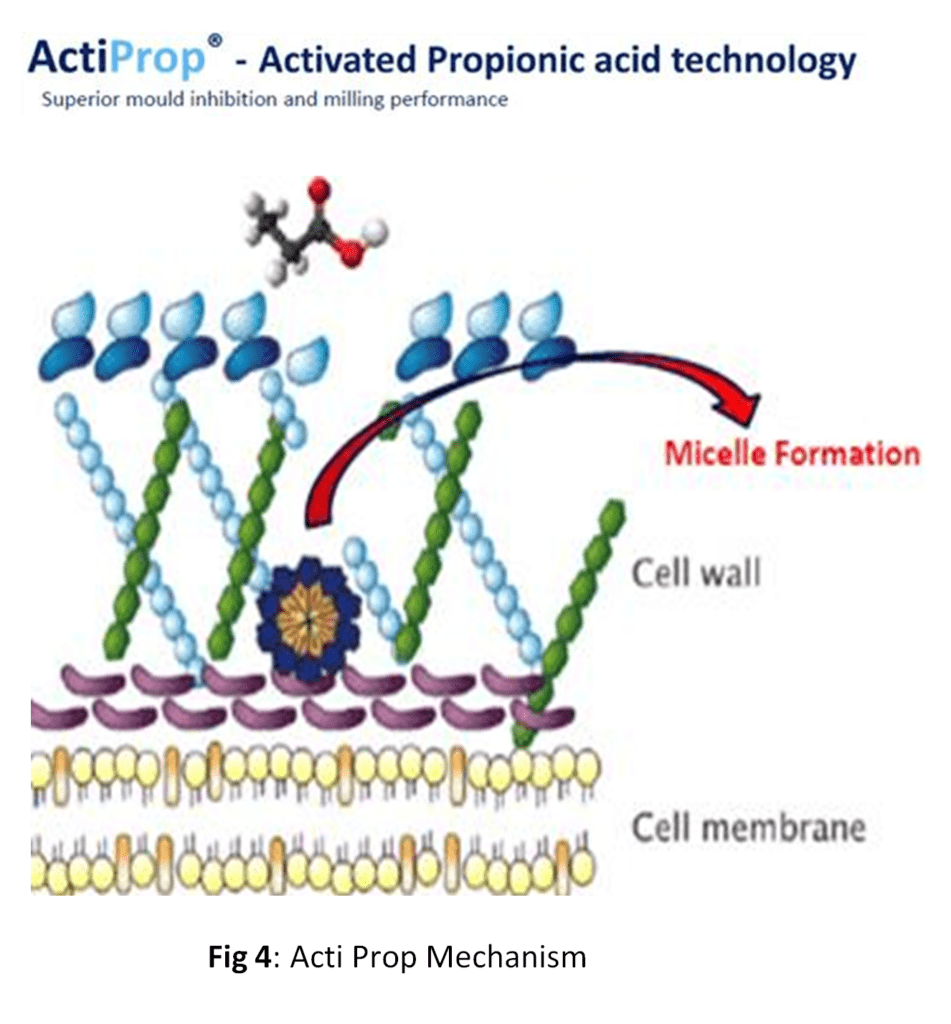
- Increased Porosity of cell wall
- Destabilization of cell membrane
- Entrance of organic acid inside the cell of microorganism.
- Decrease in internal cell PH—poor cell functioning— cell damage & cell death.
Conclusion –
Preservation of green fodder for high nutritive value feeding to the milk-producing animals throughout the year is a necessity. Silage making and preservation are two important things to take care of where the silage-making process needs to pay attention to the selection of the right crop and harvesting at the right time with correct dry matter and soluble sugar for proper fermentation. Closely monitoring of proper pressing and packing of silo pits ensures a conducive environment for efficient anaerobic fermentation and reduces the duration of the initial aerobic oxidation phase and losses.
The addition of organic acids in the combination ensures a faster decrease in the pH that supports a decrease in the duration of the aerobic phase & early reduction in the pH to avoid the growth of harmful microorganisms. The patented Acti-Prop technology from Trouw Nutrition ensures killing and inhibition with Activated propionates and a combination of buffered organic acid respectively thus reducing the number of harmful microorganisms and helping in making more safe and nutritive silage with longer shelf life.