Customers from across the region gather to learn, engage and network.
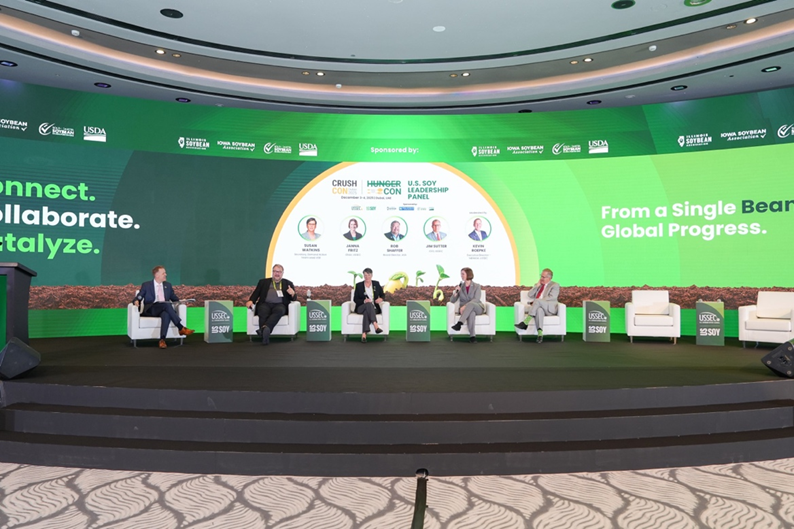
The U.S. Soybean Export Council – Middle East, North Africa, and South Asia (MENASA) hosted its signature CrushCON event in Dubai. The event featured decision-makers from the poultry, aquaculture, edible oil, and other industries from throughout South Asia, the Middle East and North Africa.
Set against the theme of Connect, Collaborate, and Catalyze, discussions centered on global trade, derisking the supply chain, sustainability, and leveraging AI to make data-driven decisions. Insights included a promising outlook for soymeal demand, buoyed by strong poultry sector growth, cautious optimism around artificial intelligence, and a thirst for more information on sustainable agriculture.
Experts agreed that despite risks in the global economy, consumer confidence in animal protein production and uncertainty in the oil palm industry indicate a growing preference for soy, especially from the United States.
“USSEC continues to foster relationships and build trust in international markets on behalf of U.S. Soy farmers,” added Jim Sutter, USSEC CEO. “CrushCON is the perfect platform to meet our customers, understand their needs, and show the value of U.S. Soy.”
MENASA’s Growing Appetite for U.S. Soy
U.S. Soy has seen significant growth in the MENASA region, driven by rising disposable income, urbanization and a protein demand boom. In February, Pakistan reopened imports of U.S. soybeans after a two-year pause, importing 844,000 MT to date. Bangladesh’s soy value chain is also committed to purchasing $1.25 billion USD of U.S. Soy over the next 12 months, a value 2.5 times more than ever before. On the MENA front, Egypt ranked as the third largest importer of whole U.S. soybeans in the marketing year 2024-2025, while Morocco ranked ninth as the world’s largest U.S. soybean meal importer.[1]
U.S. Soy: Consistent, Reliable and Value Driven
Data-led sessions demonstrated U.S. Soy’s key advantages as a superior feed ingredient and its defining 4Ds:
- Drier soybeans
- Higher digestibility
- Lower Damage
- Zero deforestation compared to soy from other origins
Consistency is a core need for animal producers and refiners – something that U.S. Soy delivers with its nutritional profile. When customers choose U.S. Soy, they can be assured that they are receiving a high-quality product that can improve animal performance, increase efficiency, and lower feed costs.
Sustainably Nourishing the World
Participants heard directly from U.S. soybean farmers about their sustainable practices and the Sustainable U.S. Soy Assurance Protocol (SSAP) – a program that verifies that U.S. soy is grown responsibly with less environmental impact.
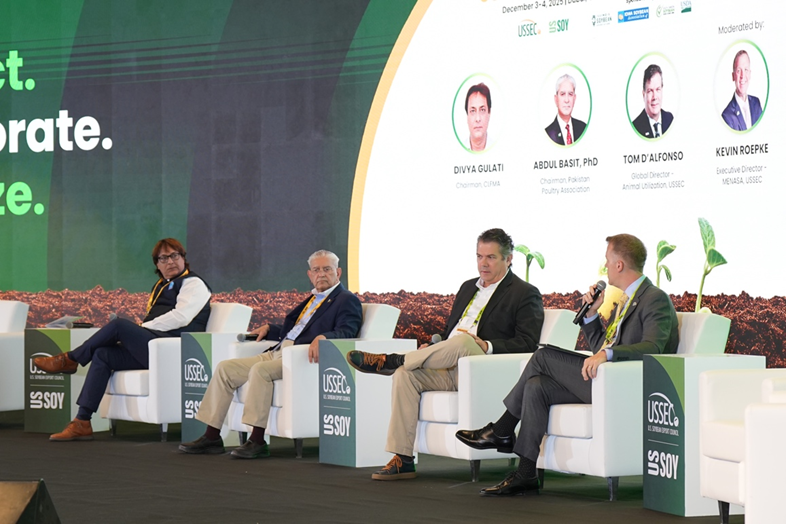
Global speaker lineup included U.S. soybean farmers Susan Watkins, USB Secretary; Rob Shaffer, ASA Director; Janna Fritz, USSEC Chair; Mark Zenuk, Founder, Tillridge Partners; Tanner Ehmke Lead Economist, CoBank; Dr. Abdul Basit, Chairman of the Pakistan Poultry Association; Sanjeev Asthana, Solvent Extractors Association of India; and Osama Soliman, CEO of Soyven.
Markets evolve, preferences change, but U.S. Soy’s consistency, reliability, and high quality remain constant, driving the aquaculture, edible oil, feed, food, and poultry industries forward.
[1] FAS United States Agricultural Department of Agriculture