Dr. S.K.Maini
Consultant, Vesper Group, Bengaluru.
The Liver of every type of poultry ( Breeders, Broilers, Layers, Turkeys, Quails, Ducks etc.) of any age, breed, sex, at any stage of production, are constantly under threat from the mycotoxins, micro-organisms (pathogens), endotoxins, anti-nutrients, poisons, medicines, chemicals etc., The liver is an important accessory organ of the digestive system and the largest gland of the body, is located in the body cavity, adjacent to the heart, gizzard, spleen, gall bladder and the duodenal loop of the intestine. It is divided into two lobes, the right (larger in size) and the left lobes, joined cranially at the midline. In the chicken and turkey’s, the left lobe is subdivided into the dorsal and ventral parts. Visceral peritoneum covers the liver and closely adheres to its surface.
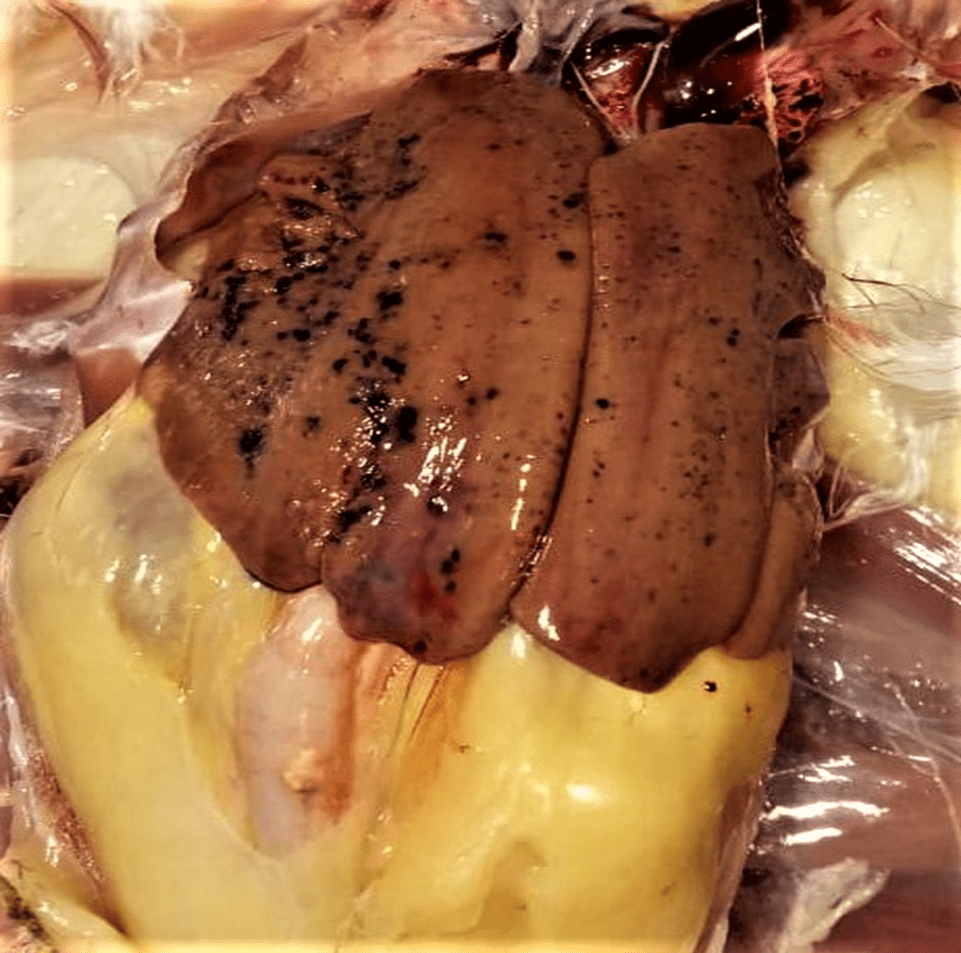
Liver damage is a multifactorial mild and progressive metabolic disorder characterized by identifiable etiological factors, causing excessive fat accumulation in the liver and abdominal cavity, leading to poor performance, liver rupture, haemorrhage and sudden deaths.
The understanding of predisposing and complicating factors like the various stressor’s, certain vitamins and trace mineral deficiencies, nutritional imbalance and disturbances, hormonal factors, certain managemental and environmental influences, use of poor quality and alternative ingredients containing inhibitory components in feed formulation, and farm history can significantly enhance diagnostic accuracy, treatment efficacy and quick recovery.
Liver damage may be classified as (1). Direct Liver Damage and (2) In-Direct Liver Damage.
Direct Liver Damage : Due to ingestion of mycotoxins, adulterants like heavy metals, poisons, chemical toxicities, anti-nutrients, tannins and the interfering components from the feed ingredients being used, certain drugs, medicines, their metabolites and incompatiabilities..
In-Direct Liver Damage : Metabolic disturbance that result from the stressor’s causing hormonal interference.
Decrease in production, deficiency or failure to synthesise, transport and use an enzyme’s and co-enzymes.
Due to maturity, start and rapid increase of egg production in layers and breeders, sudden changes in their dietary requirements, stress related to the egg production, onset of lights, hormonal changes in the body related to ovulation and egg production, increase in feed consumption, sudden increase in the requirement of calcium, phosphorus and vit D3, handling of birds for artificial insemination in breeders etc.
Metabolic disorders that result from high nutrient intake, rapid growth, high metabolic rate, pulmonary or systemic hypertension, and high egg production.
Other conditions that could be classed as metabolic disorders like lack of exercise, disease’s and their treatments, Heat Stress, Insecticide and Pesticide sprays used to control pests.
Liver Damage in the field can be seen alone, or in combination with other conditions/organs, It may be seen as fatty liver, hemorrhagic fatty livers, fatty liver and kidney syndrome etc.
Causes of Liver Damage :
High-Energy Diets: Diets high in carbohydrates and fats can lead to excessive fat accumulation in the liver.
Nutrient Imbalances: Feed be well balanced with respect to Energy, Proteins, Vitamins and trace minerals and other essential additives. Deficiencies of essential nutrients like choline, biotin, selenium, and methionine can cause impaired fat metabolism.
Mycotoxins: Contaminated feed containing single or a combination of mycotoxins and their metabolites, cause mild to severe liver damage.
Environmental Factors: Heat Stress, poor ventilation and high temperatures can stress birds and contribute to the fatty liver condition.
Lack of Exercise: Limited movement in cages, birds density in the deep litter shed for broilers, can contribute to obesity and fat accumulation in the liver and abdomen.
Infectious Diseases: Some viral and bacterial diseases, such as Marek’s disease, Lymphoid leucosis, avian hepatitis, and fowl cholera, can directly infect and damage the liver.
Drugs, Chemicals and Medicines : Excessive use of drugs (antibiotics, growth-promoting antibiotics, coccidiostats, etc.) in diets formulated for commercial poultry, as they have a negative influence on the liver function, since most of these chemicals are metabolized in the liver, causing an increase in energy expenditure that will deteriorate the productive performance of the birds.
Mostly it is seen as reversible damage, correctable and treatable with timely intervention with mitigation strategies. Prolonged damage will lead to irreversible damage like cirrhosis or fibrosis, not treatable..
Early detection, dietary corrections, use of good quality feed ingredients, prevention of stress, mycotoxins, infections, timely and appropriate supportive care are some of the critical components in promoting hepatic repair, regeneration and recovery of the affected birds.
Mitigation Strategies : The following need to be added regularly per ton of the finished feed, avoid use of poor quality and mouldy feed ingredients, alternate feed ingredients be kept to minimum levels, .
Choline Chloride @ 1 Kg/ton (this takes care of fat mobilisation from the liver to keep it fit and fine).
Toxin Binders @ 1 Kg/ton ( at least two different types of binders is suggested, so together they target maximum number of mycotoxins).
Toxol @ 1 Kg/ton (to ensure proper GI tract, liver and kidneys health, condition and functioning).