Dr, R.N. Sreenivas Gowda
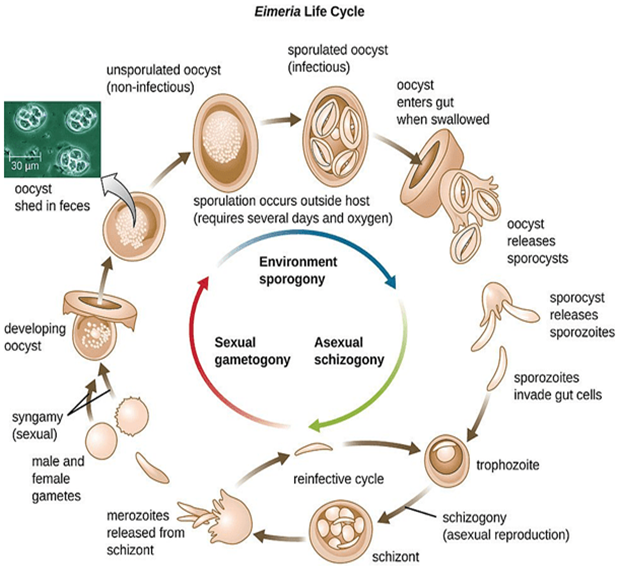
Coccidiosis is a disease of the intestinal lining, produced by the invasion of the mucosal cells by a very prolific protozoan parasite of the genus Eimeria. It is called as coccidiasis when no apparent clinical signs visible.
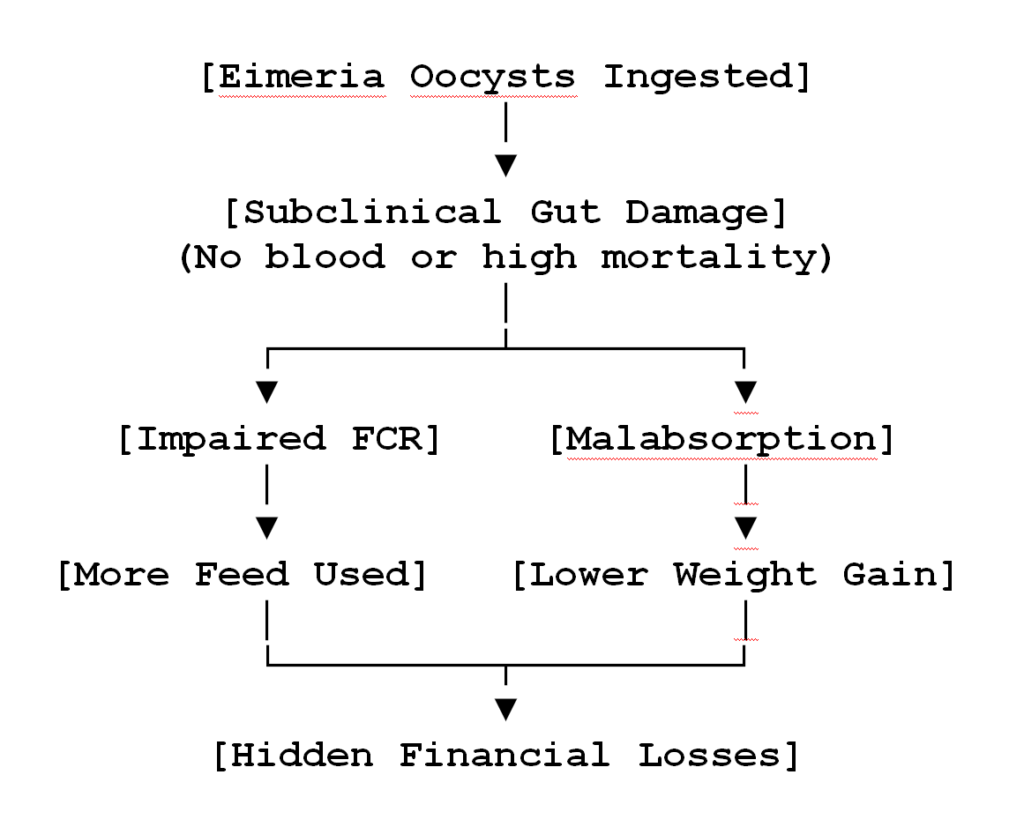
“Coccidiasis” or Subclinical coccidiosis is one of the most financially devastating diseases in broiler production because it causes severe economic losses without showing obvious visual signs of sickness and cause growth retardation in broilers.
Subclinical coccidiosis is the costliest form of coccidiosis in broiler operations, accounting for approximately 60% to 70% of the disease’s total global financial impact. Unlike clinical coccidiosis, which presents with severe symptoms and acute mortality, subclinical infections remain hidden while quietly eroding flock performance and profitability. Globally, coccidiosis costs the poultry sector upwards of $13 billion to $15 billion annually, driven heavily by these undetected production inefficiencies.
Unlike clinical coccidiosis, which causes high mortality and bloody droppings, the subclinical form remains hidden while quietly destroying the bird’s intestinal lining.
Financial Value Drivers
The economic drain of subclinical Eimeria infections stems from continuous, low-level damage to the broiler’s intestinal lining, which disrupts normal digestion and nutrient absorption.
- Worse Feed Conversion Ratio (FCR): Broilers consume significantly more feed to reach target weights. Research shows subclinical infections can increase total feed consumption by up to 8% due to poor conversion efficiency.
- Reduced Live Weight Gain: Damaged gut cells fail to absorb critical amino acids and energy. This frequently leads to a 5% (or roughly 150g) drop in final live weight per bird.
- Loss of Flock Uniformity: Parasites spread unevenly throughout a house. The resulting variance in bird weights leads to processing plant penalties and poor yield optimization.
- Downgraded Carcass Quality: Poor nutrient intake compromises skin pigmentation. Intestinal fragility also increases the risk of gut tearing and fecal contamination during slaughter.
Common Species & Affected Areas
Different Eimeria species target specific sections of the broiler’s intestinal tract:
- E. acervulina: Upper small intestine (duodenum).
- E. maxima: Middle small intestine (jejunum).
- E. tenella: The ceca (blind pouches), often causing severe bleeding.
Why Subclinical Coccidiosis is Economically Dangerous?
- Ruined Feed Conversion: Intestinal damage prevents nutrient absorption.
- Stunted Growth: Birds fail to reach target market weights.
- Poor Uniformity: Flocks grow unevenly, causing processing plant penalties.
- Depressed Profits: Feed costs rise while meat yield drops drastically.
- Hidden Spread: The disease spreads unnoticed through entire poultry houses.
- Secondary Infections: Damaged guts invite deadly Clostridium perfringens (Necrotic Enteritis).
Economic Impact Comparison
| Impact Metric | Healthy Flock | Subclinical Coccidiosis | Clinical Coccidiosis |
| Mortality Rate | Low (< 3%) | Normal to Slightly Elevated | High (> 10%) |
| Feed Conversion (FCR) | Optimal (e.g., 1.45) | Degraded (e.g., 1.55 – 1.65) | Severe Spike (> 1.80) |
| Flock Uniformity | High (> 90%) | Poor (70% – 80%) | Extremely Poor |
| Intestinal Lesions | None (Score 0) | Mild to Moderate (Score +1 to +2) | Severe (Score +3 to +4) |
| Treatment Action | Preventive only | Requires Program Adjustment | Immediate Emergency Medication |
How to Detect the Hidden Threat?
- Monitor FCR: Watch for unexpected drops in feed efficiency.
- Perform Autopsies: Conduct regular, routine post-mortem intestinal lesion scoring.
- Check Droppings: Test litter samples for microscopic parasite eggs (oocysts).
- Track Weights: Look for a sudden stagnation in daily weight gain.
Prevention and Management Strategies
Effective coccidiosis control relies on managing Eimeria parasite populations through three primary pillars: shuttle/rotation programs, vaccination, and strict biosecurity. Because Eimeria oocysts are highly resistant to environmental disinfection, broiler operations utilize these strategies to prevent subclinical gut damage without inducing drug resistance.
- Rotational Programs: Alternate different anticoccidial drugs between flock cycles.
- Shuttle Programs: Use different gut-health products in starter vs. grower feeds.
- Vaccination: Administer live vaccines in the hatchery for long-term immunity.
- Litter Management: Keep bedding dry to stop parasite egg maturation.
- Supportive Care: Add probiotics and organic acids to strengthen gut walls.
An effective anticoccidial strategy for broilers must prevent clinical outbreaks and subclinical gut damage while strictly managing drug resistance. Because Eimeria parasites adapt rapidly to medication, relying on a single drug continuously will eventually cause a complete failure in disease control.
The poultry industry uses four primary strategies to manage Eimeria loads and maintain drug efficacy.
- Shuttle Programs (Within a Single Flock)
A shuttle program involves changing the anticoccidial product across the different growth phases of a single flock’s life cycle.
- Starter Phase (Days 1–14): Use a powerful synthetic “chemical” (e.g., Nicarbazin or Clopidol) to crush the early, heavy parasite challenges.
- Grower Phase (Days 15–35): Switch to an ionophore (e.g., Salinomycin, Monensin, or Narasin). Ionophores permit a small amount of “leakage”—meaning a tiny number of parasites survive. This leakage allows the broiler’s immune system to naturally build immunity without hurting performance.
- Finisher Phase (Day 36 to Slaughter): Observe strict chemical withdrawal periods or transition to a clean-up additive to prevent meat residues.
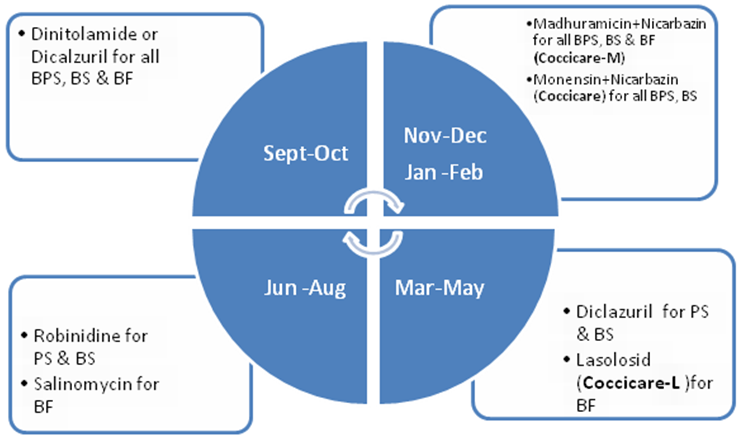
Note: This shuttle program may vary based on prevalence and is recommended by veterinarians
2. Rotation Programs (Flock-to-Flock)
A rotation program involves changing the entire class of anticoccidial drugs between successive grow-out cycles (typically every 4 to 6 months).
The Rule of Direct Classes: Never follow an ionophore with another drug of the exact same chemical sub-class (e.g., do not switch from Salinomycin to Monensin, as both are monovalent ionophores and share cross-resistance).
Annual Chemical “Clean-Up”: Use a highly potent synthetic chemical program for 1–2 flocks during the winter (when parasite pressure is highest) to dramatically lower the background oocyst numbers on the farm. Take a rest period from chemicals afterward, as parasites resist them quickly if used too long.
3. Bio-Shuttle Programs (Vaccine + Feed Additive)
Widely popular in “No Antibiotics Ever” (NAE) or commercial high-density systems, this hybrid system combines biological and chemical tools
- At Hatchery: Chicks receive a live, non-attenuated coccidiosis vaccine via spray or gel droplets.
- The Vulnerability Window: As the vaccine strains cycle through the bird’s gut to build immunity, a predictable “peak” infection occurs around days 14 to 21, which can temporarily hurt performance or trigger necrotic enteritis.
- In-Feed Intervention: A low dose of an ionophore or a mild chemical is introduced into the grower feed from day 18 to 28. This does not destroy the vaccine immunity but dampens the peak parasite shedding to keep the gut intact.
4. Non-Antibiotic / Natural Alternatives
With the rise of Antibiotic-Free (ABF) and NAE market programs, chemical ionophores (which are classified as antibiotics in some regions like the US) are being substituted.
- Phytogenics & Herbal Extracts: Supplements containing saponins, essential oils (oregano, garlic, bitter leaf), or pawpaw leaf powder disrupt the Eimeria life cycle and protect the gut lining.
- Probiotics & Prebiotics: High-quality live bacteria (like Bacillus strains) maintain tight gut junctions, redirecting nutrients away from bad bacteria even if coccidia damage occurs.
Core Comparison of Anticoccidial Tools
| Tool Type | Primary Examples | Major Advantages | Major Risks / Disadvantages |
| Synthetic Chemicals | Nicarbazin, Diclazuril, Clopidol, Robenidine | Extremely potent; rapidly clears heavy infestations. | Parasites build rapid resistance if used continuously. |
| Ionophores | Salinomycin, Monensin, Narasin, Lasalocid | Slow resistance curve; allows birds to develop natural immunity. | Classified as antibiotics in certain markets. |
| Live Vaccines | Coccidiosis Live Vaccines | Replaces resistant farm strains with drug-sensitive strains. | Requires precise hatchery application and pristine litter management. |
5.Litter Management and Biosecurity
Pharmaceuticals fail if environmental pressure is too high. Control relies heavily on managing the house microclimate:
- Moisture Control: Keep litter moisture strictly between 25% and 35%. Litter that is too wet (>35%) fuels rapid sporulation of oocysts, overwhelming drug or vaccine protocols. Litter that is too dry (<20%) prevents vaccine cycling.
- House Down-Time: Maintaining a minimum 14-day downtime between flocks allows natural litter fermentation to heat up and degrade oocyst viability.
- Targeted Disinfection: Standard farm disinfectants do not kill Eimeria oocysts. Direct treatments using specific ammonium or cresolic acid-based products are required to break the oocyst wall during terminal cleanouts.
6. Rules for Program Management
- Never switch by brand name: Always look at the active chemical molecule. Switching from one brand of Salinomycin to another provides zero protection against resistance.
- Test, don’t guess: Perform regular Anticoccidial Sensitivity Testing (AST) via a veterinarian to see exactly which drugs the parasites on your specific farm are already resistant to.
- Control litter moisture: Keep litter moisture below 30%. No anticoccidial program can overcome a wet, humid environment where oocysts multiply exponentially.
- Mind the withdrawal periods: Always cross-reference your finisher phase drugs with local withdrawal laws to prevent meat processing penalties.
7.. Coccidiosis Vaccination
Vaccination is a primary control strategy, especially in antibiotic-free (ABF) or “Raised Without Antibiotics” (RWA) production.
- Live Oocyst Vaccines: Administered at the hatchery via spray cabinet, gel droplets, or edible discs. They introduce a controlled dose of live, non-attenuated or attenuated Eimeria oocysts.
- The Cycle of Immunity: Chicks ingest the vaccine oocysts, which replicate in the gut, shed in the litter, and are re-ingested. This controlled cycling must happen 3 to 4 times under precise humidity conditions to establish lifetime immunity.
- Restoring Sensitivity: Many conventional farms rotate live vaccines into their houses for 1 to 2 cycles specifically to drop “sensitive” wild strains back into the litter, effectively resetting the efficacy of future in-feed chemical programs.
Comparison of Primary Strategies
| Control Strategy | Pros | Cons | Best Used For |
| In-Feed Chemicals | Maximum early suppression; excellent feed conversion. | Rapid parasite resistance; no immunity built. | High-pressure cleanups; short-term use. |
| In-Feed Ionophores | Allows natural immunity development; stable efficacy. | Moderate risk of resistance over time. | Standard conventional production. |
| Hatchery Vaccination | Zero chemical residues; restores drug sensitivity. | High risk of early subclinical gut lesions. | ABF/RWA operations; drug rotation breaks. |
Specific control protocol:
An effective specific control protocol depends on your market requirements (Conventional vs. Antibiotic-Free) and seasonal weather patterns. Because Eimeria parasites rapidly develop resistance to chemical drugs, protocols must follow strict, timed feed transitions and seasonal shifts.
Below are two standards, field-proven control protocols used in commercial broiler operations.
Protocol A: The Dual-Action Shuttle (Best for Conventional Production)
This protocol uses a powerful synthetic chemical to crush early parasite replication, transitioning to an ionophore to allow the bird to develop natural immunity safely.

1. Feed Formulation Phase
- Starter Phase (Days 0 to 12): Add a chemical/ionophore combo like Nicarbazin + Narasin (Maxiban) at recommended label rates. This blocks early oocyst shedding when the chick’s gut is highly vulnerable.
- Grower Phase (Days 13 to 28): Transition to a pure ionophore such as Monensin (Coban) or Salinomycin. This allows a minor level of oocyst “leakage,” stimulating the bird’s immune system without causing clinical lesions.
- Finisher/Withdrawal Phase (Day 29 to Slaughter): Switch to an anti-coccidial-free feed or use a zero-day withdrawal ionophore to meet regulatory standards and avoid processing plant residue penalties.
2. The Annual Cleanup Switch (Resistance Management)
- Spring/Summer: Run Protocol A for 2 to 3 consecutive flock cycles.
- Fall/Winter: Completely pull ionophores. Switch the entire complex to a straight chemical program (e.g., Diclazuril or Decoquinate) for one cycle to clean out resistant Eimeria strains before winter moisture peaks.
Protocol B: The Live Vaccine Bio-Cycle (Best for ABF / RWA Production)
This protocol replaces in-feed drugs with a live, controlled dose of Eimeria oocysts at hatch, relying entirely on early gut colonization to build lifelong immunity.
1. Hatchery Administration (Day 0)
- Apply a multivalent live vaccine containing E. acervulina, E. maxima, and E. tenella via a hatchery spray cabinet or gel-droplet delivery system.
- Add a brilliant blue food-grade dye to the vaccine mix. This stimulates the chicks to preen the vaccine droplets off each other, ensuring uniform oral ingestion.
- 2. Managing the Brooder (Days 1 to 21).
- Light Intensity: Maintain bright light (at least 20 lux) for the first 48 hours post-placement. This keeps chicks active and eating, ensuring the ingested oocysts begin replicating uniformly.
- The 7-Day Moisture Target: Maintain litter moisture strictly at 28% to 32% in the brooding area during week one. If the litter is too dry, the shed oocysts cannot sporulate, causing the vaccine cycle to fail and leaving birds unprotected at day 21.
Universal House-Level Execution Checklist Regardless of the protocol you select, farm managers must execute these three critical checkpoints during every flock cycle to prevent subclinical breakthroughs:
- Day 14 Post-Mortem Monitoring: Perform routine diagnostic gut scrapings on 3 to 5 normal-looking birds per house at day 14 to check for subclinical Eimeria lesion scores before performance drops.
- Water Sanitation: Run a continuous chlorine dioxide or hydrogen peroxide water sanitation program to prevent biofilm buildup, as clean guts absorb anti-coccidial medications more efficiently.
- The 14-Day Down-Time Rule: Guarantee a minimum of 14 days of empty house downtime between flocks to allow natural litter heating to degrade oocyst outer walls.
Conclusion Subclinical coccidiosis is the leading hidden profit killer in broiler operations, costing the global poultry industry over $14 billion annually through undetected intestinal damage, poor feed conversion ratios (FCR), and stunted growth. Unlike clinical coccidiosis, it does not cause high mortality or obvious signs like bloody droppings, making routine surveillance and proactive management essential for control.