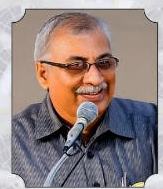
In our journey we visited many faces with our poultry Sector legends, and one among them is Dr. D. Chandrasekaran – Retired Professor & Head of the Department of Animal Nutrition at Tamil Nadu Veterinary and Animal Sciences University (TANUVAS)
1.Are you originally from Namakkal?
I was from a village Vadakkalur in erstwhile Trichy district now Perambalur district of Tamil Nadu. Moved to Namakkal in the year 1988 as an Associate professor in the Department of Animal Nutrition. in the Veterinary College and Research Institute Namakkal.
2. What is the best thing you liked in your journey??
I cannot say any one as the best thing, throughout my professional carrier challenges were continuous
As a field veterinarian in Tamil Nadu Dairy Development Corporation, I was posted in Ooty in 1977, after the initial training period I was posted in Gudalur a small town on the outskirts of Mudumalai forest. I was just settling, a call was there to treat a cow a cross bred unable to calve when I checked pelvic fracture was observed, so normal calving was impossible, with a few days of experience and some theoretical knowledge of caesarean I did not have the confidence , I asked the farmer to take it to Ooty, seeing his household condition I knew he will not be able to even pay me the charges, so I told him I will attempt an operation and at least save the calf or else both will die, he accepted,with my limited knowledge I conducted the operation under a tree, to my luck both cow and calf was saved, being a small town word spread that caesarean was done by an young Vet under a tree, the local medical officer herd and met me and profusely appreciated me and told” I will not attempt in my patients”, for which I told him it is nothing extraordinary as ifI did not attempt it both will die and it cannot be compared with his patients. During the three years of service in Gudalur, I had very good interaction with the farmers, I came to understand in Dairy farming the calf is the main product and milk is a by-product and worked on to reduce the inter-calving period so as to get one calf/year/cow.
After my service in Gudalur, I joined as a Research Associate in Tamil Nadu Agricultural University, In the year 1983 I joined the Department of Animal Nutrition as Assistant professor and part time M.V.Sc in Animal Nutrition. While handling practical class I found that practical manual on feed formulation the calculation of the nutrient requirements was the same what I was taught a decade ago, it was in the chart the students should refer, the chart which contained the nutrient requirements for body weights starting from 350 kgs and for every 50kg increase the nutrient requirements were given. I thought none of the field vets will be able to formulate based on this. I took it as a challenge created simple equations which when given the body weight, milk yield etc will give the nutrient requirements, to calculate the body weight the length and the girth of the cow if measured the body weight can be calculatedand the accuracy was 98%, and it was included in the manual. Even after 4 decades it is still valid and being taught in the department of Animal Nutrition.
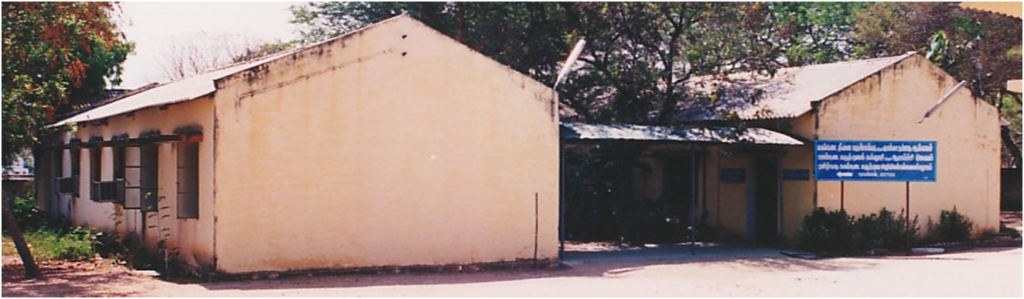
In the year 1988 I was promoted as Associate professor and posted in the Department of Animal Nutrition at Veterinary college Namakkal. It was new college so had to equip the facilities to match the need to conduct research. I was also doing part time Ph.D. In the year 1994 I was promoted as Professor and asked to start the Animal feed analytical and quality control Lab with a condition that it should operate on self-financing basis, further equipment needed should be sourced from various departments which had spare capacity and two sheds was given, Lab was started in these two sheds. (Fig:1)
Fig:1 First Laboratory building given to us
We had only one vision that no farmer entering our lab with nutritional oriented problem should go out without it being resolved, I can proudly say that 99% was our success.
Lab’s popularity grew mostly by word of mouth; we had to constantly upgrade our facility to meet the growing demand. The main challenge was purchase of chemicals, the annual budget for chemicals was above Rs35lakhs even the Vice Chancellor did not have the power, as national tender has to called for and then only orders could be placed, I took a bold stance, called four major manufacturers and asked them to quote the maximum discount, I negotiated between 40 to 50% discount and placed orders. In the annual audit objection was raised, during the argument with the audit team I remembered what the great General Patton in a press briefing told about Terry Allen another great American General who has never lost any battle in the second world war, was relieved from duties for breaking the rules (His division soldiers were not saluting properly and always wearing crumpled uniforms) when Patton was asked about this he told “Allen did not break rules , he did not acknowledge these rules existed”, I told, similarly the rules are for other heads who need not bother about the budget, but I have to earn to pay more than 25 staff members, 10% of the income to the University and upgrading the lab to meet the rising needs of the feed industry. I gave one comparison, Acetone 2.5 litre bottle I bought for Rs 190 whereas in other department it was Rs320 they compared other rates and dropped the objections. The Dean of the college on hearing this made me the Chairman of the purchase committee for the entire college.
Three important points
- Standardising a protocol for estimating 9 Mycotoxins in a single run, we worked on a protocol of Maria O Tapia where 5 mycotoxins could be estimated in a single run and modified it to estimate 9 mycotoxins and validated it by running the test in thirty thousand samples and then published in the year 1999 and still this method is being adopted in many labs.
- Empowering the farmers was my main aim hence, I developing least cost feed formulation software and distributed it free of cost to the farmers and feed manufacturers, it is being used by several farmers not only in India but also in South Asian countries.
- I was convinced to take up medium range weather forecasting project funded by National centre for medium range weather forecasting. It was totally new to me over the period I understood the it was more important to a nutritionist; with this experience I developed an equation which can predict the ME requirement of the laying bird and the accuracy was nearly 98% for Namakkal region. We had a feeling that in Namakkal over the period the rainfall was reduced that is why the ground water level kept reducing, when I started reviewing the rainfall data obtained from our records and from other sources, I was shocked to know the total rainfall was not different in the past 25 years the only difference was that the number of rainy days reduced from 120 days to 60 days indicating that because of downpour the water ran away instead of percolating when this message was spread some farmers started rain water harvesting and in those areas the ground water started improving.
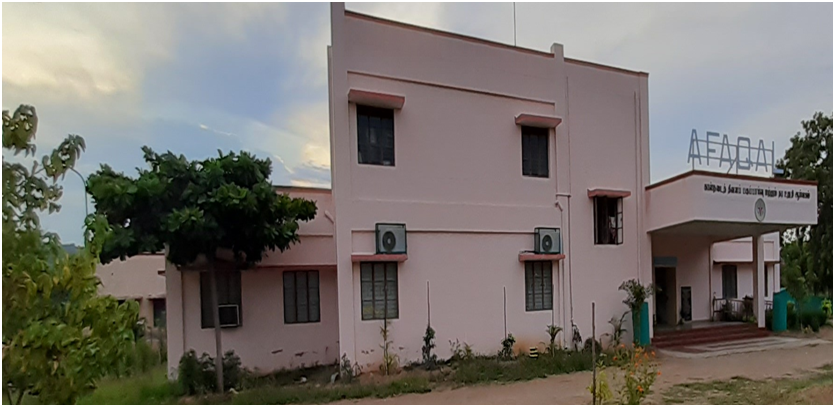
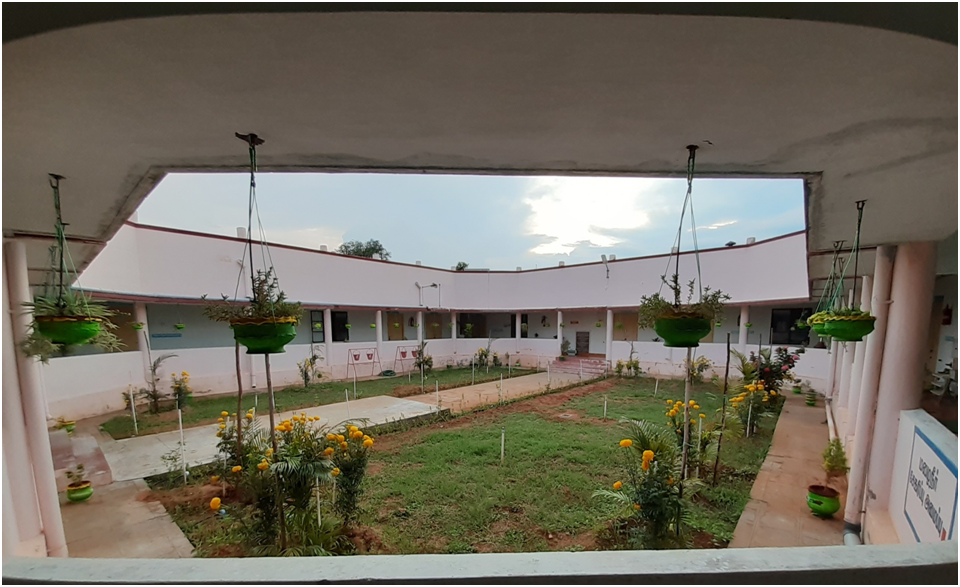
In the year 2004 I was transferred to the Department of Animal Nutrition, while demitting the charge I handed over not only the well upgraded lab, also a fixed deposit of Rs.35 lakhs which was used to build a new building for the lab the photo is given below. (Fig:2)
Fig:2 New Lab building
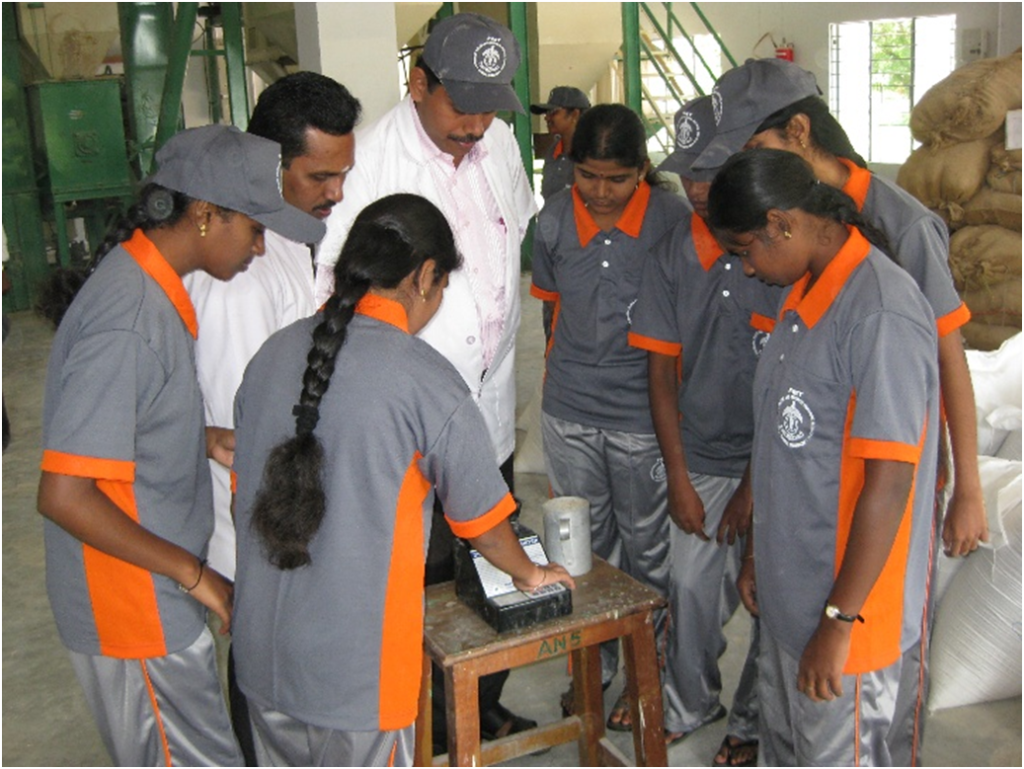
As the Head of the Département the challenge was still great, as I have to work within the budget given by the University, my recurring budget was Rs 75000 compared to my budget of above Rs.50laks in the lab, it was peanuts. The challenge was to reinject vitality to the department. Started planning, the staff mostly my students were involved and prepared project proposals sent to funding agencies, ICAR approved the project of starting feed manufacturing technology training program,a pilot feed mill with pelleting facility was established and B.V.Sc students were given hands on training on profit sharing basis, that is they work from evaluating the raw materials, formulating and manufacturing, it was 2 months training, 50% of the profit was shared with the trainees. Each trainee was getting about Rs 1500.
Fig 3. ICAR funded feed mill
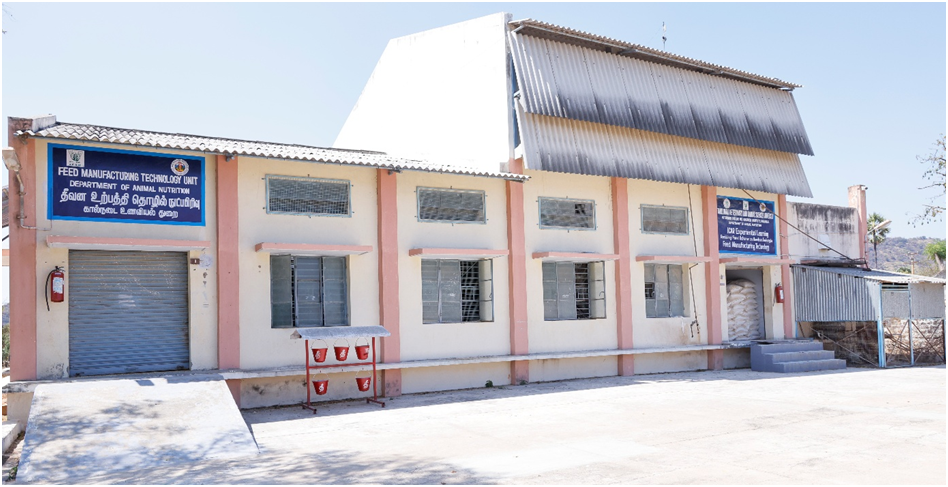
Fig: 4 Trainees working in the mill
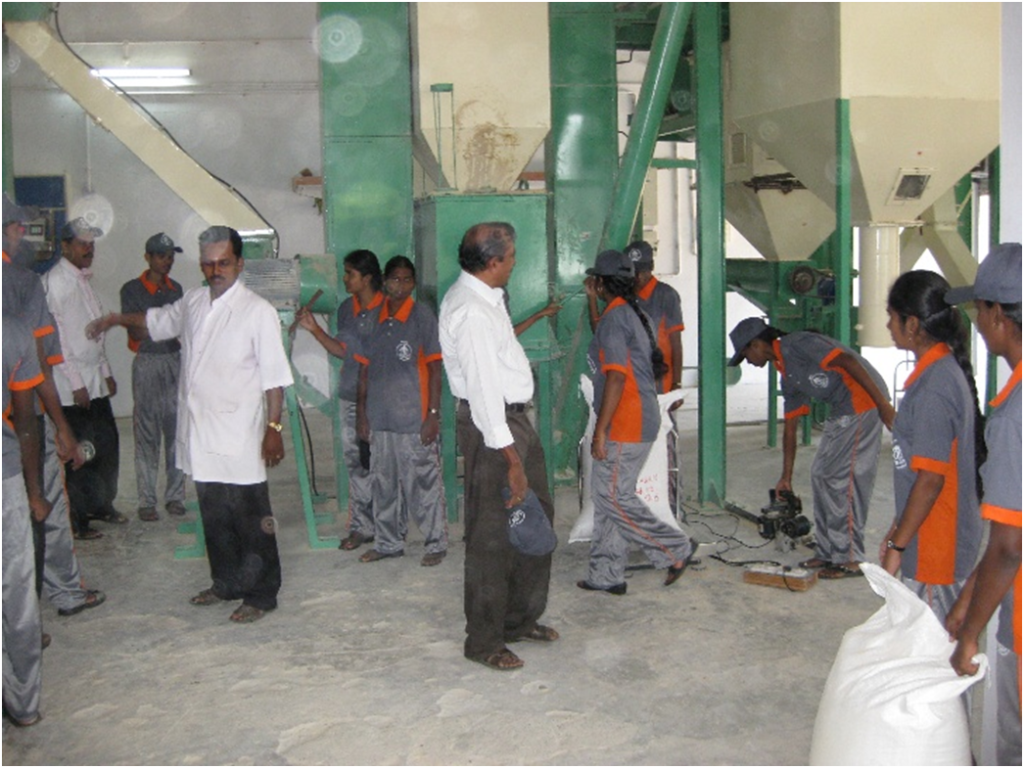
Later an on-line feed technology course was started for field Vets and Mill managers it was also successful.
Here also we had to overcome the purchase rules, with the permission of the Dean a committee was formed to make spot purchase of the needed materials, because of that we could compete with the commercial feed manufacturers in selling the feed.
In year 1999 one farmer wanted to establish environmental control shed for Layers in Namakkal one German company established two sheds for 1.2lakh birds over the period there were problems in managing the birds, performance of the birds was not comparable with the birds in open sheds in his farm. After a few years he closed the EC unit. Later another farmer contacted me for my help in establishing EC unit, I told him already the first farm is closed we could not analyse the reasons, but he insisted if I am ready to help, he will go for it, reluctantly I accepted, the first batch the egg production did not cross 85%whereas the same batch of pullets in open shed was laying 96%. We tried to alter the feed, then increased the supplements nothing changed, by this time it was 40 weeks of age, when I closely inspected the birds, I felt the birds appeared to be large for its age when checked the body weight it was 1.75kgs whereas in the open shed the same batch was 1.375 kg there was no difference in feed consumption so it was deemed that the nutrients were diverted for fattening because of chill effect due to over ventilation. I had work out a strategy for winter, the critical points are elimination of CO2 and conserving the heat, to achieve this the optimum ventilation was calculated, I found that for that shed of 1 lakh bird capacity only 2 fans were needed, but by default 14 fans were running, I told the farmer this has to be done by this time another 15 weeks passed and the production was only 70% the corresponding batch in the open shed was still above 90%. Initially the farmer was afraid to do that then he asked about the consequences I told that birds may die if my calculation is faulty, since he was losing heavily he agreed instead for 2 fans, I altered the minimum ventilation so that 4 fans will be running, and that night both of us stayed in the shed,next morning when the lights were switched on the birds were found to be agile and in 2 wees time the egg production increased to 85% , Then I coined the term “EC is not easy”, summer management may not be a problem only winter management we have to concentrate. Subsequent batches are doing well.
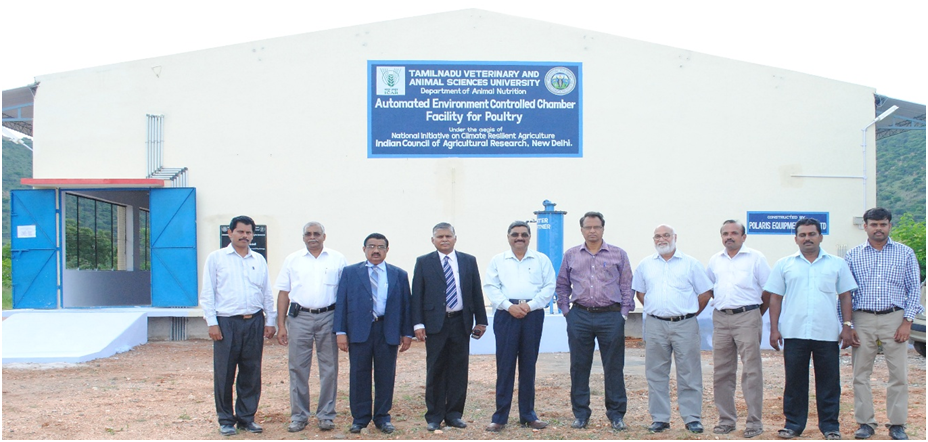
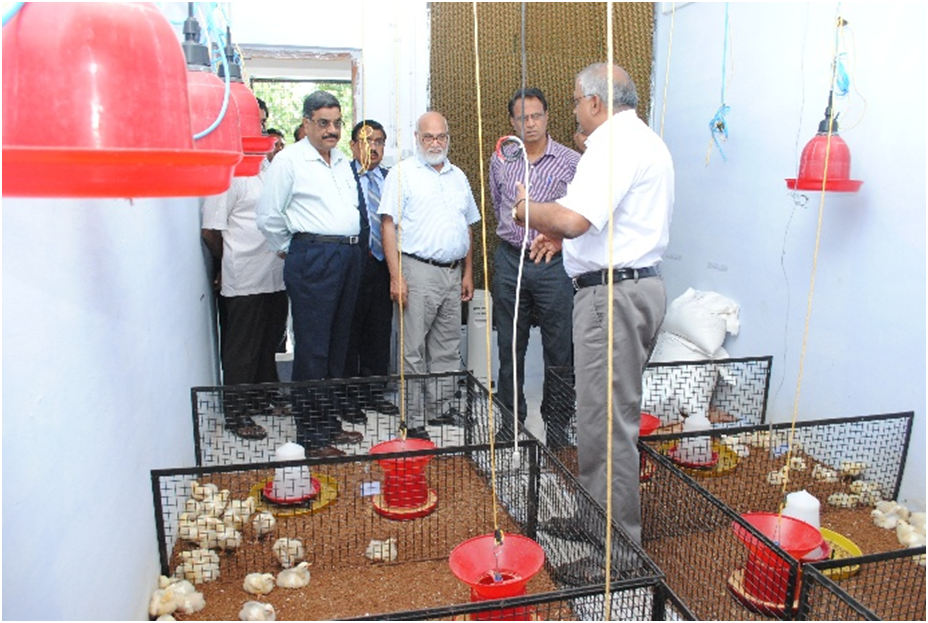
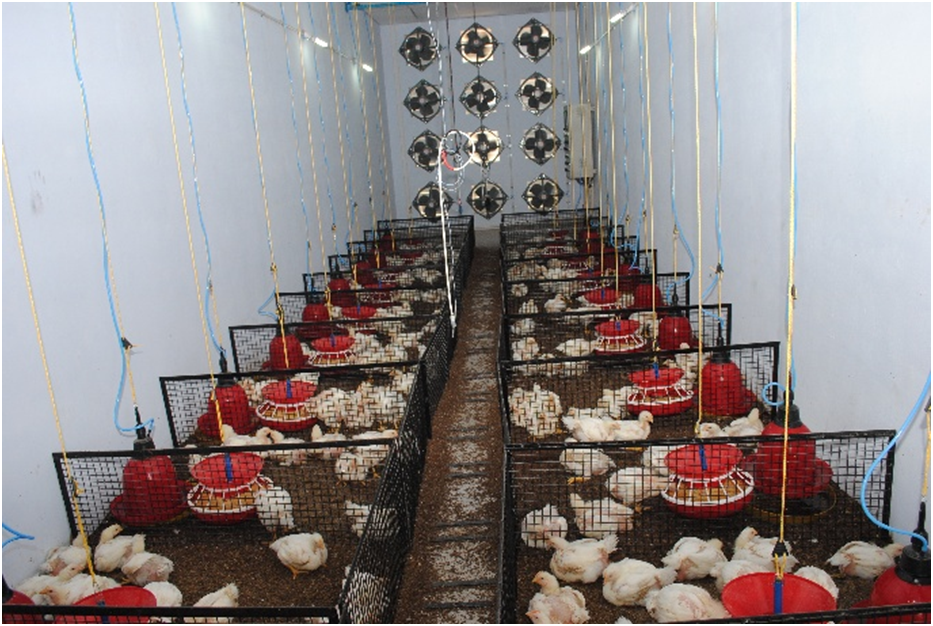
During that time ICAR called for projects regarding climate mitigation, we sent a proposal to establish 6 EC chambers so as to take up research work to study the climate impact on the birds. In this facility wind speed can reach up to 750ft/minute, Temperature can be increased up to 42oC and humidity can be raised up to 85%
Fig: 5. ICAR Team with University staff in front of the EC chamber
EC Broiler chamber
EC Layer Chamber
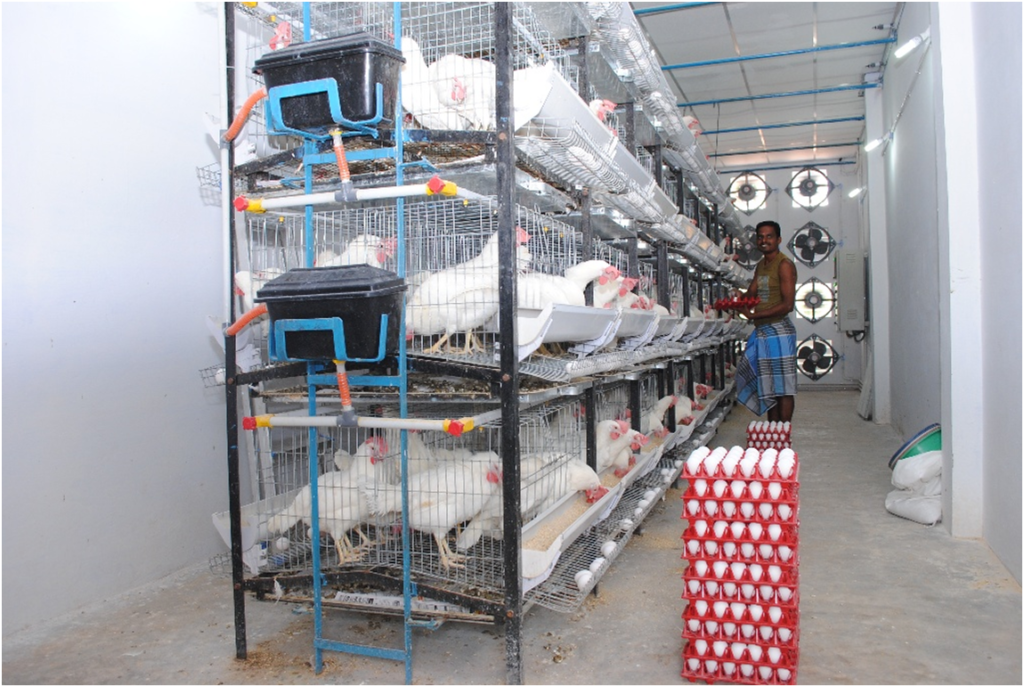
This miniature facilities helped us to easily modulate the inner climate to study the impact on the birds and working out the stress reduction.
With all these additional facilities we were able to get more external funding and when I retired in the year 2014 my budget was more than 3 crores. Further out of the profits I was able to hand over to my successor a fixed deposit of Rs 20 lakhs.
3. Why you choose the Poultry / Livestock profession
As most Vets I joined Veterinary college because I could not get medical admission. During my B.V. Sc course even though I was a meritorious student I can say I was a mere passenger, once I joined as a field Vet things changed and that fervour continues till date.
4.As compared to other big players in the industry, how you feel Your presence is different?
From the beginning my vision was empowering the farmer, first as a dairy Vet after attending the case I will explain to the farmerwhat was the reason for the condition, so that it will not recur. Once in Namakkal while heading the lab the poultry farmer who wants feed formulation, I will ask his current formulation he will tell 4 bags of Maize, one bag of Jowar, one bag of DOGN etc. while giving the formulation I will explain the nutrient content of the formulation it had very good effect, next time when he comes he will tell in Kgs, as time passed he was talking in terms of amino acids. Later they started asking for the software and now I can tell most of the farmers are using my program and formulating themselves.
5 Please tell us about your family.
My wife Lalitha was a Higher secondary teacher which she resigned after the birth of my daughter Keerthana who did her Computer Science MS in Nanyang Technological University Singapore, now she is an entrepreneur in Chennai, My Son-in-law Giridhar is a Chartered Accountant having his own practice, My Son Sri Nivas did his BE in Electronic and Communication Engineering, MS in Cornel University and Ph.D. in University of Oslo, now working in a MNC. My daughter-in-law Dr. Abhirami is a Dentist both my daughter and Son are blessed with daughters, now we have 5 Mahalakshmi’s in my family.
6. What you have dream to the next generation entered in this business?
When you enter the farm go with aa open mind, react to the situation learn from it and become proactive and work out a strategy to prevent it.
7. What is your favourite eatery food?
I am not a foody if a choice is there, I would choose Punjabi food.
8. What are your hobbies?
Astrology started as a hobby now has become a passion.
9. Anything you would like to add? In past examples
As a production Vet I strongly feel whatever we do end of the day farmer should see some money. All the projects I started are running on self-financing basis, as a Nutritionist If I do not train my student to formulate for profit then I will consider myself as a failure.
Apart from what I did in the Laboratory and Department of Animal Nutrition two instances I consider significant.
I was given additional charge of the Department of Dairy science as the Head retired and the Department had only young Assistant professors, one day I walked into the Dairy department lab and enquired what is the practical class, I was told the students were preparing Rose milk, I enquired one student what is the cost of production of the rose milk/ Sachet, he was blinking and posed the same question to the teacher who was also ignorant. I told him that the student is being trained to prepare dairy products to be an entrepreneur, if the economics is not considered there is no use, I told them to work out the costings for all the products, then I asked them to come out with a project proposal for production of products and sell it, I arranged for a seed money of Rs.5000 to be returned in one year, it was returned in 6 months and even after 20 years it is successfully running.
The HOD of LPM Department was my student I enquired about the performance of the various livestock units in the department, I asked him whether the Dairy , sheep and goat farm can be made self-financing, he was hesitant, then I told him whether he can at least recover the recurring cost of the units, he was agreeing then strategy was worked and they were able to recover 10% more than the recurring expenditure.
Main point I emphasize to my colleagues and students is that production scientist should not be mere theoretician.